Making bread, pizza, noodles, and enriched dough by hand can be time-consuming and physically demanding. The best dough kneading machines simplify mixing and kneading while giving home bakers more consistent results.
This roundup compares 10 options, from compact stand mixers to large-capacity dough makers with fermentation functions, so you can choose a machine that matches your recipes, kitchen space, and baking routine.
Best 10 Dough Kneading Machines Picks for 2026
Best Versatile Stand Mixer
KitchenAid Classic 4.5-Quart Mixer

- Ten speeds for varied mixing tasks
- Durable metal construction
- Supports optional KitchenAid attachments
Best For: Multi-purpose baking and kitchen prep
Best Large-Capacity Dough Machine

- 9.5-quart bowl for large batches
- Four mixing and fermentation modes
- Adjustable kneading and proofing times
Best For: Large-batch dough and filling preparation
Best Compact Dough Mixer
Kitchen in the box 3.2Qt Stand Mixer
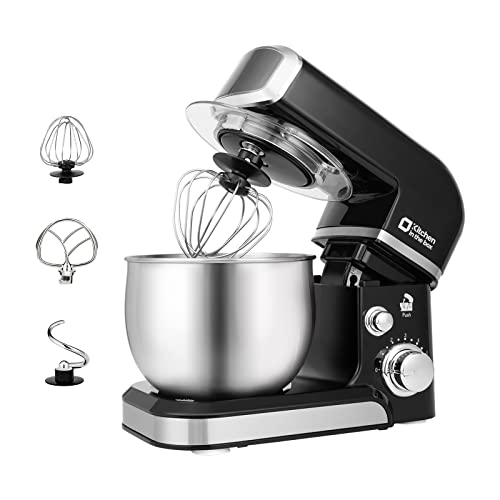
- Lightweight, space-saving design
- Six speeds for everyday mixing
- Includes hook, beater, and whisk
Best For: Small kitchens and beginner bakers
Hand-Kneading Style Pick
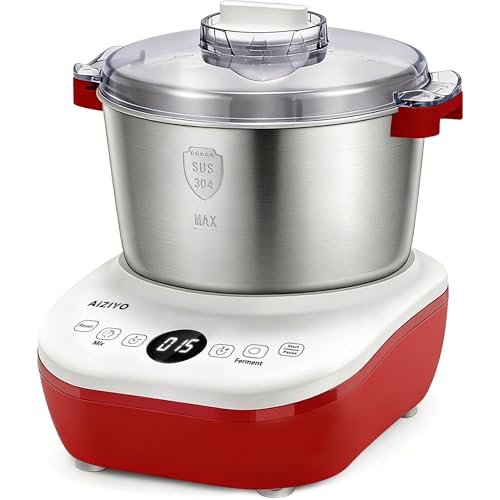
- Mix and ferment in one appliance
- S-shaped blade with mix-pause-mix program
- Wide opening for adding ingredients
Best For: Beginners and families wanting simple large-batch baking
Best Family-Size Value

- 6.5L bowl handles up to 1,600g of flour
- Kneads and ferments in one appliance
- Ingredient chute and digital timer simplify use
Best For: Families needing larger home-baking batches and integrated proofing
Best Timed Kneading Machine – Joydeem 7.4Qt Dough Maker
If you want dough kneading machines to handle mixing and proofing with minimal supervision, the Joydeem JD-HMJ7L offers preset programs, intermittent kneading, and a fermentation function. Its 6.6-quart capacity and 250W motor suit family-size batches of bread, pizza, buns, and dumplings.
Best For: Home bakers who want automated kneading and proofing in a space-saving vertical design.
Pros:
- Preset programs can knead dough in about 15 minutes or knead and proof in about 45 minutes.
- Intermittent kneading motion helps simulate manual dough making.
- Stainless steel bowl and blade are dishwasher safe, and the top cover is removable.
- Large 6.6-quart capacity works well for larger households.
Cons:
- Only one speed is available.
- The base and cover are not both dishwasher safe; the base must be cleaned separately.
- Its listed noise level is 70 dB.
The Joydeem is a focused dough maker rather than a general stand mixer. Choose it when timed fermentation and hands-off dough preparation matter more than speed control or broad attachment compatibility.
Best Versatile Stand Mixer – KitchenAid Classic 4.5-Quart Mixer
Among dough kneading machines, the KitchenAid Classic stands out for its durable metal construction, 10 speeds, and included dough hook. The 4.5-quart bowl handles up to eight dozen cookies in a batch, while the tilt-head design makes adding ingredients and changing attachments straightforward.
Best For: Bakers who need one mixer for dough, batters, whipping, and future attachment upgrades.
Pros:
- Ten speeds provide control for kneading, mixing, and whipping.
- Durable metal construction and 59 touchpoints support thorough mixing.
- Includes a coated dough hook, flat beater, and wire whip.
- Compatible with more than 10 optional attachments for tasks such as pasta making and food processing.
Cons:
- The 4.5-quart capacity is smaller than the largest dedicated dough makers in this group.
- Optional attachments are sold separately.
- At 22 pounds, it is not especially lightweight or portable.
This is the most flexible choice for cooks who want more than kneading. It costs kitchen space and weight, but its speed range and attachment ecosystem make it a strong long-term option for varied recipes.
Best Large-Capacity Dough Machine – Joydeem 9.5Qt Mixer
For large batches, this Joydeem is one of the more capable dough kneading machines, with a 9.5-quart bowl and a 300W intermittent motor. It offers separate Mix and Blend functions plus seasonal fermentation modes, making it suitable for bread, pizza, sourdough, roti, dumplings, steamed buns, and fillings.
Best For: Frequent home bakers preparing large quantities of dough or mixing fillings.
Pros:
- 9.5-quart capacity accommodates up to 2,800g of flour for mixing.
- Mix, Ferment, Mix + Ferment, and Blend modes cover dough and filling preparation.
- Adjustable mixing time runs from 5 to 30 minutes, while fermentation can run from 5 to 120 minutes.
- Winter and Summer fermentation settings add flexibility across room conditions.
Cons:
- Its larger footprint requires more counter and storage space.
- The listed maximum flour weight for fermented dough is 2,500g, below the general 2,800g mixing limit.
- The controls require manual time and mode selection rather than a single automatic program.
The HMJ-A901 is a strong fit for high-volume dough work and users who value control over fermentation. It is less compelling for occasional bakers with limited space or small batch needs.
Best Compact Dough Mixer – Kitchen in the box 3.2Qt Stand Mixer
If countertop space is limited, this compact mixer offers a practical entry point among dough kneading machines. Its 3.2-quart stainless steel bowl, six speeds, dough hook, flat beater, and whisk cover everyday mixing needs while keeping the unit under seven pounds.
Best For: Beginners, couples, and apartment kitchens that need a lightweight mixer for small batches.
Pros:
- Compact 12.9-by-7-by-10.2-inch design is easy to store.
- Six speeds support dough, batters, meringues, and whipped cream.
- Includes a dough hook, flat beater, whisk, and stainless steel bowl.
- Four suction cups help keep the mixer stable during operation.
Cons:
- The 3.2-quart capacity is better suited to small households and smaller batches.
- The lightweight plastic-and-metal construction may feel less substantial than a full-size metal mixer.
- It does not provide a dedicated fermentation function.
This model prioritizes portability and storage efficiency over capacity and specialized dough automation. It makes sense for occasional baking, but high-volume users may outgrow its smaller bowl.
Large-Capacity Fermentation Pick – 7.4Qt Dough Maker
For shoppers comparing dough kneading machines, this 7.4-quart model stands out for combining a 250W motor with automatic fermentation. Its large stainless steel bowl handles 300g to 2100g of flour, making it suitable for family-sized batches of bread, pizza, dumpling, and other doughs.
Best For: Families and frequent bakers who want large batches plus integrated proofing.
Pros:
- Large detachable, dishwasher-safe stainless steel bowl.
- Automatic fermentation maintains 77-100°F after kneading.
- Touch controls, digital display, time setting, and auto shutoff.
- Top feeding window and transparent lid make monitoring and adding ingredients convenient.
Cons:
- The large-capacity design may be more than smaller households need.
- The 250W motor has a listed single power setting rather than adjustable speeds.
This is a practical choice when batch size and a streamlined mix-to-ferment workflow matter most. Its removable bowl and quieting base pad also help make regular use easier.
Seasonal Proofing Pick – Joydeem 3.7Qt Dough Maker
Among dough kneading machines, the Joydeem HMJ-A351 is designed for smaller batches and year-round proofing. Its intermittent kneading motion supports bread, pizza, pasta, sourdough, roti, dumpling, and steamed-bun dough, while separate summer and winter fermentation modes address changing kitchen temperatures.
Best For: Home bakers making moderate batches who want adjustable mixing and seasonal fermentation settings.
Pros:
- 3.7-quart bowl accommodates 200g to 1100g of flour, with up to 900g recommended for fermented dough.
- Summer and winter modes provide different constant-temperature fermentation ranges.
- Mixing and fermentation times are adjustable in five-minute increments.
- 304 stainless steel bowl and blade are durable and easy to clean.
Cons:
- It is not speed-adjustable and uses push-button controls.
- The smaller capacity is less suited to very large batches.
- Fermentation settings have separate time limits for the two seasonal modes.
The Joydeem is a focused option for households that value controlled proofing without a full-size bowl. Its compact capacity and multiple operating modes make it especially useful for routine home baking.
Hand-Kneading Style Pick – AIZIYO DoughChief 7.4Qt
The AIZIYO DoughChief is one of the dough kneading machines aimed at simplifying both mixing and proofing. Its S-shaped blade uses a mix-pause-mix pattern to imitate hand kneading, while the 7.4-quart 304 stainless steel bowl provides room for bread, pizza, and pasta dough.
Best For: Beginners and families who want a large bowl with simple mix-and-ferment operation.
Pros:
- Mix, ferment, or combine both functions in one appliance.
- S-shaped blade and intermittent program help fold and stretch dough.
- Constant-temperature fermentation operates from 77-100°F.
- Wide top opening allows ingredients to be added while mixing.
Cons:
- Only one speed is listed.
- The listed 75 dB noise level may be noticeable during operation.
- Fermentation requires yeast or fermentation powder.
This model suits shoppers who prioritize straightforward controls and a hand-kneading-inspired program over speed customization. Its large stainless steel bowl and integrated ferment function support convenient family baking.
Best Family-Size Value – VEVOR 6.9-Quart Dough Mixer
For shoppers comparing dough kneading machines for regular family baking, the VEVOR combines a 6.5-liter stainless steel bowl with kneading and constant-temperature fermentation. Its 250-watt motor, timer, and ingredient chute are practical features for preparing bread, pizza, sourdough, dumpling wrappers, and other doughs.
Best For: Families needing larger home-baking batches and an integrated kneading-and-proofing workflow.
Pros:
- Handles up to 1,600g of flour in its 6.5-liter stainless steel bowl.
- Combines dough mixing with constant-temperature fermentation.
- Detachable ingredient chute lets you add liquids, yeast, butter, or seasonings during operation.
- Digital controls support convenient time settings.
Cons:
- Its 250-watt motor and single listed speed may be less versatile than a multi-speed mixer.
- The footprint is relatively substantial for compact kitchens.
The VEVOR is a straightforward choice when capacity and built-in proofing matter more than advanced speed control. It is particularly useful for households that make several types of dough and want to reduce manual kneading and separate proofing steps.
Best Hand-Kneading Simulation – AIZIYO DoughChief 7.4QT
The AIZIYO DoughChief stands out among dough kneading machines for its mix-pause-mix program, which is designed to simulate hand kneading. It also offers mix, ferment, and combined modes, making it a flexible option for home bakers preparing bread, pizza, pasta, and sourdough dough.
Best For: Home bakers who want hand-kneading-style mixing plus controlled proofing.
Pros:
- Mix-pause-mix operation is designed to develop softer, chewier, more elastic dough.
- Constant-temperature fermentation operates from 77–100°F.
- Large 7.4-quart 304 stainless steel bowl suits family-size batches.
- Removable parts are dishwasher-safe for easier cleanup.
Cons:
- Only one speed is listed, limiting speed-based control.
- The stated 75 dB noise level may be noticeable during operation.
- Fermentation requires yeast or fermentation powder.
The DoughChief is a compelling pick if dough texture and proofing control are priorities. Its removable lid, touch controls, and dishwasher-safe parts add convenience, while the 3-in-1 program structure supports different baking routines.
Best Large-Capacity Design – 7.4QT Electric Dough Maker
For buyers seeking dough kneading machines with generous capacity and simple ingredient adjustments, this 7.4-quart dough maker provides a 7-liter stainless steel bowl and a top window for adding water or seasonings. Its constant-temperature fermentation and intermittent mixing design are aimed at consistent home baking.
Best For: Large households and gatherings that need substantial batches with easy mid-cycle additions.
Pros:
- 7.4-quart capacity supports larger batches of bread, pizza, and pastry dough.
- Constant-temperature fermentation helps create a consistent proofing environment.
- Top window allows ingredients to be added without stopping the mixer.
- Digital display, timer, and automatic shutoff add operating convenience.
Cons:
- Only one speed is listed.
- The product’s large capacity may be more than needed for small households.
- The notes do not specify a maximum flour capacity.
This model makes the most sense for shoppers who value batch size, built-in fermentation, and the ability to fine-tune ingredients during mixing. Its touch controls and timer keep the process simple, though it is less suited to users seeking multiple mixing speeds.
How We Picked the Best Dough Kneading Machines
We focused on the features that matter most for practical home baking: bowl capacity, dough-focused mixing performance, fermentation capability, controls, construction, versatility, and ease of use. The selection includes dedicated dough makers and conventional stand mixers to cover different budgets, batch sizes, and kitchen setups.
We also considered whether each machine is better suited to occasional baking, frequent bread making, pizza preparation, noodles, or larger family-sized batches. A larger bowl is not automatically better; motor performance, countertop footprint, and minimum recommended batch size can be equally important.
Quick Comparison
| Best For | What to Look For | Standout Feature |
|---|---|---|
| Small kitchens | Compact footprint and lighter weight | Easy storage and everyday versatility |
| Regular bread baking | Strong kneading action and timer controls | More consistent dough development |
| Large batches | 7-quart or larger bowl capacity | Useful for multiple loaves or pizzas |
| Fermented dough | Temperature-aware fermentation programs | Less hands-on proofing |
| Mixed kitchen tasks | Multiple attachments or operating modes | Dough, fillings, eggs, and other preparations |
Key Buying Factors for Dough Kneading Machines
Capacity and Batch Size
Choose capacity based on the amount of flour you normally use, not just the advertised bowl volume. Oversized machines can be inconvenient for small batches, while compact models may struggle with several loaves at once.
Kneading Performance
Look for stable operation, gradual speed control, and a dough hook or dedicated kneading mechanism designed for dense mixtures. A machine that mixes well but leaves dry flour or requires frequent scraping may be frustrating for bread recipes.
Fermentation and Timing Controls
Built-in fermentation can help with sourdough-style recipes, pizza dough, and enriched breads by reducing the need for a separate warm proofing area. Check whether the temperature and timing settings suit your recipes and climate.
Construction and Cleanup
Stainless steel bowls are durable and generally easy to clean. A removable lid, splash protection, accessible controls, and dishwasher-safe accessories can make frequent use much easier. Also check the machine’s weight and available counter space before buying.
Versatility and Noise
Some dedicated dough makers focus on kneading and fermentation, while stand mixers can also handle whipping, cake batter, and other tasks. Consider noise, vibration, and attachment options if the appliance will run often in an open kitchen.
Who Should Buy Which Dough Kneading Machines?
Choose a compact stand mixer if you bake smaller batches, have limited storage, or want one appliance for dough, eggs, cakes, and general mixing. A mid-size dedicated dough maker is a better fit for frequent bread or pizza baking when fermentation assistance is valuable.
For large households, meal prep, or multiple loaves in one session, prioritize a 7-quart-or-larger dough maker with a sturdy bowl and clear timing controls. If you mainly make noodles, fillings, or specialty doughs, look for models offering multiple modes rather than paying for capacity you rarely use.