The best corn grinders make it easier to turn whole corn and other dry grains into meal, flour, or animal feed. The right choice depends on your batch size, preferred grind, available power, and how much hands-on work you want to do.
Our roundup covers manual cast-iron mills, compact household grinders, and high-powered electric machines for larger-volume processing. Use the buying guide below to narrow the options by capacity, versatility, maintenance, and intended use.
Best 10 Corn Grinders Picks for 2026
Best Manual High-Capacity Pick

- Cast-iron construction
- Adjustable grind setting
- High hopper for larger batches
Best For: Manual home milling of corn and other grains
Best for Livestock Feed

- 60L high-capacity hopper
- Seven interchangeable sieves
- 1300W electric operation
Best For: Farm and homestead feed preparation
Best Compact Manual Option

- 1200g manual capacity
- Adjustable grind control
- Clamp-on cast-iron design
Best For: Small-batch household milling
Best Heavy-Duty Electric Mill

- 3000W electric motor
- Adjustable grinding thickness
- Cast-iron industrial construction
Best For: High-powered dry grinding in a dedicated workspace
Traditional Choice
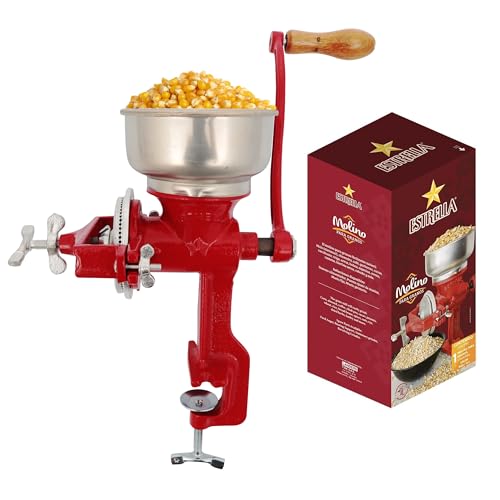
- Cast iron hand-crank design
- Adjustable grinding for corn and other grains
- Clamps to counters up to 1.5 inches
Best For: Traditional masa, tortilla, and small-batch grinding
High-Capacity Power
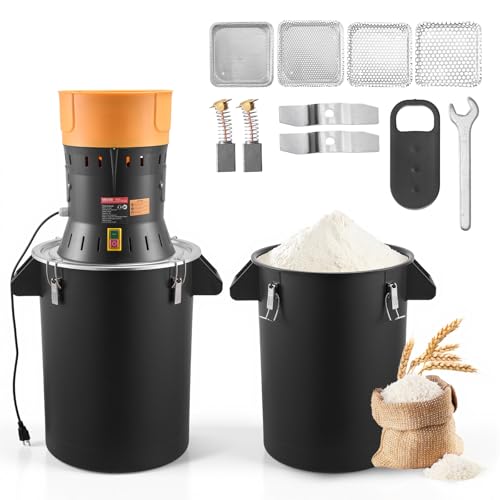
- 600W motor with 15,000 RPM speed
- Five interchangeable grinding screens
- 53-liter capacity for larger batches
Best For: High-volume dry grain, corn, spice, and feed grinding
Farm-Ready Option

- 1000W motor with 19,000 RPM speed
- 6.6-gallon hopper for larger batches
- Five sieve sizes for grain and feed
Best For: Agricultural grain, corn, spice, and animal-feed grinding
Best Manual Pick
Compact Cast-Iron Corn Grinder

- Electricity-free grinding with reduced heat buildup
- Adjustable texture for grains, spices, and nuts
- Clamp-on base and dust cover support cleaner, steadier use
Best For: Small-batch kitchen grinding and home brewing
Best High-Capacity Pick

- 3000W motor rated for up to 200 pounds per hour
- Adjustable settings from coarse feed to fine powder
- Heavy galvanized cast iron housing for demanding use
Best For: Small farms and high-volume grain or feed processing
Best Manual High-Capacity Pick – Victoria 2400g Grain Mill
If you want traditional corn grinders for home use, the Victoria 2400g model offers sturdy cast-iron construction, an adjustable grind setting, and a high hopper for holding more grain between refills. It clamps to tables 1/2 to 2 inches thick and includes a non-slip surface protector.
Best For: Home cooks, hobby brewers, and users who want a manual mill for corn and other grains.
Pros:
- Durable cast-iron body with erosion-resistant grinding discs
- High 2400g capacity and adjustable coarseness
- Versatile enough for grains, coffee, beans, seeds, nuts, and spices
Cons:
- Manual operation requires physical effort
- Cannot produce a superfine texture
- Will not grind whole wheat into a fine powder
This is a practical, space-conscious choice when electricity is unavailable or unnecessary. Choose it for controlled, small-batch milling rather than ultra-fine flour production.
Best for Livestock Feed – 60L Electric Corn Grinder
Among corn grinders for farms and homesteads, this electric model stands out for its 60-liter hopper and seven interchangeable sieves. Its 1300W design is intended for processing dry corn, wheat, rice, barley, soybeans, and other grains into customized feed.
Best For: Small farms and homesteaders preparing recurring batches of poultry or livestock feed.
Pros:
- Large 60L hopper reduces refill frequency
- Seven sieves provide adjustable particle sizes
- Handles multiple dry grains and includes simple start/stop controls
Cons:
- Designed for dry materials only
- Screens must be changed only when the machine is unplugged and clear
- Its large capacity may be excessive for occasional kitchen use
The generous hopper and feed-focused design make this a better match for agricultural workloads than small countertop milling. It also includes a three-year manufacturer warranty according to the supplied details.
Best Compact Manual Option – Victoria 1200g Grain Mill
This Victoria model is one of the more approachable corn grinders for manual, small-batch use. Its cast-iron body, adjustable screw, and low hopper support controlled grinding, while the clamp fits tables 1/2 to 2 inches thick.
Best For: Users who need a manual mill for modest quantities of corn, grains, coffee, spices, or dried beans.
Pros:
- Heavy-duty cast-iron construction with double tin plating
- Adjustable grinding coarseness
- Includes a non-slip protector for table stability
Cons:
- Manual cranking is slower and more labor-intensive than electric milling
- Does not grind to a superfine texture
- Not suitable for turning whole wheat into fine powder
With a 1200g capacity and low-hopper configuration, this mill makes sense when storage and batch size matter more than speed. It is a dependable traditional option for everyday small-scale grinding.
Best Heavy-Duty Electric Mill – VEVOR 3000W Corn Grinder
For shoppers comparing heavy-duty corn grinders, the VEVOR electric mill combines a 3000W motor with cast-iron grinding plates and adjustable thickness control. It is built for dry grinding corn, wheat, rice, sorghum, soybeans, spices, and similar ingredients into powder.
Best For: Users who need high-powered electric grinding for food processing or agricultural grains.
Pros:
- Powerful 3000W motor for continuous grinding
- Adjustable thickness accommodates different textures
- Stainless-steel funnel and cast-iron body are designed for durability
Cons:
- Heavy 46.7-pound construction is not easy to move
- 500g capacity is smaller than the large feed mill option
- Its industrial design may be more machine than casual users need
This is the strongest fit when motor power and fine dry grinding take priority. Its relatively small listed capacity and 46.7-pound weight make it better suited to a dedicated work area than frequent relocation.
Traditional Choice – Estrella Manual Grain Mill
For shoppers comparing corn grinders, the Estrella Manual Grain Mill offers a traditional hand-crank approach for preparing masa, tortillas, tamales, pupusas, and other freshly ground recipes. Its cast iron construction and adjustable settings suit hands-on kitchen use.
Best For: Home cooks who want a manual molino for corn, nixtamal, masa, and other coarse grains.
Pros:
- Traditional hand-crank design for homemade masa and tortillas
- Durable cast iron construction with adjustable grinding settings
- Can grind corn, nixtamal, chickpeas, wheat, rice, coffee beans, and spices
- Clamps to countertops up to 1.5 inches thick and has removable parts for cleaning
Cons:
- Manual operation requires physical effort and does not provide electric-speed convenience
- Countertop clamping is limited to surfaces up to 1.5 inches thick
The Estrella is a practical pick when authentic preparation and versatility matter more than automated throughput. Its 5.2-pound cast iron body is suited to regular home use, provided your counter can accommodate the clamp.
High-Capacity Power – VEVOR 600W Grain Grinder
Among corn grinders, the VEVOR Electric Grain Mill stands out for powered, high-speed processing of dry grains, spices, cereals, coffee, corn, and pepper. Its interchangeable screens let you adjust the output for feed, flour, or spice powder.
Best For: Users who need a high-capacity electric grinder for dry ingredients and flexible coarseness.
Pros:
- 600W motor reaches up to 15,000 RPM for efficient grinding
- Five included screens provide 3, 4, 5, 6, and 8 mm grinding options
- Large 53-liter capacity and 9.8-inch feed port support bigger batches
- Detachable hopper and feed inlet simplify cleaning
Cons:
- At 18.3 pounds, it is considerably less portable than a manual mill
- Uses a 220-volt AC power source, which may not suit every kitchen setup
- Its large 19.69-by-15.16-by-34.65-inch footprint requires substantial space
This VEVOR model is better suited to farm, ranch, or heavy-duty home applications than occasional countertop use. Confirm the 220-volt requirement and available floor space before choosing it.
Farm-Ready Option – FoundGo 1000W Feed Grain Mill
For buyers seeking corn grinders with agricultural capacity, the FoundGo combines a 1000W motor, a 6.6-gallon hopper, and five sieve sizes. It is designed for wheat, corn, spices, and animal feed, with continuous feeding for efficient batch work.
Best For: Farms, feed preparation, and users who want a powerful 110V grinder for larger batches.
Pros:
- 1000W pure copper motor reaches 19,000 RPM
- Five sieve sizes—2, 3, 4, 6, and 8 mm—offer grinding flexibility
- 6.6-gallon hopper supports larger quantities and continuous feeding
- Heat-sink design, overheat protection, handles, and secure buckles support convenient operation
Cons:
- Plastic construction may feel less heavy-duty than a cast iron mill
- Its agricultural design may be more machine than needed for occasional kitchen grinding
- Best suited to dry grinding rather than wet masa preparation
The FoundGo is a strong fit when speed, capacity, and 110V compatibility are priorities. Its included sieve range makes it adaptable for both grain processing and feed-related tasks.
Best Manual Pick – Compact Cast-Iron Corn Grinder
For shoppers comparing corn grinders for occasional kitchen prep, this VEVOR manual mill offers electricity-free operation, adjustable fineness, and a clamp-on design. Its low hopper is suited to smaller batches, while the hand crank can process corn, grains, spices, coffee beans, and nuts.
Best For: Small-batch grinding, home kitchens, baking, and home brewing where manual control matters.
Pros:
- Manual operation helps avoid heat buildup and preserve natural aroma and nutrients.
- Adjustable grinding disc supports coarse or finer results, with repeat passes for extra-fine texture.
- Stable table clamp fits surfaces with a 0.79–1.58-inch opening range and includes a dust cover.
- Powder-coated cast iron construction is designed to resist rust and wear.
Cons:
- Manual cranking requires more time and effort than an electric mill.
- The low hopper is intended for small batches rather than high-volume grinding.
- It requires a suitable table edge for secure clamping.
This is a practical choice when portability, hands-on control, and small-batch versatility are more important than speed. The adjustable grind and sturdy clamp make it one of the more flexible manual corn grinders in this group.
Best High-Capacity Pick – 3000W Electric Corn Grinder
Among these corn grinders, this 3000W electric model is the speed-focused option. Its heavy-duty motor is rated to process up to 200 pounds of grain per hour, and adjustable settings allow it to produce anything from coarse feed to fine powder.
Best For: Small farms, livestock feed preparation, home flour milling, brewing, and users who need faster grain processing.
Pros:
- 3000W pure copper motor is rated for processing up to 200 pounds of grain per hour.
- Handles dry corn, wheat, soybeans, rice, barley, and some herbs.
- Adjustable grind settings accommodate coarse feed and fine powder.
- Galvanized cast iron housing is designed to resist corrosion and provide durability.
Cons:
- At 47 pounds, it is substantially heavier than the manual options.
- Its industrial design may be excessive for occasional household grinding.
- It requires a 110-volt electrical connection.
This grinder makes the most sense when throughput is the deciding factor. Its size, weight, and electric motor favor dedicated work areas, farms, or serious home milling rather than quick countertop use.
Best Large-Hopper Pick – Manual Corn and Grain Grinder
This high-hopper manual mill is a useful option for shoppers seeking corn grinders that can accept larger loads without frequent refilling. Its auger is designed to grind grains evenly, while the adjustable plate lets you control the final texture for dough, brewing, or poultry feed.
Best For: Home brewing, dough preparation, poultry feed, and manual grinding of corn, barley, wheat berries, beans, and chickpeas.
Pros:
- Large hopper reduces the need to replenish grains during a grinding session.
- Adjustable grinding plate supports different particle sizes.
- Auger is designed to grind grains thoroughly and evenly.
- Adjustable table base fits tables with different thicknesses.
Cons:
- Manual operation is slower and more labor-intensive than electric grinding.
- It needs to be installed on a table edge before use.
- The large hopper can be unnecessary for very small batches or limited storage spaces.
Choose this model when hopper capacity and flexible table installation are priorities. It offers a straightforward manual setup with broad use across home brewing, food preparation, and animal feed tasks.
How We Picked These Corn Grinders
We selected these Corn Grinders across several common use cases, including home cooking, traditional hand milling, spice and grain pulverizing, and agricultural feed preparation. We compared the listed motor power, hopper or chamber capacity, construction, grind-adjustment features, included screens or sieves, and whether each mill is manual or electric.
Because product specifications and real-world output can vary, treat advertised capacity as a starting point rather than a guaranteed hourly production rate. Dry-grain compatibility, moisture level, kernel size, and the desired fineness all affect performance.
Quick Comparison
| Best For | Look For | Recommended Type |
|---|---|---|
| Occasional home use | Compact design and adjustable grind | Manual or lower-wattage electric mill |
| Traditional cornmeal and flour | Cast-iron body and hand control | Manual grain grinder |
| Chicken or livestock feed | Large hopper, screens, and high throughput | Heavy-duty electric feed grinder |
| Spices and powdered ingredients | High-speed motor and enclosed grinding chamber | Electric pulverizer |
| Bulk processing | Powerful motor, cooling, and durable components | Commercial-style electric mill |
Key Buying Factors for Corn Grinders
Manual Versus Electric Operation
Manual mills work without electricity and offer excellent control, but they require more effort and are slower for large batches. Electric grinders are faster and better suited to feed or frequent processing, although they require a compatible outlet and careful attention to duty cycles.
Capacity and Throughput
A larger hopper reduces refilling, but it also increases the machine’s footprint and may make storage harder. For occasional meal or flour, a smaller unit is usually easier to manage. Farm users should prioritize the grinding chamber, included screens, and stated output rather than hopper size alone.
Grind Adjustment and Screens
Choose an adjustable mill if you need both coarse meal and finer flour. Models with multiple sieves provide more flexibility for feed and grain sizes. Confirm that the screens match your intended ingredients and that replacements are available.
Construction, Safety, and Cleaning
Cast iron offers stability and durability but can be heavy and may require drying and seasoning to resist rust. Electric models should have secure covers, stable bases, ventilation, and overload protection where available. Always follow the manufacturer’s guidance about dry ingredients, operating time, and cleaning; never reach into a moving grinder.
Who Should Buy Which Corn Grinders?
Choose a manual cast-iron mill if you value simplicity, portability, and traditional control for modest batches. A low-hopper design is convenient for easier loading, while a high-hopper model can reduce refills. Select a compact electric grinder for regular kitchen use, spices, or small amounts of grain.
For poultry or livestock feed, choose a heavy-duty electric model with a larger chamber and multiple sieves. If you need very fine powder or process several dry ingredients, prioritize motor power, blade or burr design, adjustable thickness, and cooling requirements. Before buying, verify the voltage, plug type, acceptable grain moisture, dimensions, and whether the grinder is intended for food use or feed only.