Manual grain mills give you fresh, shelf-stable flour and meal without depending on power. They’re a smart choice for homesteads, backup kitchens, and anyone who wants more control over grind texture.
From compact hand-crank options to heavier cast-iron mills with flywheels, the best model depends on what you grind most often and how much effort you want to put in.
Best 10 Manual Grain Mills Picks for 2026
Traditional Cast-Iron Workhorse

- Heavy cast-iron body with double tin plating
- Adjustable screw changes grind coarseness
- Clamps to 1/2"–2" tables with rubber protector
Best For: Traditional home grinding of corn, grains, and mixed kitchen ingredients
High-Output Hand Mill

- Fast hand-crank output for a manual mill
- Includes stainless steel and stone burr sets
- Handles dry, oily, wet, and high-moisture foods
Best For: Versatile milling, from flour and masa to nut butter and spices
Large-Capacity Flywheel Mill
Lehman's Manual Power Grain Mill

- 6-cup hopper for larger batch grinding
- 12" flywheel adds momentum for hand grinding
- Made for dry grains like wheat, corn, and rye
Best For: Large-batch home grinding of dry grains and pastry flour
Compact Countertop Grinder
Kitchen Crop Hand Crank Grain Mill
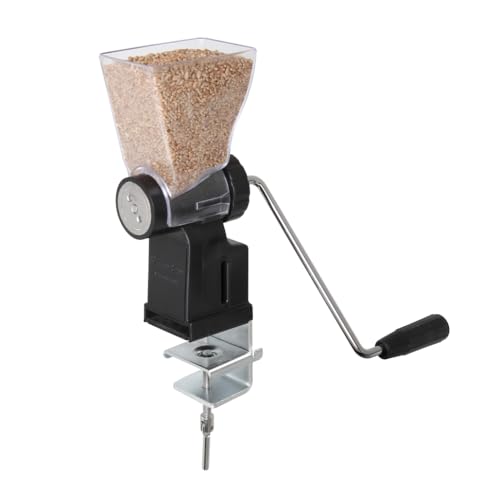
- Lightweight design under 3 pounds
- Adjustable dial for coarse to fine grinding
- Stainless steel burrs for dry, non-oily grains
Best For: Small-batch grinding in compact kitchens
Classic Cast-Iron Corn Mill

- Cast-iron body with food-safe tin plating
- Adjustable grind from coarse to fine
- Includes clamp, handle, and hopper
Best For: Traditional kitchen milling of masa, tortillas, and fresh flour
High-Capacity Hand Grinder
Heavy Duty Cast Iron Grain Mill

- 7.5 lb hopper for larger batches
- Adjustable grind from flour to meal
- Table clamp and no-electric operation
Best For: Home brewing and larger-batch grinding
Traditional High-Hopper Mill

- 1.9-quart hopper for fewer refills
- Cast iron with food-safe tin plating
- Adjustable for corn, wheat, rice, and more
Best For: Frequent small-to-medium batch kitchen milling
Heavy-Duty Flywheel Pick
VEVOR Manual Grain Mill with Flywheel

- Flywheel helps keep grinding steady and cool.
- Three fineness settings for coarse to fine results.
- Large 0.53-gallon hopper suits bigger batches.
Best For: Frequent batch grinding at home
Traditional Cast Iron Pick
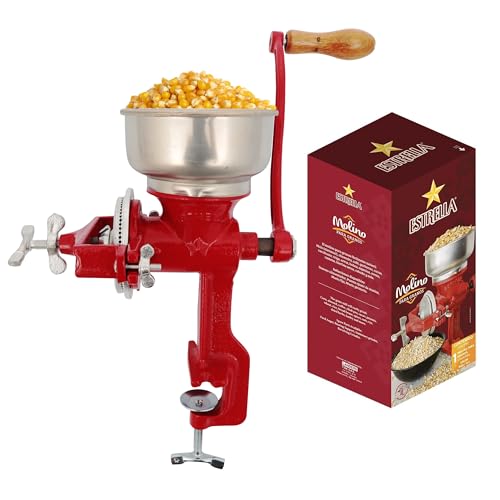
- Traditional Mexican molino for masa and tortillas.
- Cast iron body is built for durable use.
- Clamps to counters up to 1.5 inches thick.
Best For: Traditional corn grinding and family recipes
Compact Clamp-On Pick
VEVOR Manual Grain Mill with Low Hopper

- Clamp mount keeps the grinder steady on tables.
- Dust cover helps limit powder scatter.
- Low hopper suits smaller batches and quick prep.
Best For: Small-batch grinding with a cleaner setup
Traditional Cast-Iron Workhorse – Victoria Cast Iron Grain Mill
If you want a classic manual grain mill for home use, this Victoria model leans into durability and versatility. Its heavy cast-iron build, adjustable screw, and hand crank are designed for grinding a range of grains and kitchen ingredients while clamping securely to most tables.
Best For: Home cooks and traditionalists who want a sturdy manual grinder for corn, grains, and other coarse to medium grinds.
Pros:
- Heavy-duty cast iron construction with double tin plating for long-term use
- Adjustable screw lets you change the coarseness and fineness of the grind
- Clamps to tables 1/2"–2" thick and includes a non-slip rubber protector
- Works with grains, corn, coffee, seeds, nuts, spices, and more
Cons:
- Cannot grind to a superfine texture
- Will not turn whole wheat into a fine powder
This is a practical pick if you value a manual mill with a proven, no-frills design. It is best suited to everyday grinding tasks where rugged construction matters more than ultra-fine flour.
High-Output Hand Mill – WonderMill Junior Deluxe
The WonderMill Junior Deluxe is aimed at buyers who want a manual grain mill with more flexibility than a basic hand grinder. It is built for faster output, handles dry and oily ingredients, and includes both stainless steel and stone burr sets for different kinds of milling.
Best For: Users who want a versatile hand-crank mill for flour, masa, nut butter, spices, and oily ingredients.
Pros:
- Grinds 1.25 cups of flour in a minute, with higher output than many hand mills
- Includes both stainless steel and stone burr sets for different ingredients
- Handles dry, hard, soft, wet, oily, and high-moisture foods
- Double clamp mount secures to a table or counter without drilling
Cons:
- Heavier than compact hand mills at 14 pounds
- Bulkier footprint than smaller countertop models
For shoppers comparing manual grain mills, this one stands out for versatility and ingredient range. It is especially appealing if you want one grinder that can cover both everyday flour needs and specialty tasks like nut butter or masa.
Large-Capacity Flywheel Mill – Lehman's Manual Power Grain Mill
This manual grain mill is built for larger jobs, with a 6-cup hopper and a flywheel that helps add momentum during grinding. It is designed for free-flowing dry grains and can be bolted down for a more permanent setup.
Best For: Home bakers who want a large-capacity mill for dry grains and pastry-flour grinding.
Pros:
- Grinds dry grains like wheat, corn, rye, rice, quinoa, and small beans
- Extra-large 6-cup hopper reduces refills during batch grinding
- 12" flywheel pulley provides momentum for easier hand grinding
- Can also be motorized and has pre-drilled holes for bolting down
Cons:
- Designed for free-flowing dry grain only
- At 26 pounds, it is much heavier than compact hand mills
If your priority is capacity and smoother manual operation, this Lehman’s model is a strong candidate. It makes the most sense for users who grind in larger batches and want a more stationary mill.
Compact Countertop Grinder – Kitchen Crop Hand Crank Grain Mill
Kitchen Crop Hand Crank Grain Mill Wheat Flour Grinder, Stainless Steel Metal Burrs (The Grain Mill)
Check Price On AmazonFor buyers who want a lighter manual grain mill, this Kitchen Crop model focuses on compact size and straightforward control. Its stainless steel burrs and adjustable dial are geared toward dry, non-oily grains and small-batch countertop use.
Best For: Small kitchens and occasional grinding of dry grains and seeds.
Pros:
- Stainless steel burrs handle wheat, rice, oats, barley, rye, corn, beans, and spices
- Adjustable dial lets you set the grind from coarse cereal to fine flour
- Weighs less than 3 pounds for easy storage and transport
- Wide clamp base secures to counters and tables up to 2 inches thick
Cons:
- Designed for dry, non-oily grains only
- Two-cup hopper is better for small batches than large jobs
This model is a sensible choice if you want a straightforward hand grinder without much bulk. It is especially practical for smaller households that mill grains occasionally rather than in big batches.
Classic Cast-Iron Corn Mill – Corona Manual Grain Mill
If you want manual grain mills that lean into tradition and durability, this Corona hand grinder is built around a cast-iron body, adjustable plates, and a countertop clamp for steady use. It’s a practical pick for grinding corn, wheat, rice, coffee, spices, and dried peppers when you want fresh ingredients without electricity.
Best For: Home cooks making masa, tortillas, tamales, arepas, and fresh flour from a sturdy traditional mill.
Pros:
- Solid cast-iron construction with food-safe tin plating for long-term use
- Adjustable grind settings for coarse to fine textures
- Includes hopper, plates, clamp, handle, and mounting hardware
- Countertop clamp adds stability during hand grinding
Cons:
- Small 0.8-qt hopper means more frequent refilling for larger batches
- Manual operation takes more effort than electric milling
This is a straightforward, dependable grain mill for everyday kitchen milling if you value classic construction and versatility over speed. It makes the most sense for smaller-batch, hands-on prep.
High-Capacity Hand Grinder – Heavy Duty Cast Iron Grain Mill
Among manual grain mills, this heavy-duty cast-iron grinder stands out for batch size and off-grid practicality. Its 7.5 lb hopper, adjustable grind, and table clamp make it suited to bigger sessions for corn, wheat, oats, and barley without needing electricity.
Best For: Larger-batch home grinding, home brewing prep, and emergency or off-grid use.
Pros:
- Large 7.5 lb hopper supports continuous grinding
- Adjustable settings handle fine flour through coarse meal
- Heavy-duty table clamp helps keep the mill stable
- Manual design works anywhere with no electricity required
Cons:
- Manual winding takes effort, especially on bigger batches
- Cast-iron construction is sturdy but not lightweight
If you need a tougher, higher-capacity grain mill for repeated use, this model is built around throughput and stability. It’s a strong fit for practical pantry prep and brewing tasks where batch size matters.
Traditional High-Hopper Mill – Corona Manual Grain Mill
This Corona model is one of the more practical manual grain mills if you want the familiar cast-iron design with a higher-capacity hopper. It handles corn, wheat, rice, soybeans, chickpeas, coffee, and spices, and the adjustable plates let you move from coarse to fine textures for everyday kitchen milling.
Best For: Home cooks who want a traditional, high-hopper manual mill for frequent small-to-medium batches.
Pros:
- High hopper capacity at 1.9 quarts for fewer refills
- Cast-iron body with food-safe tin plating
- Adjustable grind settings for multiple textures and ingredients
- Includes clamp, handle, grinding plates, and stabilizing pad
Cons:
- Manual grinding still requires time and effort
- Heavier build may be less convenient to move or store frequently
For buyers who like the Corona style but want more hopper capacity, this is the more practical everyday pick. It keeps the same traditional build while offering a bit more room for milling.
Heavy-Duty Flywheel Pick – VEVOR Manual Grain Mill with Flywheel
If you want manual grain mills that grind steadily without electricity, this VEVOR model is built for practical kitchen use. The flywheel helps deliver consistent grinding while reducing heat buildup, so grains, spices, coffee beans, nuts, and corn can keep more of their natural aroma and flavor.
Best For: Home cooks and bakers who want a large-capacity manual grinder for frequent batch prep.
Pros:
- Flywheel design supports steady grinding and helps prevent heat buildup.
- Three fineness settings let you switch between coarse, medium, and fine textures.
- 0.53-gallon hopper offers generous capacity for larger batches.
- Wide base improves stability and helps reduce vibration during use.
Cons:
- At 32.2 pounds, it is heavier than smaller hand grinders.
- Motor use is optional only with a separate motor setup, which is not included.
This is a solid pick if you want a durable manual grain mill that can handle more than occasional use. The combination of adjustable fineness, large hopper size, and stable construction makes it especially practical for people who grind often.
Traditional Cast Iron Pick – Estrella Manual Grain Mill
Among manual grain mills, this Estrella molino is aimed at cooks who want a traditional hand-crank grinder for fresh, everyday prep. It is designed for corn, nixtamal, chickpeas, wheat, rice, coffee beans, spices, soybeans, and other coarse grains, making it useful for recipes like masa, tortillas, tamales, atole, pupusas, and arepas.
Best For: Traditional cooking and anyone making masa, tortillas, or other fresh corn-based recipes.
Pros:
- Traditional Mexican-style molino designed for authentic home cooking.
- Cast iron build is made for long-term, dependable use.
- Adjustable grinding settings add flexibility for different ingredients.
- Clamps to countertops up to 1.5 inches thick for simple setup.
Cons:
- Hand-crank operation is best suited to smaller, manual prep jobs.
- Cleanup is easier with removable parts, but it still takes more effort than an electric grinder.
This grinder is a strong fit if authenticity matters as much as function. Its traditional build and versatile grinding use make it especially appealing for cooks who want freshly ground ingredients for family recipes.
Compact Clamp-On Pick – VEVOR Manual Grain Mill with Low Hopper
If you are comparing manual grain mills for smaller batches and a tidier setup, this VEVOR low-hopper version is built for straightforward hand grinding. It runs without electricity, works with grains, spices, coffee beans, nuts, and corn, and includes a dust cover to help keep powder from scattering during use.
Best For: Small-batch grinding where a secure table clamp and cleaner workspace matter.
Pros:
- Clamp design fits tables with a 0.79-1.58 inch opening range.
- Dust cover helps reduce scattered powder and mess.
- Powder-coated cast iron body is designed for durability.
- Adjustable disc tightness allows finer or coarser grinding.
Cons:
- Low hopper is better for small batches than larger-volume grinding.
- Requires manual effort, so it is less convenient for frequent high-volume use.
This model makes sense if you want a compact manual grinder with a secure mount and a cleaner workflow. It offers practical control over texture while keeping the focus on small, manageable batches.
How We Picked These Manual Grain Mills
We focused on build quality, grinding mechanism, capacity, mounting stability, ease of adjustment, and the types of grain each mill handles best. We also considered whether a model is better suited for occasional use, regular kitchen prep, or larger-batch grinding.
Quick Comparison: What Matters Most
Not all Manual Grain Mills are designed for the same job. Some are best for fine flour from dry grains, while others are more versatile for corn, oats, seeds, spices, or oily ingredients. Bigger hoppers and flywheels usually improve output, but they can also mean a larger footprint and more counter or table space.
Key Buying Factors for Manual Grain Mills
Grinding Mechanism
Burr mills are commonly preferred for consistent flour, while cast-iron grinder-style mills are often better for coarse meal and harder grains. If you want finer control, look for a model with adjustable fineness settings.
Material and Durability
Cast iron is popular for long-term durability, but it may require more maintenance to prevent rust. Stainless steel parts can be easier to clean, while carbon steel models often aim to balance strength with affordability.
Capacity and Output
If you plan to mill larger amounts, check hopper size, feed rate, and whether the design supports longer grinding sessions without frequent refills. Smaller mills can still be excellent, but they tend to suit light or occasional use.
Mounting and Stability
A secure table clamp or solid base matters more than many buyers expect. A stable setup reduces wobble, improves safety, and makes the hand-crank process much less tiring.
What You’ll Grind
Some Manual Grain Mills handle only dry grains well, while others can process corn, seeds, spices, nuts, or oily foods. Match the mill to your actual ingredients instead of buying for versatility you may never use.
Who Should Buy Which Manual Grain Mills?
If you want a simple backup option for flour and meal, choose a compact, easy-to-store mill. If you bake often or grind in larger batches, a flywheel model or a heavy-duty cast-iron design is usually the better fit. If versatility matters most, look for one of the Manual Grain Mills that can handle multiple ingredient types and offer finer adjustment control.
For most buyers, the best choice comes down to a balance of grind quality, comfort, and how much effort you want to spend at the crank. Start with your typical grain type and batch size, then choose the most stable and durable model that fits your space and routine.