Making fresh pasta at home does not require a restaurant-sized budget or professional kitchen. The best pasta machines under $300 can roll, cut, or extrude dough with far less effort than a rolling pin, while giving you control over thickness, shape, and ingredients.
This roundup includes traditional hand-crank machines, motorized rollers, and automatic pasta makers. Use the guide below to match the right style, capacity, cleanup requirements, and included accessories to the way you cook.
Best 10 Pasta Machines Under 300 Picks for 2026
Classic Manual Pick

- Made in Italy with chrome and nickel-plated steel
- 10 thickness settings from 0.8 to 4.8 mm
- Makes lasagna, fettuccine, and tagliolini
Best For: Hands-on pasta making with adjustable thickness
Fast Automatic Choice
Philips 7000 Series Pasta Maker

- Automatic 150W operation with eight discs
- Prepares up to eight portions in under 10 minutes
- Dishwasher-safe parts and HomeID app guidance
Best For: Family-sized batches with minimal manual effort
Electric Upgrade
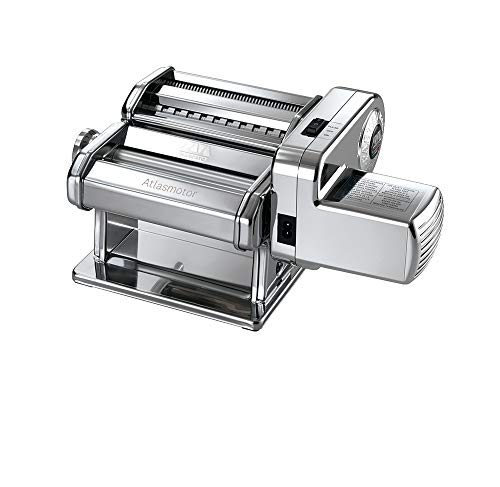
- Includes motor, hand crank, clamp, and Atlas 150
- Rolls pasta sheets up to 6 inches wide
- Offers 10 adjustment positions and dual operation
Best For: Cooks wanting electric convenience with manual control
Budget-Friendly Versatility

- Seven settings roll dough from 0.5 to 3 mm
- Includes 2 mm and 6 mm cutters
- Stainless-steel and aluminum construction
Best For: Beginners seeking multiple noodle widths and dough thicknesses
Best Value Versatility

- Nine thickness settings from 0.5 to 3 mm
- Two cutter widths for varied pasta styles
- Lightweight rust-resistant manual design
Best For: Beginners and families wanting flexible pasta-making options
Best Italian-Built Upgrade
Imperia Classic Line Pasta Maker

- 100% made in Italy with chromed steel construction
- Makes sheets, fettuccine, and tagliolini
- Supports optional motor and ravioli accessories
Best For: Frequent pasta makers seeking a durable, expandable machine
Best Beginner-Friendly Color Option
Sailnovo 3-in-1 Red Pasta Maker
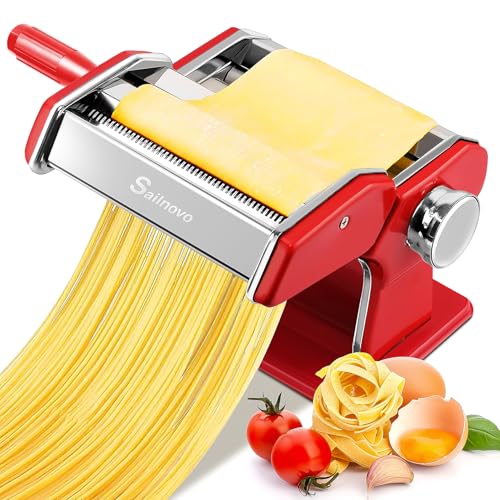
- Nine settings from 0.3 to 3 mm
- Two widths for noodles, lasagna, and dumplings
- Lightweight design with secure clamp
Best For: First-time users and families making pasta by hand
Best Manual Value
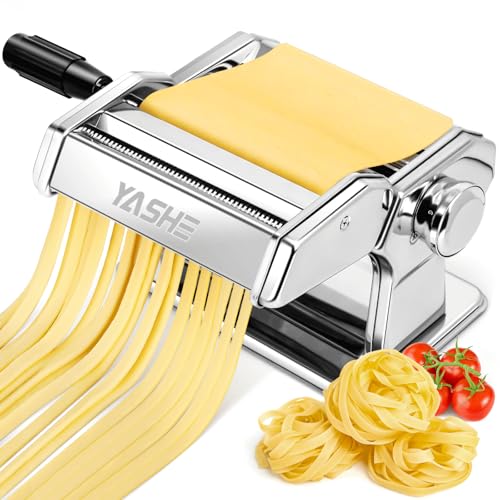
- Nine thickness settings from 0.3mm to 3mm
- 2mm and 6.5mm cutters included
- Cleaning kit and securing clamp included
Best For: Hands-on home pasta making
Best Automatic Variety

- 500g capacity for about four servings
- Eight pasta discs and four automatic modes
- Cleaning tools and dishwasher-safe parts included
Best For: Beginners and family-size batches
Best High-Output Electric

- 135W motor with stated output up to 22 lb/h
- Three noodle blade options
- Stainless steel body with automatic operation
Best For: Frequent home or small-batch noodle production
Classic Manual Pick – Marcato Atlas150
MARCATO Atlas150 Manual Pasta Maker Machine-LASAGNA, FETTUCCINE & TAGLIOLINI. Made in Italy
Check Price On AmazonFor shoppers comparing pasta machines under 300, the Marcato Atlas150 is a traditional manual option made in Italy. Its 10 settings support sheets from 0.8 to 4.8 millimeters, while the included cutters make lasagna, fettuccine, and tagliolini.
Best For: Cooks who want hands-on control and a classic chrome pasta machine.
Pros:
- Made with chrome- and nickel-plated steel.
- Offers 10 thickness settings.
- Includes three pasta-making components: the machine, crank handle, and user manual.
Cons:
- Manual operation requires continuous hand cranking.
- Its included formats are limited to lasagna, fettuccine, and tagliolini.
The Atlas150 is a straightforward choice for buyers who value adjustable thickness and durable metal construction over automation. Its compact 8-by-8-by-7-inch profile also suits kitchens with limited counter space.
Fast Automatic Choice – Philips 7000 Series Pasta Maker
Among pasta machines under 300, the Philips 7000 Series stands out for automated preparation. Its 150W motor, eight shaping discs, and large capacity are designed to produce up to eight portions, with pasta ready in under 10 minutes according to the supplied product information.
Best For: Families and hosts who want automated, high-capacity pasta making.
Pros:
- Automatic operation with 150W power and eight discs.
- Can prepare up to eight portions in one batch.
- Dishwasher-safe, non-stick parts simplify cleanup.
- HomeID app provides recipe guidance, including vegan and gluten-free options.
Cons:
- At 20 pounds, it is substantially heavier than the listed manual machines.
- Its sheet-thickness range is limited to 1–1.5 millimeters.
This Philips model is the convenience-focused option in the group. Choose it when speed, portion capacity, and reduced manual effort matter more than a broad range of sheet thicknesses.
Electric Upgrade – Marcato Atlasmotor
For shoppers seeking pasta machines under 300 with flexible operation, the Marcato Atlasmotor combines a hand crank with a Pastadrive motor. The Made-in-Italy set rolls sheets up to 150 millimeters wide and provides 10 adjustment positions for thickness control.
Best For: Home cooks who want both electric convenience and manual backup.
Pros:
- Includes the Atlas 150, hand crank, clamp, Pastadrive motor, and manual.
- Can operate manually or electrically.
- Offers 10 clear adjustment positions.
- Compatible with 11 separately available Marcato accessories.
Cons:
- Additional pasta shapes require separately available accessories.
- The set weighs 9.5 pounds, making it less portable than lighter manual models.
The Atlasmotor is a versatile middle ground: it preserves the control of a manual machine while reducing effort with its motor. Its 6-inch sheet width is suitable for standard home pasta preparation.
Budget-Friendly Versatility – Nuvantee 3-in-1 Pasta Maker
The Nuvantee is a practical contender among pasta machines under 300, pairing manual operation with seven thickness settings and two cutting widths. It rolls dough from 0.5 to 3 millimeters and supports spaghetti, fettuccine, lasagna, dumpling wrappers, and other preparations.
Best For: Beginners and budget-conscious cooks who want multiple noodle widths.
Pros:
- Uses a stainless-steel and aluminum construction.
- Provides seven thickness settings from 0.5 to 3 millimeters.
- Includes 2 mm and 6 mm cutters for different noodle widths.
- Manual design needs no electrical power.
Cons:
- Only two cutting attachments are included.
- Manual operation requires hand cranking.
With its broad thickness range and two included cutters, the Nuvantee offers useful flexibility without an automated motor. It is a sensible fit for first-time pasta makers who also want to prepare dumpling wrappers.
Best Value Versatility – Sailnovo 3-in-1 Pasta Maker
If you want one of the more adaptable pasta machines under 300, the manual Sailnovo combines a roller with two cutter widths and nine thickness settings. Its lightweight stainless steel and aluminum construction suits casual homemade pasta, dumpling skins, and lasagna without requiring an electric motor.
Best For: Beginners and families looking for an affordable manual machine with flexible thickness control.
Pros:
- Nine settings cover dough thicknesses from 0.5 to 3 mm.
- Two cutter widths support spaghetti, fettuccine-style noodles, lasagna, and more.
- Rust-resistant, lightweight construction includes a table clamp and English manual.
Cons:
- The blade attachment should not be washed in water or placed in a dishwasher.
- Manual cranking requires hands-on effort.
The Sailnovo is a practical choice when broad adjustability matters more than premium construction or motor compatibility. Its dry-cleaning requirement is worth noting, but the generous settings and simple operation make it a capable entry-level option.
Best Italian-Built Upgrade – Imperia Classic Line Pasta Maker
For shoppers comparing pasta machines under 300, the Imperia Classic Line stands out with 100% Italian manufacture and a heavy-duty chromed steel body. It makes wide dough sheets, fettuccine, and tagliolini, while its accessory compatibility leaves room to expand beyond the included manual setup.
Best For: Enthusiasts who prioritize solid construction, Italian manufacturing, and future expandability.
Pros:
- Heavy-duty chromed steel construction is designed for durable use.
- Six thickness settings range from 0.5 to 5 mm, with three included pasta shapes.
- Compatible with a Pasta Facile motor and additional ravioli-making accessories.
- Includes a crank, non-slip base, table support, storage pouch, brush, and manual.
Cons:
- Its 3.66 kg weight makes it less portable than lightweight models.
- Additional accessories and the compatible motor are separate expansions.
The Imperia is the most substantial option here for cooks who expect to make pasta regularly. Its accessory ecosystem and steel construction add long-term flexibility, while the included support and cleaning brush make the manual workflow easier to manage.
Best Beginner-Friendly Color Option – Sailnovo 3-in-1 Red Pasta Maker
This red Sailnovo is a straightforward pick among pasta machines under 300, offering nine thickness settings and two noodle widths in a compact manual design. The detachable structure, secure clamp, and food-grade materials make it approachable for first-time pasta makers and family cooking sessions.
Best For: Beginners who want easy thickness adjustment, a stable clamp, and a colorful countertop tool.
Pros:
- Nine settings adjust dough from 0.3 to 3 mm.
- Two cutter widths support noodles, lasagna, dumplings, and other dishes.
- Rust-resistant aluminum-alloy rollers are lightweight and easy to handle.
- Detachable parts and included support make cleaning and setup more manageable.
Cons:
- Cleaning should use a dry brush or cloth rather than water or a dishwasher.
- As a manual machine, it requires cranking during rolling and cutting.
The red Sailnovo offers useful control without a complicated setup. It is especially appealing if you want a beginner-friendly machine for occasional pasta projects and value easy handling over motorized operation.
Best Manual Value – YASHE 3-in-1 Pasta Maker
For shoppers comparing pasta machines under 300, the YASHE 3-in-1 is a practical manual option with adjustable thickness and two built-in cutting widths. Its stainless steel and aluminum construction, clamp, and included cleaning tools make it suited to regular countertop use without relying on electricity.
Best For: Home cooks who want hands-on control over pasta thickness, spaghetti, fettuccine, lasagna sheets, or dumpling skins.
Pros:
- Nine thickness settings range from 0.3mm to 3mm.
- Includes 2mm and 6.5mm cutters for different pasta styles.
- Food-grade stainless steel and aluminum construction with a securing clamp.
- Cleaning brush and cloth are included.
Cons:
- Manual operation requires hand-cranking.
- It does not offer the automated mixing or extrusion of electric models.
The YASHE is a strong fit if you value adjustable rolling and straightforward maintenance over push-button convenience. It is especially versatile for cooks making both pasta sheets and noodles at home.
Best Automatic Variety – VEVOR Electric Pasta Maker
Among pasta machines under 300, the VEVOR electric model stands out for quick, low-effort noodle making. Its 150W motor, 500g flour capacity, four automatic modes, and eight pasta discs are designed to help prepare a family-sized batch with minimal manual work.
Best For: Beginners and families who want automatic mixing and multiple noodle shapes from one countertop machine.
Pros:
- 500g flour capacity can make approximately four servings in about 14 minutes.
- Eight discs provide a range of pasta shapes.
- Four automatic modes simplify the process.
- Includes measuring cups, spatula, cleaning brush, and dishwasher-safe parts.
Cons:
- Accurate flour-to-water ratios are important to prevent sticking or failed extrusion.
- The 11-pound machine is less lightweight than a manual roller.
The VEVOR is a convenient choice when speed and automation matter most. Its accessories and shape selection add flexibility, but users should follow the included ratio guidance carefully for consistent results.
Best High-Output Electric – WICHEMI 3-in-1 Pasta Maker
For shoppers seeking pasta machines under 300 with higher stated output, the WICHEMI combines electric dough pressing and noodle cutting in a compact stainless steel body. Its 135W motor and three blade options support round noodles, flat noodles, and dough for dumpling or wonton skins.
Best For: Home kitchens, small food businesses, or cooks who want an electric machine with multiple noodle sizes and higher production capacity.
Pros:
- Three-in-one operation presses dough and cuts noodles automatically.
- Three cutting options produce 2.5mm round, 4mm flat, and 9mm flat noodles.
- Stainless steel body is designed for resistance to rust and aging.
- Stated efficiency reaches up to 22 pounds per hour.
Cons:
- At 17.6 pounds, it is relatively heavy to move frequently.
- It offers fewer cutting options than the VEVOR’s eight discs.
- The supplied details specify a 110V US plug, limiting compatibility in some regions.
The WICHEMI makes the most sense for users prioritizing electric operation and throughput over portability. Its three noodle styles and dough-sheet range cover common pasta and dumpling applications, while the stainless steel build suits frequent use.
How We Picked the Best Pasta Machines Under 300
We focused on machines that offer useful performance and practical value at their price. Our comparison considers pasta-making method, construction, thickness control, cutting or shaping options, motor power where applicable, batch capacity, included accessories, cleaning demands, and ease of use. We also included both established Italian-style roller machines and automatic models so shoppers can choose between hands-on control and convenience.
Because prices and bundles can change, check the current listing for included cutters, motors, dies, clamps, and warranty details before ordering.
Quick Comparison
| Machine type | Best for | Main advantage | Potential trade-off |
|---|---|---|---|
| Manual roller and cutter | Traditional pasta making | Simple, controllable, and durable | Requires hand cranking |
| Motorized roller | Frequent rolling | Frees one hand for feeding dough | Motor adds cost and storage needs |
| Automatic extruder | Fast, low-effort batches | Mixes, kneads, and shapes dough | More parts and cleanup |
| Entry-level 3-in-1 machine | Occasional use | Affordable access to basic shapes | May have lighter construction |
Key Buying Factors for Pasta Machines Under 300
Manual Versus Automatic Operation
Manual machines are usually the best choice for cooks who enjoy the process and want direct control over dough thickness. Automatic machines can mix, knead, and extrude or cut pasta with less physical work, making them attractive for families, busy cooks, and larger batches.
Roller Settings and Pasta Shapes
Look for a broad thickness range if you make lasagna, fettuccine, ravioli sheets, or delicate noodles. A standard cutter set may handle spaghetti and fettuccine, while automatic models often use interchangeable shaping discs or dies. More shapes are useful only if the parts are easy to install, store, and clean.
Construction, Stability, and Capacity
Steel rollers and a firm clamp help manual machines stay steady during use. Consider the counter space required and whether the clamp fits your worktop. For automatic models, review flour or dough capacity and serving guidance so the machine suits your typical batch size.
Cleaning and Storage
Dried dough is easier to remove than wet dough, but every machine benefits from careful cleaning after use. Check whether parts are removable, whether accessories are dishwasher-safe, and whether the unit has a convenient place to store cutters or discs. Never rinse an electric motor housing unless the manufacturer specifically permits it.
Who Should Buy Which Pasta Machines Under 300?
- Choose a classic manual Italian-style machine if you value durable construction, adjustable sheets, and traditional hands-on preparation.
- Choose a motorized roller if you like manual-style pasta but want to reduce cranking during repeated batches.
- Choose an automatic extruder if speed, portion control, and reduced kneading effort matter more than a fully traditional process.
- Choose an affordable 3-in-1 roller if you are new to homemade pasta or make it only occasionally.
For most buyers, the best option is the one that fits their regular workflow rather than the machine with the largest shape count. Prioritize stability, useful thickness settings, manageable cleanup, and dependable accessories over features you are unlikely to use.