Consistent salt levels matter when you make soup, brine, pickles, fermented foods, or other recipes where flavor and preservation depend on concentration. A salinity meter can provide a faster, more repeatable check than estimating by taste or relying only on measured ingredients.
These 10 options range from compact food testers to multifunction conductivity meters with temperature readings, data logging, and broader measurement ranges. Use the guide below to match features, accuracy, and operating style to your kitchen needs.
Best 10 Salinity Meters for Home Kitchens Picks for 2026
Best Multi-Use Pick
GIDIGI Digital Food Salinity Meter
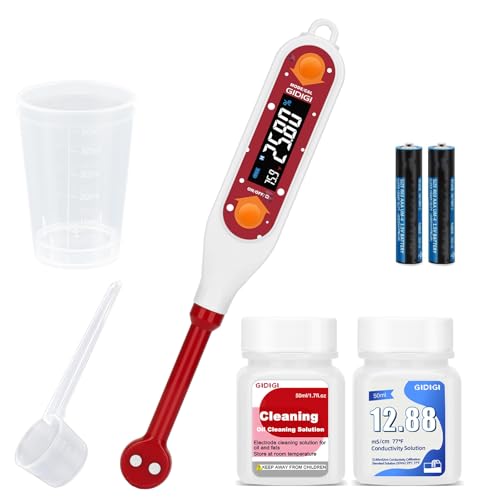
- 0.01%-26.00% salinity range
- Also measures EC, TDS, temperature, and specific gravity
- Includes calibration and cleaning supplies
Best For: Versatile home kitchens, fermentation, and marine-water testing
Best for Water Monitoring
LaMotte Tracer PockeTester 1749

- Measures salt, TDS, temperature, and conductivity
- Stores up to 25 test results
- Designed for portable water-quality testing
Best For: Pool maintenance and on-site water monitoring
Best Simple Kitchen Pen
XROLAND Electronic Food Salinity Tester

- Compact pen-style design
- Temperature compensation for food testing
- LED levels for soups, sauces, and stews
Best For: Everyday cooking and quick liquid-food checks
Best Durable Pick
LOHAND LH-SA10 Digital Salinity Meter

- 0-10%/100ppt range for brines and pickles
- Platinum-plated, corrosion-resistant electrode
- Vibration and value lock for quick readings
Best For: Frequent brine, pickle, soup, and sauce testing
Versatile Kitchen Salt Testing
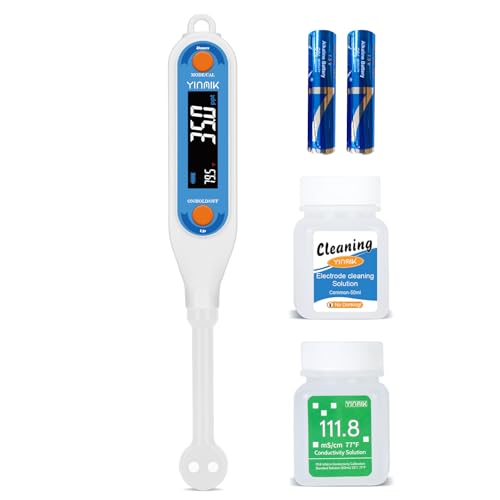
- Three salinity modes: PPT, %, and SG
- Includes thermometer, ATC, and backlit display
- Comes with calibration and cleaning supplies
Best For: Home cooks wanting a portable, multipurpose salt meter
Data-Logging Water Analysis

- Measures conductivity, TDS, and salt levels
- Provides automatic temperature compensation
- Supports real-time data logging with optional SD card
Best For: Water testing where recorded readings and multiple measurements matter
Fast Food Salinity Readings

- 0–10% salt range with fast three-second readings
- Shows salt percentage, sodium, and temperature
- Hot-liquid probe with IP66 splash-proof housing
Best For: Home cooks checking soups, brines, and other hot foods
Compact Kitchen Pick

- LED indicators show concentration and power
- ABS shell with copper testing top
- Lightweight design for liquid and food testing
Best For: Portable salt checks in soups, saltwater, and other liquids
Versatile Cooking Tool

- Digital LED readings for salt concentration
- Designed for brines, soups, pickles, and ferments
- Compact handheld format
Best For: Home cooks working with varied salty foods and liquids
Precision-Style Pick

- Conductivity-based liquid-food testing
- Seven LEDs show concentration and power
- Compact pen-style portable design
Best For: Liquid-food testing with visual LED level feedback
Best Multi-Use Pick – GIDIGI Digital Food Salinity Meter
For shoppers comparing salinity meters for home kitchens, the GIDIGI stands out as a versatile option for brines, sauces, soups, and fermented foods. It measures salinity from 0.01% to 26.00% and includes automatic temperature compensation, making it useful for both everyday cooking and broader water-quality tasks.
Best For: Home cooks who want one meter for food salinity, fermentation, TDS, EC, temperature, and marine-water testing.
Pros:
- Wide 0.01%-26.00% salinity range for low- and high-salt recipes.
- Measures salinity, EC, TDS, temperature, and seawater specific gravity.
- Backlit display, lock-on readings, calibration solution, cleaning solution, and measuring cup are included.
- Lightweight 85g design provides quick readings in under 30 seconds.
Cons:
- Hot liquids must be below 176°F, and oily soup surfaces should be skimmed before testing.
- The extensive feature set may be more than needed for cooks seeking only a basic salt check.
Its broad measurement range and included accessories make this a particularly adaptable choice for kitchens that prepare fermented foods or brine regularly. It is also a practical pick for users who want testing capabilities beyond cooking.
Best for Water Monitoring – LaMotte Tracer PockeTester 1749
LaMotte Tracer PockeTester, 1749, Salt, TDS, Temperature, Conductivity | Salt/TDS/Conductivity/Temp
Check Price On AmazonThe LaMotte Tracer PockeTester is a compact option among salinity meters for home kitchens, although its supplied specifications emphasize pool and water-quality testing rather than food preparation. It combines salt, TDS, temperature, and conductivity measurements in one digital tester.
Best For: Users who need portable salt and water-chemistry checks, especially for pool maintenance and on-site monitoring.
Pros:
- Combines salt, TDS, temperature, and conductivity testing.
- Provides immediate digital readings after dipping the probe into a water sample.
- Stores up to 25 test results for tracking changes over time.
- Portable PockeTester format supports on-site testing.
Cons:
- The supplied notes focus on pool water and do not specify a food-salinity measurement range.
- At 2 pounds, it is heavier than the compact kitchen pen-style meters in this roundup.
This is best viewed as a water-quality instrument that can complement a kitchen setup, rather than a dedicated food-seasoning tester. Its memory function is useful when repeated measurements need to be compared.
Best Simple Kitchen Pen – XROLAND Electronic Food Salinity Tester
For straightforward kitchen use, the XROLAND electronic tester is a small pen-style option among salinity meters for home kitchens. It is designed to check salt concentration in soups, stews, sauces, and other foods, with temperature compensation and LED indicators for different salt levels.
Best For: Cooks who want a compact, easy-to-operate tool for checking salt concentration in everyday liquid foods.
Pros:
- Compact 155 x 29 x 14mm design is easy to store and carry.
- Designed for soups, stews, sauces, and other food liquids.
- Temperature compensation supports more consistent readings.
- LED indicators show different levels of salt concentration.
Cons:
- The supplied notes do not provide a numerical salinity measurement range.
- Only one food salinity tester is listed in the package.
This model focuses on simplicity rather than a long list of extra measurements. It may suit cooks who want a small dedicated tester for liquid dishes and prefer level-indicator feedback over a feature-heavy instrument.
Best Durable Pick – LOHAND LH-SA10 Digital Salinity Meter
The LOHAND LH-SA10 is a focused choice for shoppers seeking salinity meters for home kitchens that can handle brine, pickles, soups, sauces, and seafood solutions. Its 0-10%/100ppt range, platinum-plated electrode, and value-locking vibration are geared toward quick, repeatable kitchen measurements.
Best For: Food makers who frequently test brines, pickles, and other relatively salty liquids and want a durable, easy-to-clean meter.
Pros:
- Measures salinity from 0-10%/100ppt for common brining and pickling tasks.
- Platinum-plated electrode resists corrosion and helps minimize impurity buildup.
- Vibration and value lock make the result easier to notice and read.
- Includes two AAA batteries, cleaning cloth, cover opener, manual, and protective cover.
Cons:
- The 10% range is narrower than meters designed for salinity up to 26%.
- Its supplied features focus on salinity rather than multiple water-quality measurements.
The LH-SA10 is a practical specialist for routine food testing, especially when corrosion resistance and straightforward maintenance matter. Choose it over a wider-range model when your recipes generally stay within its 0-10% measurement range.
Versatile Kitchen Salt Testing – YINMIK Food Salt Meter
For shoppers comparing salinity meters for home kitchens, the YINMIK Food Salt Meter is a versatile option for checking food, fermented samples, and saltwater. It offers three reading modes, a backlit display, and temperature compensation for more consistent measurements when sample temperatures vary.
Best For: Home cooks who want food salinity readings plus thermometer functionality and included calibration supplies.
Pros:
- Measures salinity in PPT, percentage, and specific gravity modes.
- Also functions as a food thermometer and includes automatic temperature compensation.
- Includes batteries, calibration solution, cleaning solution, and a sample spoon.
- Pocket-sized design with a backlit color display and hanging strap.
Cons:
- Its listed uses focus on indoor food and saltwater testing rather than broad laboratory applications.
- Cleaning and calibration supplies require ongoing probe maintenance.
The YINMIK stands out when you want one portable tool for salt checks, temperature readings, and routine upkeep. Its multiple modes may be more than needed for cooks seeking only a simple food percentage reading.
Data-Logging Water Analysis – REED R3100SD Salinity Meter
Among salinity meters for home kitchens, the REED Instruments R3100SD is geared toward water-focused testing rather than direct food seasoning. It measures conductivity, total dissolved solids, and salt levels, while automatic temperature compensation and data logging support repeatable monitoring.
Best For: Users who need conductivity, TDS, and salinity measurements in water with the option to record results.
Pros:
- Measures conductivity, total dissolved solids, and salt levels.
- Automatic temperature compensation helps account for changing water temperatures.
- Real-time data logging supports recorded measurements with an optional SD memory card.
- Includes a probe, hard carrying case, batteries, and a backlit LCD.
Cons:
- It is described for measuring salt levels in water, so it may be less suitable for checking soups or solid foods.
- The SD memory card is optional rather than included.
The R3100SD is the strongest fit here for measurement flexibility and record keeping. For ordinary kitchen seasoning, its water-analysis features may be more specialized than necessary.
Fast Food Salinity Readings – Digital 0–10% Salt Tester
Designed specifically for salinity meters for home kitchens, this digital tester targets everyday foods such as soups, brines, pasta, and stews. Its 0–10% salt range, 0.01% resolution at lower concentrations, three-second response, and simple one-key workflow make it straightforward for routine cooking.
Best For: Home cooks who want quick salt and sodium readings directly from hot kitchen liquids.
Pros:
- Measures 0–10% salt and temperatures up to 99 °C.
- Displays salt percentage and sodium ions with automatic conversion.
- Provides a three-second reading with audio and LED completion alerts.
- Food-grade 304 stainless probe, IP66 body, large display, and fold-out hook suit busy kitchens.
Cons:
- The stated accuracy varies across concentration ranges, with wider tolerances at higher salt levels.
- It is designed for indoor food use rather than general-purpose water conductivity testing.
This tester is the most kitchen-specific choice of the three, combining fast operation with readable salt and temperature information. Its focused food range is an advantage for cooking but less suitable for users seeking broader salinity instrumentation.
Compact Kitchen Pick – Handheld LED Salinity Meter
If you want a straightforward option among salinity meters for home kitchens, this handheld tester combines a compact design with an LED readout. Its copper testing top and ABS shell are suited to checking salt concentration in liquid foods and other solutions.
Best For: Home cooks who want a portable tester for soups, saltwater, and other liquid or food salinity checks.
Pros:
- LED panel uses red for salt concentration and green for power.
- Compact and lightweight at about 2.11 ounces.
- ABS housing and copper testing top are designed for durability.
- Notes highlight responsive measurement, stability, and easy operation.
Cons:
- The supplied information does not specify a numerical measurement range.
- It is intended for salinity testing rather than broader kitchen measurements.
Its simple indicator-light setup makes this a practical choice when you value portability and quick, easy-to-read feedback over a feature-heavy display.
Versatile Cooking Tool – Digital Food Salt Tester
For cooks comparing salinity meters for home kitchens, the Cabilock electronic tester is designed around digital readings for brines, soups, pickles, and fermented foods. Its handheld form and LED display support quick checks while seasoning or processing food.
Best For: Home cooks and food makers who need a compact digital tester for brine, broth, pickles, and fermented products.
Pros:
- Designed to measure salt concentration in brines, soups, pickles, and fermented foods.
- LED display presents readings for simpler salt-level adjustments.
- Portable dimensions of approximately 8.07 x 1.38 x 0.71 inches.
- Suitable for home kitchens, restaurants, and food-processing use.
Cons:
- The supplied notes do not list the measurement range or calibration process.
- Its stated applications focus on high-salt foods and liquid preparations.
This is a flexible pick if your kitchen projects extend beyond soup to pickling and fermentation, though shoppers wanting detailed technical specifications may need to verify them before buying.
Precision-Style Pick – Professional LED Salinometer
This professional-style option stands out among salinity meters for home kitchens with a conductivity-based testing method and seven LED indicators. It is designed for liquid foods and uses a probe positioned about 2 cm above the liquid surface, making technique important during use.
Best For: Home cooks who want a compact salinity tester with multiple LED indicators for liquid-food testing.
Pros:
- Uses a conductivity test method to determine salt concentration in liquid food.
- Seven LED indicators help show salt concentration and power status.
- Compact pen-style design weighs about 2.4 ounces.
- Notes describe the meter as portable and precision made.
Cons:
- The probe must be placed approximately 2 cm above the liquid surface for the stated method.
- The supplied details do not provide a numerical accuracy range or calibration instructions.
With its conductivity approach and expanded LED indicator array, this meter may appeal to buyers who prefer visual level feedback and are comfortable following a specific testing position.
How We Picked These Salinity Meters for Home Kitchens
We focused on meters designed to measure salt concentration or salinity in liquid foods, brines, soups, pickling solutions, and similar kitchen applications. The selection includes simple handheld testers as well as advanced instruments that also measure conductivity, TDS, temperature, or stored readings.
Important considerations included stated measurement range, display readability, probe design, resolution, portability, cleaning requirements, and the availability of calibration or temperature-compensation features. Because product specifications can vary, verify the manufacturer’s instructions and intended sample type before purchase.
Quick Comparison
- For straightforward kitchen checks: Choose a compact digital food salinity tester with a dedicated salt-concentration mode.
- For brines and frequent testing: Look for a wider range, a durable probe, quick readings, and simple calibration.
- For temperature-sensitive samples: A model with an integrated thermometer or automatic temperature compensation can improve consistency.
- For technical or batch-recording work: A conductivity/TDS/salinity meter with data logging offers more flexibility than a basic food tester.
Key Buying Factors for Salinity Meters for Home Kitchens
Measurement Range and Resolution
Match the range to your recipes. Many kitchen-focused meters cover low salt percentages suitable for soups, sauces, and brines, while instruments using parts per thousand or conductivity scales may require more interpretation. Resolution indicates how finely the display changes, but it does not automatically guarantee laboratory-level accuracy.
Probe Material and Cleaning
Stainless-steel or platinum-style electrodes are common. The probe should be easy to rinse without trapping food residue. Clean it between samples, avoid abrasive tools, and follow the maker’s guidance for storage and calibration. A waterproof or sealed body is useful around sinks and cooking areas.
Calibration and Temperature Handling
Regular calibration helps maintain reliable results, especially when measuring different liquids. Check whether calibration solutions are included or must be purchased separately. Temperature can affect conductivity-based readings, so automatic compensation or a built-in temperature sensor is valuable when samples vary in temperature.
Usability and Readout
A clear LED or LCD, fast stabilization, automatic shutoff, and a compact design make routine testing easier. If you work with hot liquids, confirm the permitted temperature range and take appropriate precautions rather than placing the meter directly into boiling food.
Who Should Buy Which Salinity Meters for Home Kitchens?
Occasional home cooks should favor a simple, portable meter with a direct percentage display and minimal setup. Pickle makers and fermentation hobbyists may benefit from better resolution, a washable probe, temperature measurement, and repeatable calibration. Serious home producers or small-batch makers should consider a more advanced conductivity or data-logging model if they need records, multiple measurement modes, or broader sample compatibility.
Whichever model you choose, use it as a consistency tool rather than the sole safety check. Follow a tested recipe, measure representative samples after they are mixed, and clean and calibrate the instrument according to its instructions.