Choosing the right meter can make food storage, fermentation, dehydration, and pantry testing more consistent. The products in this roundup cover focused tools for pH and water activity, along with broader TDS, nitrate, radiation, and temperature testers.
Use the guide below to match the meter’s measurement range, accuracy, maintenance needs, and intended food application to your routine.
Best 10 Water Quality Meters for Food Storage Picks for 2026
Portable Aw Testing
Compact Food Water Activity Meter

- Measures 0–1.0 aw for a range of foods
- Lightweight design with case and sample plate
- Backlit aw and temperature display
Best For: Portable food water activity checks
Multiparameter Water Monitoring

- Measures seven water-quality parameters
- Automatic temperature compensation and ranging
- Rated for over 100 hours or 5,000 tests
Best For: Process water and laboratory monitoring
Food Safety pH Testing
Bluetooth Fermentation and Canning Meter
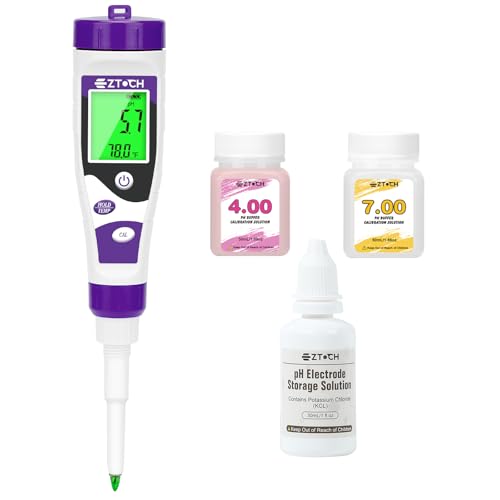
- Supports canning and fermentation pH checks
- Stores up to 1,000 readings via app
- Includes calibration and probe-storage solutions
Best For: Canning, sourdough, and fermentation monitoring
Connected Aw Monitoring
GY1 Smart Food Water Activity Meter
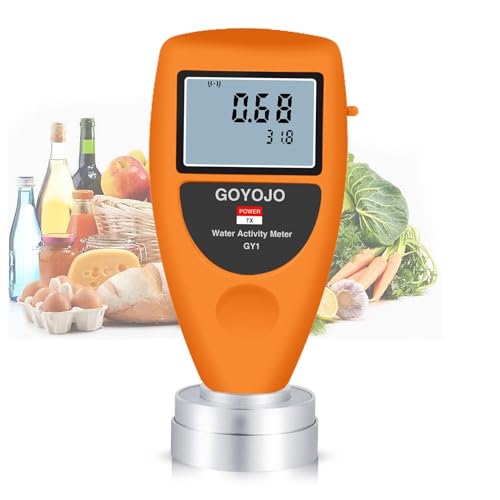
- Measures 0–1.0 aw with ±0.02 aw accuracy
- Tracks equilibrium during 15–30 minute tests
- Transfers data by USB or Bluetooth
Best For: Connected aw testing and data-sharing workflows
Fermentation pH Pick

- 0–14 pH range for fermented foods
- Includes 4.00 and 7.00 calibration solutions
- Conical electrode suits dough and semi-solid foods
Best For: Fermentation and sourdough acidity checks
Moisture-Control Pick

- Measures water activity and temperature together
- Stated ±0.03aw precision with five-minute testing
- Compact design includes case and sample plates
Best For: Shelf-life and storage moisture control
Multi-Check Pick

- Screens nitrate levels in several food categories
- Tests water TDS and hardness
- Adds radiation detection in one handheld device
Best For: Broad household food and water screening
Most Readable 4-in-1 Pick
MEXYBE TDS, EC & Temperature Meter

- Measures TDS, EC, and temperature
- Large backlit LCD with hold and auto-lock
- Includes a TDS reference chart
Best For: Easy household, RO/DI, aquarium, and hydroponic water checks
Most Comprehensive Food-Safety Tool
ECO6 Nitrate, TDS & Radiation Tester

- Checks nitrates in food in about three seconds
- Adds TDS water and radiation measurements
- Portable design with included battery
Best For: Households wanting food, water, and radiation screening in one device
Best Basic Water Meter
Digital TDS, EC & Temperature Tester
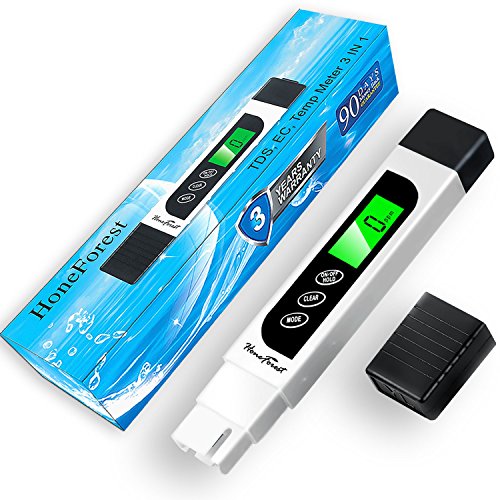
- Measures TDS up to 9,990 ppm
- Includes EC and dual-scale temperature readings
- Compact body with auto-lock and auto-off
Best For: Routine drinking-water, filter, aquarium, and hydroponic checks
Portable Aw Testing – Compact Food Water Activity Meter
For shoppers comparing water quality meters for food storage, this portable water activity meter focuses on free-water measurement rather than pH or general water chemistry. It covers a 0–1.0 aw range and is designed for foods such as baked goods, dried fruit, meat, and preserved foods.
Best For: Home or small-scale food testing where a compact, battery-powered aw meter is useful.
Pros:
- Measures water activity across a 0–1.0 aw range.
- Portable 100 g design with a carrying case and sample plate.
- Backlit LCD displays aw and temperature readings.
- Includes a reading-correction function.
Cons:
- Sampling typically takes about five minutes.
- Specified accuracy is ±0.02 aw with ±0.01 aw resolution.
- Batteries are required but not included.
This is a straightforward choice when your storage decisions depend on water activity and microbial-growth potential. Its lightweight format is convenient, though the waiting period and stated accuracy may be limiting for demanding laboratory work.
Multiparameter Water Monitoring – Myron L Ultrameter II 6PIIFCE
Among water quality meters for food storage, the Myron L Ultrameter II is the broadest water-monitoring option here. It combines seven parameters in one handheld device, making it better suited to checking process or utility water than directly measuring food moisture or water activity.
Best For: Food-processing, water-treatment, laboratory, and field users who need several water chemistry readings from one meter.
Pros:
- Measures pH, ORP, conductivity, TDS, resistivity, FCE, and temperature.
- Uses four-electrode conductivity technology and microprocessor-controlled performance.
- Offers automatic temperature compensation and automatic range selection.
- Battery life is rated for more than 100 hours or 5,000 tests.
Cons:
- It does not directly measure food water activity.
- Its multiparameter design may be more equipment than basic storage checks require.
- At 1.43 pounds, it is less lightweight than compact food-specific meters.
This is the strongest fit when water quality monitoring involves multiple chemical parameters, such as in processing or sanitation workflows. Choose a dedicated aw or food pH meter instead if your primary concern is the food itself.
Food Safety pH Testing – Bluetooth Fermentation and Canning Meter
For water quality meters for food storage shoppers who need acidity data, this digital food pH meter is aimed at canning, fermentation, brewing, and baking. It can help compare foods with the 4.6 pH canning threshold and record readings through Bluetooth and the YINMIK app.
Best For: Home food processors, bakers, and fermenters who want pH testing with stored measurement history.
Pros:
- Designed for foods including sauces, fruits, vegetables, meat, sourdough, and fermented products.
- Bluetooth connectivity supports app-based data storage and review.
- Automatically stores up to 1,000 readings.
- Includes pH 4.00 and 7.00 calibration solutions plus probe storage solution.
Cons:
- Measures pH, not water activity or moisture content.
- Probe care and regular calibration are required for reliable use.
- The supplied notes do not specify measurement accuracy or range.
This meter is a practical match for acidity-focused food safety decisions and fermentation tracking. It complements, rather than replaces, an aw meter when shelf stability depends on free water.
Connected Aw Monitoring – GY1 Smart Food Water Activity Meter
This GY1 is a connected option among water quality meters for food storage, measuring water activity in foods such as jerky, dried fruit, grains, and vegetables. Its smart equilibrium algorithm, display, and USB or Bluetooth output are useful when readings need to be monitored and shared.
Best For: Food, agricultural, and research users who want portable aw testing with digital data transfer.
Pros:
- Measures 0–1.0 aw with stated ±0.02 aw accuracy.
- Displays aw and sample temperature on a backlit LCD.
- Monitors equilibrium in real time and typically produces results within 15–30 minutes.
- Supports USB PC communication and Bluetooth data transfer.
Cons:
- Testing can take longer than the five-minute procedure listed for some simpler meters.
- The notes do not specify the exact battery type or battery life.
- Its 2.16-pound listed weight is less travel-friendly than an ultra-light handheld meter.
The GY1 stands out when traceability and data sharing matter as much as the aw reading. It is a capable choice for repeated product checks, provided the longer equilibrium time fits your workflow.
Fermentation pH Pick – YINMIK Food pH Tester
For shoppers comparing water quality meters for food storage, this YINMIK model is a focused pH tester for checking acidity in fermented foods and dough. Its 0–14 pH range, automatic calibration, ATC, and included calibration solutions make routine measurements easier.
Best For: Home fermenters, sourdough bakers, and cooks testing sauces, jams, cheese, or other acidic foods.
Pros:
- Includes 4.00 and 7.00 pH calibration solutions.
- 0–14 pH range with automatic calibration and ATC.
- Conical-tip electrode is designed for semi-solid foods such as dough.
- Protective cap includes a KCL-moistened sponge to help keep the probe moist.
Cons:
- Measures pH rather than water activity, TDS, hardness, or radiation.
- Requires regular calibration for accurate readings.
- Uses three LR44 batteries.
This is the most specialized option here for acidity-based food checks. Choose it when fermentation safety and sourdough monitoring matter more than broad water or moisture analysis.
Moisture-Control Pick – Portable Water Activity Meter
Among water quality meters for food storage, this portable water activity meter is aimed at measuring free moisture rather than pH or dissolved solids. It reports water activity and temperature together, with stated ±0.03aw precision and results in about five minutes.
Best For: Food producers, inspectors, and users optimizing packaging, shelf life, and storage conditions for dry goods, produce, or other products.
Pros:
- Measures water activity and temperature simultaneously.
- Produces stated results in approximately five minutes.
- Compact 100 g design is suitable for field or production-line use.
- Includes a carrying case and three sample plates.
Cons:
- Designed for water activity, not pH, TDS, hardness, or nitrate testing.
- Results take longer than the three-second readings claimed for some testers.
- Battery operation requires attention to the undervoltage warning.
This is the strongest match for storage decisions based on free moisture. Its dual readings can help users connect water activity with temperature when evaluating food stability and packaging needs.
Multi-Check Pick – Greennovo ECO 5F Food Tester
For broad screening alongside water quality meters for food storage, the Greennovo ECO 5F combines several measurements in one handheld unit. It is designed to check nitrate levels in produce, meat, and fish, test water TDS and hardness, and detect radiation.
Best For: Households and food shoppers wanting a single portable screening device for produce, animal products, drinking water, and radiation readings.
Pros:
- Tests nitrate levels in fruits, vegetables, fish, and meat.
- Measures water TDS and hardness.
- Includes a radiation detector and Geiger-counter function.
- Claims rapid readings in about three seconds for nitrate and TDS tests.
Cons:
- It is a screening tool, not a replacement for laboratory analysis or regulatory testing.
- Does not measure pH or water activity.
- Its many functions may be unnecessary if you only need one specific measurement.
This is the most versatile choice of the three, especially for users who want quick checks across food and water. Pick it for breadth; choose the YINMIK or water activity meter when a more specialized measurement is the priority.
Most Readable 4-in-1 Pick – MEXYBE TDS, EC & Temperature Meter
For shoppers comparing water quality meters for food storage and household water checks, the MEXYBE offers a straightforward way to monitor dissolved solids, conductivity, and temperature. Its larger backlit display, hold function, and included TDS chart make routine readings easier to interpret.
Best For: Users who want one easy-to-read meter for drinking water, RO/DI systems, aquariums, hydroponics, and other water sources.
Pros:
- Measures TDS, EC, and temperature in both Celsius and Fahrenheit.
- Features a 25% larger backlit LCD, auto-lock, hold function, and two-minute auto-off.
- Uses a titanium alloy probe and high-precision chip for dependable readings, according to the product notes.
- Includes a convenient TDS reference chart on the tester and in the guide.
Cons:
- It measures water properties rather than directly testing nitrate levels or food contamination.
- The supplied notes do not specify included calibration solution or a stated measurement accuracy.
This is a practical, user-friendly choice when readability and versatility matter. For food-storage routines, use it as a water-monitoring tool rather than a complete food-safety detector.
Most Comprehensive Food-Safety Tool – ECO6 Nitrate, TDS & Radiation Tester
Among water quality meters for food storage, the ECO6 stands out by extending beyond water readings to nitrate testing in food and radiation monitoring. Its portable design is aimed at quick checks of produce, meat, fish, drinking water, and surrounding environments.
Best For: Health-conscious households seeking a multipurpose tester for food nitrate checks, basic TDS readings, and radiation monitoring.
Pros:
- Tests nitrate content in fruit, vegetables, meat, and fish in about three seconds, with stated 90% accuracy.
- Also measures TDS for drinking water, pools, plants, aquariums, and well water.
- Includes a real-time radiation detector with readings shown on the screen.
- Pocket-sized design weighs 8.4 ounces and includes a lithium-polymer battery.
Cons:
- The product notes do not describe the TDS measurement range or temperature measurement.
- Its broad feature set may be more than needed for shoppers seeking only a basic water meter.
The ECO6 is the strongest fit when food testing is as important as water testing. Its nitrate and radiation functions add versatility, while the TDS feature covers everyday water checks.
Best Basic Water Meter – Digital TDS, EC & Temperature Tester
For straightforward water quality meters for food storage routines, this compact digital tester focuses on the core measurements most households need: TDS, EC, and temperature. It is designed for quick readings from drinking water, RO/DI systems, aquariums, pools, spas, and hydroponic setups.
Best For: Buyers who want an inexpensive, compact meter for routine water-quality comparisons and filter monitoring.
Pros:
- Measures TDS up to 9,990 ppm, EC, and temperature in Fahrenheit or Celsius.
- Uses a titanium alloy probe and intelligent chip for stable, accurate readings, according to the notes.
- Auto-locks stabilized readings and shuts off after two minutes without operation.
- Includes a portable leather bag, instruction sheet, and color box.
Cons:
- It does not directly test food nitrate levels or radiation.
- The plastic body and compact display may offer fewer convenience features than the newer four-in-one model.
This meter is a sensible choice for simple, repeatable water checks without extra food-safety functions. It can help monitor dissolved solids and filter performance, but it should not be treated as a comprehensive food-storage safety test.
How We Picked the Best Water Quality Meters for Food Storage
We organized these products by the measurements they are designed to provide rather than treating every tester as interchangeable. Food pH meters are useful for fermentation, canning, sauces, and other applications where acidity matters. Water activity meters measure available moisture, which is more relevant than total moisture when evaluating dried foods, jerky, grains, and storage stability. TDS meters measure dissolved solids in water, while nitrate, radiation, and multiparameter devices target broader screening tasks.
We also considered stated measurement ranges, portability, display information, calibration or storage requirements, speed, and whether a device is specialized or multifunctional. Check the manufacturer’s specifications before relying on any meter for regulated food-safety decisions.
Quick Comparison
| Meter Type | Best For | What It Measures |
|---|---|---|
| Water activity meter | Dried and shelf-stable foods | Available water activity and often temperature |
| Food pH meter | Fermentation and acidity checks | pH |
| TDS meter | Water and dissolved-solids screening | TDS, EC, and temperature |
| Nitrate or multiparameter tester | Broader household screening | Depending on model, nitrate, TDS, hardness, radiation, or other readings |
| Professional multiparameter meter | Frequent, varied testing | Several water-quality parameters in one instrument |
Key Buying Factors for Water Quality Meters for Food Storage
Choose the Measurement That Matches the Risk
A TDS meter cannot replace a pH meter, and neither directly measures water activity. For dehydrated foods, water activity is usually the most relevant choice. For acidified foods and fermentation, select a food-capable pH tester. Choose nitrate or radiation functions only when those specific screening features are useful to you.
Check Accuracy, Range, and Calibration
Look for a range suited to your ingredients and a clearly stated accuracy specification. pH meters generally require calibration solutions and proper probe storage. Water activity instruments may need controlled sampling and clean measurement chambers. Follow the included procedure, because contamination, temperature, and sample preparation can affect results.
Prioritize Repeatability and Maintenance
A fast reading is helpful, but consistent readings matter more. Consider automatic temperature compensation, calibration reminders, replaceable probes, protective cases, and cleaning requirements. A simple dedicated meter may be easier to maintain than a multifunction device with features you rarely use.
Who Should Buy Which Water Quality Meters for Food Storage?
- Home fermenters and canners: Choose a dedicated food pH meter with calibration and storage accessories.
- Jerky, dried-fruit, and dehydrated-food makers: Choose a water activity meter designed for solid or semi-solid samples.
- Households checking drinking or process water: A TDS/EC/temperature meter is a practical starting point, but it does not certify safety.
- Gardeners and produce testers: Consider a nitrate-focused or broader food-screening device if its supported tests match your needs.
- Frequent or professional users: A calibrated multiparameter meter can reduce the need to carry several instruments, provided its specifications meet your testing requirements.
For critical preservation decisions, use validated procedures and appropriate laboratory testing alongside any consumer meter.