The best electric fruit presses make it easier to turn fresh oranges, apples, grapes, and other produce into juice with less hand work and mess. This roundup includes compact citrus machines, cold-press juicers, electric crushers, and larger fruit-processing equipment.
Whether you want quick breakfast juice or enough capacity for homemade cider and wine, compare motor power, pressing method, capacity, cleanup, and the type of fruit each machine handles best.
Best 10 Electric Fruit Presses Picks for 2026
High-Capacity Crusher
VEVOR 550W Electric Fruit Crusher

- Processes up to 132.3 lb per hour
- Crushes whole apples up to 2.76 inches
- SUS304 steel body with detachable parts
Best For: High-volume cider and fruit-mash preparation
Everyday Cold-Press Juicer
Ninja NeverClog JC151 Cold Press Juicer

- 150W auger handles fruits and leafy greens
- Two filters control pulp texture
- Dishwasher-safe juice-contact parts
Best For: Small-batch countertop juicing
Large-Feed Crusher
Stainless Steel Electric Fruit Crusher

- Rated for 44 lb per hour
- Wide 13.78-by-12.2-inch feeding opening
- Forward and reverse motor controls
Best For: Batch cider preparation with fewer reloads
Compact Citrus Option
BLACK+DECKER 32oz Citrus Juicer

- Auto-reversing cones extract citrus juice
- Adjustable pulp control
- Clear 32-ounce container with measurements
Best For: Quick countertop orange and citrus juicing
Heavy-Duty Batch Press
VEVOR 30L Hydraulic Fruit Press

- 30-liter capacity for larger batches
- 3-ton jack-style pressing force
- Removable bucket for easier cleaning
Best For: Large-batch juice, cider, wine, and orchard use
Hands-Free Citrus Pick

- Automatic enclosed juicing in about 10 seconds
- Fits limes through 4.5-inch grapefruit
- Dishwasher-safe parts and two pulp filters
Best For: Fast, low-mess everyday citrus juicing
Maximum-Pressure Option
Mosakar 40L Hydraulic Fruit Press

- 40-liter capacity for high-volume pressing
- 5-ton hydraulic jack for strong extraction
- 304 stainless-steel juice-contact components
Best For: Large harvests, cider, wine, and orchard pressing
Best with Extra Features

- 40-watt auto-reversing motor
- 24-ounce home-batch capacity
- Compact, BPA-free, easy-clean design
Best For: Small-batch citrus juicing in compact kitchens
High-Volume Manual Press
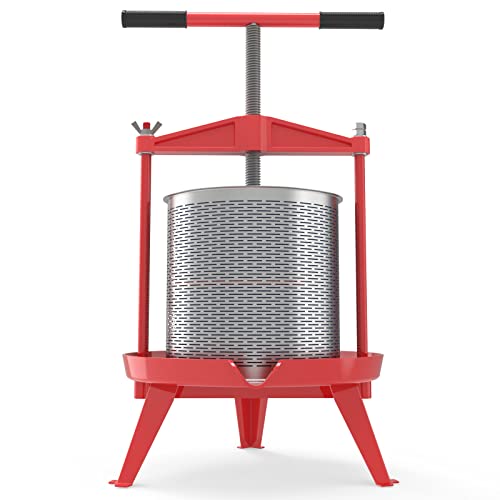
- 14-liter stainless steel basket
- Heavy-duty T-handle and Acme screw
- Suitable for fruit, herbs, nut milks, and honey
Best For: Large home-brewing and harvest-season batches
Power Citrus Squeezer
Eurolux Premium Electric Orange Juicer

- 120-watt quiet motor
- One-touch soft-grip operation
- Filtered juice and dishwasher-safe parts
Best For: Frequent, effortless orange and lemon juicing
High-Capacity Crusher – VEVOR 550W Electric Fruit Crusher
For shoppers comparing electric fruit presses, the VEVOR 550W is a powerful crushing machine designed to prepare fruit mash before pressing. It handles whole apples up to 2.76 inches and processes up to 132.3 pounds per hour, making it a practical choice for cider making and larger batches.
Best For: Home cider makers and small farms that need high-volume fruit crushing.
Pros:
- Processes up to 132.3 pounds per hour with a 4.4-pound batch capacity.
- Accepts whole fruits under 70mm without pre-cutting.
- Food-grade SUS304 stainless steel construction and detachable parts simplify cleaning.
- Works with apples, pears, pineapples, potatoes, carrots, and other produce.
Cons:
- Stone fruits must be pitted before crushing.
- At 26.7 pounds, it is less convenient to move than a compact countertop juicer.
This model is a fruit crusher rather than a complete juice extractor, so it is best paired with a separate press. Its strong motor, broad produce compatibility, and high stated throughput make it the most suitable option here for preparing substantial quantities of mash.
Everyday Cold-Press Juicer – Ninja NeverClog JC151 Cold Press Juicer
Among electric fruit presses, the Ninja NeverClog is a countertop cold-press juicer for people who want ready-to-drink juice rather than fruit mash. Its low-speed auger, reverse function, and two pulp filters are designed to handle fruits and vegetables with control over texture.
Best For: Small kitchens and everyday users making cold-pressed fruit, vegetable, or green juice.
Pros:
- High-torque 150-watt motor handles apples, carrots, celery, and leafy greens.
- Two interchangeable filters provide less-pulp or lots-of-pulp results.
- Reverse function helps reduce jams, while the anti-drip lever limits spills.
- Juice-contact parts are dishwasher safe for easier cleanup.
Cons:
- The 24-ounce juice jug is intended for relatively small batches.
- It is designed for juicing, not high-volume fruit crushing before a traditional press.
The JC151 is the better fit for routine kitchen juicing and convenient cleanup. Its compact footprint and pulp-control options add flexibility, though users processing large harvests may need a higher-capacity crusher or press setup.
Large-Feed Crusher – Stainless Steel Electric Fruit Crusher
This stainless steel machine offers a straightforward option for electric fruit presses that require a separate crushing stage. Its 60W pure copper motor, reverse-direction switch, and wide 13.78-by-12.2-inch feeding opening are suited to preparing larger loads of fruit for cider pressing.
Best For: Users who want a wide-feed crusher for batch-oriented cider preparation.
Pros:
- Stated production capacity reaches 44 pounds per hour.
- Large feeding opening and 1.06-gallon capacity reduce repeated loading.
- Stainless steel construction is described as wear-, corrosion-, and rust-resistant.
- Forward and reverse controls can help fully process ingredients and address jams.
Cons:
- Its 60W motor is less powerful than the 550W VEVOR crusher.
- The notes do not specify included accessories or detailed cleaning features.
- It crushes fruit but does not replace a separate juice press.
With its unusually wide feed opening and moderate 44-pound-per-hour capacity, this model emphasizes loading convenience. It is worth considering for cider setups that value fewer feeding cycles, provided you already have a method for pressing the resulting mash.
Compact Citrus Option – BLACK+DECKER 32oz Citrus Juicer
If your idea of electric fruit presses is focused on oranges and other citrus, the BLACK+DECKER CJ625 is a compact, pressure-activated juicer. It uses auto-reversing cones and adjustable pulp control to extract juice directly into a measured 32-ounce container.
Best For: Quick countertop juicing of oranges and other citrus fruits.
Pros:
- Auto-reversing cones are designed to maximize citrus extraction.
- Adjustable pulp control lets users tailor the juice texture.
- Clear measurements help with recipe preparation.
- Dishwasher-safe parts and a drip-free pour spout make serving and cleanup convenient.
Cons:
- It is intended for citrus, not apples, leafy greens, or general fruit crushing.
- The plastic construction is less suited to heavy-duty harvest processing.
- Its 32-ounce container is smaller than equipment designed for large batches.
This is the simplest and most compact choice for fresh citrus juice, but it is not a general-purpose electric fruit press. Choose it when ease of use, pulp adjustment, and a small countertop footprint matter more than versatility or high-volume capacity.
Heavy-Duty Batch Press – VEVOR 30L Hydraulic Fruit Press
For shoppers comparing electric fruit presses for large-scale juicing, this VEVOR model is a manual hydraulic alternative built for substantial batches. Its 30-liter capacity and 3-ton maximum load make it suited to apples, grapes, vegetables, and other pressable ingredients.
Best For: Large-batch juice, cider, wine, herbal mash, and farm or orchard use.
Pros:
- Large 7.93-gallon/30-liter capacity for processing more fruit at once.
- Heavy-duty jack-style design with a maximum load capacity of 3 tons.
- Thickened 4 mm pressing plate is designed for efficient juice extraction.
- Removable bucket helps simplify rinsing and cleanup.
Cons:
- Manual hydraulic operation requires physical effort rather than electric operation.
- At 57.8 pounds, it is less convenient to move than a compact countertop juicer.
- Its nearly 30-inch height requires substantial storage space.
This is a practical choice when capacity and pressing force matter more than automation. It can handle varied ingredients and larger workloads, but buyers seeking quick, hands-free citrus juicing should consider a dedicated electric model instead.
Hands-Free Citrus Pick – Vinci Automatic Citrus Juicer
Among electric fruit presses, the Vinci stands out as a compact, hands-free option for everyday citrus juice. Place a halved fruit inside, close the lid, and press the Auto Juice button for enclosed extraction in about 10 seconds.
Best For: Quick countertop juicing of limes, lemons, oranges, and grapefruit.
Pros:
- Automatic enclosed operation helps contain juice and reduce splashing.
- Pressure-sensitive extraction is designed to limit bitter rind scraping.
- Accommodates citrus from small limes through grapefruit up to 4.5 inches.
- Includes fine and coarse pulp filters plus top-rack dishwasher-safe removable parts.
Cons:
- Designed for citrus rather than apples, grapes, or other large-batch pressing.
- The 12-ounce bowl is better suited to individual servings than harvest quantities.
- Its single 50-watt speed offers less flexibility for specialized juicing tasks.
The Vinci is a convenient fit for kitchens where speed, minimal mess, and simple controls are priorities. Its compact citrus-focused design is less appropriate for processing large amounts of mixed fruit or making cider.
Maximum-Pressure Option – Mosakar 40L Hydraulic Fruit Press
For large harvests, this Mosakar hydraulic press offers the capacity and force many buyers want from a high-output fruit press. It combines a 40-liter basket with a 5-ton hydraulic jack and AISI 304 stainless-steel juice-contact parts for fruit, cider, wine, nut milk, honey, and herbs.
Best For: High-volume home, orchard, harvest-season, and party pressing.
Pros:
- Large 10.6-gallon/40-liter capacity supports substantial batches.
- Five tons of hydraulic pressure provide strong squeezing force.
- AISI 304 stainless steel is used for the pressing plate, basket, and juice tray.
- Adjustable tray height and a 90-degree-turning beam improve loading and container compatibility.
Cons:
- It is a manual hydraulic press, not an electric fruit press.
- At 85 pounds, it is notably heavy and difficult to reposition.
- Its 40-liter capacity and roughly 32-inch height may be excessive for small kitchens.
This model makes the most sense for buyers who regularly press large quantities and value force, durability, and flexible setup. For occasional glasses of juice, its size and weight are likely more than necessary.
Best with Extra Features – Elite Gourmet ETS623
For everyday electric fruit presses focused on citrus, the Elite Gourmet ETS623 offers a compact design, a 40-watt motor, and auto-reversing extraction. Its 24-ounce capacity suits small home batches, while the pour spout and pulp-and-seed filter help streamline serving.
Best For: Apartments, dorms, RVs, and households making two to three servings of orange, lemon, lime, or grapefruit juice.
Pros:
- 40-watt motor provides more power than standard 25-watt models.
- Auto-reversing reamer helps extract juice from both directions.
- Compact BPA-free design with an integrated pulp-and-seed filter.
- Removable parts are top-rack dishwasher safe.
Cons:
- Its 24-ounce capacity is intended for small batches.
- It is designed for citrus rather than apples, grapes, or other larger fruit.
The ETS623 is a practical choice when counter space and simple cleanup matter more than high-volume pressing. It delivers useful power in a small footprint for routine citrus juicing.
High-Volume Manual Press – 3.69-Gallon Fruit Wine Press
Among electric fruit presses and larger home pressing equipment, this 3.69-gallon fruit wine press is built for substantial batches of apples, pears, grapes, herbs, nut milks, or honey. Its heavy-duty T-handle and Acme screw create high pressure manually, without relying on a motor.
Best For: Home brewers, orchard owners, and harvest-season users processing larger quantities of fruit or making wine.
Pros:
- 14-liter stainless steel basket handles sizable batches.
- Heavy-duty T-handle generates high pressure with relatively little effort.
- Food-grade stainless steel basket resists rust and corrosion.
- Detachable basket simplifies cleanup.
Cons:
- This is a manual press, not an electric juicer.
- Its 22-by-18.5-by-25.9-inch footprint requires substantial storage space.
- Hand washing is recommended.
This press is better suited to serious batch processing than quick countertop citrus juice. Choose it when capacity and mechanical pressing power are more important than automatic operation or compact storage.
Power Citrus Squeezer – Eurolux Premium Electric Orange Juicer
For shoppers seeking powerful electric fruit presses for citrus, the Eurolux Premium Electric Orange Juicer combines a 120-watt motor with one-touch handle operation. Its stainless steel construction, integrated filter, and dishwasher-safe parts are designed for convenient, low-mess orange and lemon juicing.
Best For: Frequent citrus juicing when you want strong motor performance, automatic start-and-stop operation, and filtered juice.
Pros:
- Quiet 120-watt motor provides strong extraction performance.
- Soft-grip handle starts the juicing cycle with light pressure.
- One-size-fits-most cone accommodates different fruit sizes.
- Integrated filter captures seeds and unwanted residue.
Cons:
- The 13-inch depth and 10-inch height make it less compact than smaller citrus juicers.
- Its listed recommended uses focus on lemons and oranges rather than a broad range of fruits.
The Eurolux is a strong fit for users who juice citrus regularly and value effortless operation. Its larger stainless steel build takes more counter space, but the powerful motor and automatic controls make repeated pressing easier.
How We Picked These Electric Fruit Presses
We selected machines across several use cases rather than treating every juicer as interchangeable. The lineup includes pressure-activated citrus presses for oranges and lemons, cold-press models for mixed produce, electric apple crushers, and hydraulic or manual presses designed for larger batches of cider, wine, and fruit juice.
Our comparison focuses on practical specifications: motor or pressing power, usable capacity, construction materials, pulp control, cleanup requirements, operating convenience, and the kinds of fruit each design can process. Because a compact citrus juicer and a 40-liter hydraulic press solve very different problems, the best choice depends on your batch size and preparation style.
Quick Comparison
- Best for everyday citrus: Choose a compact electric citrus press with pressure activation and adjustable pulp control.
- Best for mixed produce: A cold-press juicer is more versatile for fruits and vegetables, while typically producing less foam.
- Best for apples and cider: Pair an electric crusher with a dedicated basket or hydraulic press for efficient batch processing.
- Best for larger batches: Hydraulic presses with stainless-steel juice-contact parts offer greater capacity and controlled pressure.
- Best for limited counter space: Compact countertop models are easier to store and clean than crusher-and-press systems.
Key Buying Factors for Electric Fruit Presses
Fruit Type and Pressing Method
Citrus presses are optimized for halved oranges, lemons, limes, and grapefruits. Cold-press juicers can handle a broader range of prepared produce, but hard fruit may need chopping. Apple crushers grind whole or cut apples into pulp before pressing; they are not a complete juicing solution on their own.
Capacity and Throughput
For one or two glasses, a 24- or 32-ounce countertop reservoir may be sufficient. Larger baskets, gallon ratings, and higher hourly capacities matter when processing garden harvests or making cider. Check whether the listed capacity refers to the hopper, juice container, or pressing basket.
Power, Materials, and Cleanup
Higher wattage can help with repeated crushing, but it does not alone determine juice quality. Look for stainless-steel components where fruit contacts the machine, stable bases, protected moving parts, and removable pieces that are easy to rinse. Dishwasher-safe components can significantly reduce cleanup time.
Workflow and Storage
Hands-free citrus machines are convenient for frequent use, while manual or hydraulic presses require more setup but can deliver better control for large batches. Measure your counter and storage area, and account for space needed for bowls, pulp containers, and pressing bags.
Who Should Buy Which Electric Fruit Presses?
Choose a compact citrus press if you mainly want fresh orange, lemon, lime, or grapefruit juice with minimal preparation. Choose a cold-press juicer if you want one countertop appliance for varied fruits and vegetables. Choose an electric crusher if your priority is preparing apples or similar fruit for cider and you are willing to add a separate press. Choose a hydraulic fruit press if you process large quantities and value capacity, pressure control, and durable stainless-steel juice-contact surfaces.