Making cider, fruit wine, or fresh juice at home is easier with the right press. This roundup compares 10 fruit presses under $300, from compact citrus hand presses to larger basket models for apples, grapes, and berries.
We focused on practical differences that matter during real use, including basket capacity, construction, pressing mechanisms, stability, cleanup, and the types of fruit each design handles best.
Best 10 Fruit Presses Under 300 Picks for 2026
Best Large-Batch Press
3.69-Gallon Stainless Steel Wine Press
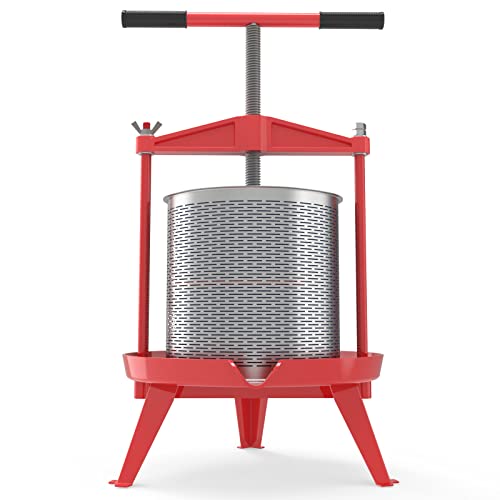
- 14-liter basket for larger batches
- Heavy-duty T-handle reduces pressing effort
- Removable stainless basket for cleanup
Best For: Home winemakers and orchard harvests
Best Electric Option
Smoothpress 6-Inch Chute Cold Press Juicer

- 6-inch chute fits many whole fruits
- 58 RPM slow extraction with 300W motor
- Detachable and dishwasher-safe components
Best For: Daily countertop juicing
Best With Filter Bags
VEVOR 3.69-Gallon Manual Fruit Press

- 14-liter capacity for batch pressing
- Includes two food-grade filter bags
- Stable cast iron and triangular-base design
Best For: Families, farms, and small wineries
Best Citrus Press

- Lever action minimizes pressing effort
- Stable weighted base with rubber pad
- Dishwasher-safe stainless steel bowl and cone
Best For: Citrus juice, pomegranates, bars, and kitchens
Best Large-Capacity Pick
SQUEEZE master 12L Wooden Fruit Press

- 3.17-gallon capacity for larger batches
- Extended handle helps reduce pressing effort
- Includes a filter bag for juice and cider making
Best For: Families, parties, and small-batch cider or wine making
Best Compact Wooden Press
1.6-Gallon Beechwood Fruit Press

- Compact capacity for home-size batches
- Beechwood basket with removable pulp design
- Pour spout and optional mounting holes improve stability
Best For: Home juice, cider, and wine making
Heavy-Duty Citrus Press

- 13.7-pound cast-iron construction
- Manual, quiet citrus pressing
- Stainless cone separates pulp and seeds
Best For: Fresh citrus juice, cocktails, and baking
Large-Batch Wine Press
VEVOR 1.6-Gallon Beechwood Press

- Six-liter pressing capacity
- Natural beechwood basket with stable base
- Includes two food-grade filter bags
Best For: Family batches, cider, and fruit wine
Compact Stainless Press
VEVOR 0.8-Gallon T-Handle Juicer
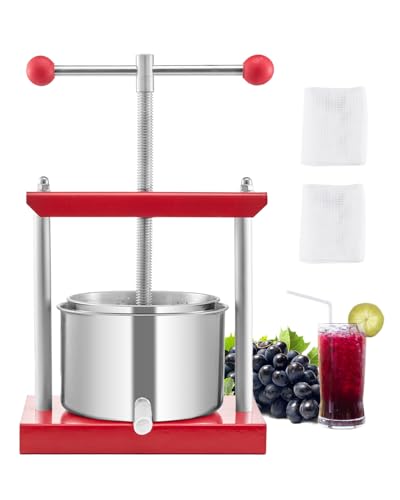
- Three-liter manual pressing capacity
- Stainless-steel barrels and plate
- Suitable for juice, cider, wine, and purée
Best For: Small household batches and versatile pressing
Best Large-Batch Press – 3.69-Gallon Stainless Steel Wine Press
If you need a high-capacity option among fruit presses under 300, this manual stainless steel wine press is built for processing larger quantities of apples, grapes, herbs, nut milks, or honey. Its 14-liter basket and heavy-duty screw are suited to home brewing, orchard harvests, and gatherings.
Best For: Home winemakers and families pressing substantial batches of fruit or other ingredients.
Pros:
- 14-liter (3.7-gallon) stainless steel basket handles larger batches.
- Heavy-duty T-handle and Acme screw provide strong pressing force with less effort.
- Removable basket simplifies cleanup.
- Food-grade stainless steel and a powder-coated frame resist rust and corrosion.
Cons:
- Hand-wash-only care requires more cleanup time.
- Its large 22-by-18.5-by-25.9-inch footprint needs dedicated storage space.
- Manual pressing is slower than using an electric juicer.
This is a practical choice when batch capacity matters more than compactness. The stainless basket and high-pressure screw make it especially suitable for seasonal fruit processing and home wine production.
Best Electric Option – Smoothpress 6-Inch Chute Cold Press Juicer
For shoppers comparing fruit presses under 300 for everyday kitchen use, the Smoothpress offers electric cold-press convenience rather than a traditional basket press. Its 6-inch chute accommodates whole apples, oranges, cucumbers, and similar produce with less preparation.
Best For: Daily home juicing when quick prep, quiet operation, and easy rinsing are priorities.
Pros:
- Wide 6-inch feed chute reduces the need for pre-cutting.
- 58 RPM slow pressing is designed to limit heat and oxidation.
- 300-watt motor handles firm and fibrous produce.
- Detachable parts, reverse function, and dishwasher-safe care support easier cleanup.
Cons:
- Its 473 ml capacity is much smaller than a batch-style wine press.
- Requires access to a 120-volt power source.
- Plastic construction may feel less substantial than a metal manual press.
This machine is better suited to fresh servings than orchard-scale pressing. The whole-fruit chute, low operating noise, and included recipe book make it a convenient countertop option for regular juice routines.
Best With Filter Bags – VEVOR 3.69-Gallon Manual Fruit Press
This VEVOR model is a strong contender among fruit presses under 300 for buyers who want a large manual cider or wine press with included filtration. Its 14-liter capacity, swing-open crossbeam, and two food-grade filter bags make batch preparation more straightforward.
Best For: Families, farms, wineries, and gatherings that need a stable press for larger fruit batches.
Pros:
- 14-liter (3.69-gallon) basket supports high-volume pressing.
- Two included food-grade filter bags help contain fruit pulp.
- Cast iron crossbeam and triangular base provide a sturdy setup.
- Removable 304 stainless steel basket is easier to clean.
Cons:
- At 34 pounds and over 38 inches tall, it is bulky to move and store.
- Best results may require pre-crushing fruit.
- Hand-wash care and periodic lubrication add maintenance.
The included bags distinguish this press for users who want a more contained pressing process. It is most useful for substantial batches, while compact kitchens may find its size excessive.
Best Citrus Press – Cast Iron Lever Juicer
Among fruit presses under 300, this compact manual lever juicer is tailored to citrus and pomegranates rather than large fruit batches. Its gravity-assisted handle, weighted base, and detachable stainless steel bowl make it convenient for kitchen, bar, and café use.
Best For: Fast countertop pressing of lemons, oranges, grapefruits, and pomegranates.
Pros:
- Lever design applies pressing force with minimal hand effort.
- Weighted base and rubber pad help reduce sliding.
- Detachable stainless steel bowl and cone are dishwasher-safe.
- Manual operation needs no electricity and can produce juice quickly.
Cons:
- Designed primarily for citrus and pomegranates, not large fruit batches.
- The cast iron body requires hand washing.
- Its 9-by-7-by-15-inch size still needs upright counter or storage space.
This is the most targeted choice in the group. Choose it when speed and leverage for individual citrus servings matter more than high capacity or versatile wine pressing.
Best Large-Capacity Pick – SQUEEZE master 12L Wooden Fruit Press
If you need fruit presses under 300 for larger batches, this hand-powered wooden press offers a 3.17-gallon capacity and is designed for apples, grapes, and other fruit. Its extended handle and spiral, phase-in pressing design aim to reduce effort while the wide press plate helps extract juice thoroughly.
Best For: Families, parties, small fresh-juice operations, and home cider or wine making.
Pros:
- Large 3.17-gallon capacity can handle about 12 to 16 pounds of fruit at once.
- Thick press plate and broad stressed area are designed for higher juice yield.
- Versatile manual design works with fruit, vinasse, oil pomace, and honeycomb.
- Includes one filter bag and uses no electrical power.
Cons:
- At nearly 10 kg, it is less convenient to move frequently.
- Hand-wash-only care requires additional cleanup.
- Its larger footprint may be excessive for small countertop batches.
This is a practical choice when batch size matters more than compact storage. The wooden construction and included filter bag make it well suited to traditional juice, cider, and wine preparation.
Best for Everyday Use – IMGROSE Cast Iron Hand Press
For shoppers comparing fruit presses under 300 for everyday citrus use, this manual cast iron press is built for lemons, oranges, limes, grapefruits, and pomegranates. Its extended lever, stainless-steel strainer, and quiet operation make it a convenient alternative to an electric juicer.
Best For: Home kitchens, juice bars, and small restaurants making quick citrus juice.
Pros:
- Professional-style lever is designed to produce juice in about three seconds.
- Cast iron body and food-grade 304 stainless-steel components support regular use.
- Built-in strainer separates seeds and pulp for smoother juice.
- Detachable stainless-steel parts are easy to clean.
Cons:
- The press is primarily suited to citrus and similarly sized fruit rather than large fruit batches.
- Larger fruits should be cut in half before pressing.
- Its 9.9-pound cast iron construction is sturdy but not especially lightweight.
This press is a focused choice for fast, quiet citrus juicing. The stable cast iron base and integrated filtering make it especially useful when convenience and repeatable countertop operation are priorities.
Best Compact Wooden Press – 1.6-Gallon Beechwood Fruit Press
This 1.6-gallon manual press is a sensible option among fruit presses under 300 when you want a smaller setup for apples, grapes, berries, or homemade wine. Its beechwood basket, heavy-duty stand, and built-in pour spout support straightforward loading, pressing, and juice collection.
Best For: Home users making modest batches of juice, cider, or wine.
Pros:
- Compact 1.6-gallon capacity suits smaller seasonal batches.
- Solid beechwood basket is designed to resist moisture and wear.
- Breakaway basket design helps remove fruit pulp between pressing cycles.
- Stand includes a pour spout and optional screw-hole mounting for stability.
Cons:
- Smaller capacity requires more pressing cycles for larger harvests.
- Hand-wash-only care may make cleanup more involved.
- Manual operation requires crushed fruit and repeated handle turning.
This model balances traditional wooden construction with a relatively compact footprint. It is a good fit for home users who want controlled, quiet pressing without the size of a full-scale fruit press.
Heavy-Duty Citrus Press – Cast Iron Orange Squeezer
If you want fruit presses under 300 for quick citrus drinks, this manual cast-iron juicer focuses on speed, stability, and quiet operation. Its stainless-steel cone separates juice, pulp, and seeds, while the lever design is suited to home kitchens, bars, and outdoor use.
Best For: Oranges, lemons, grapefruits, and pomegranates; home breakfasts, cocktails, baking, and small-scale bar service.
Pros:
- Heavy-duty cast-iron body weighs 13.7 pounds for a stable pressing platform.
- Ergonomic lever and nonslip handles support comfortable manual operation.
- Quiet, electricity-free use with a stainless-steel cone for separating pulp and seeds.
- Juice-contact parts can be disassembled and placed in a dishwasher, according to the product notes.
Cons:
- Designed primarily for citrus fruits rather than large-batch apples, grapes, or berries.
- Its 15.5-inch height may require dedicated counter space.
- Product care instructions list hand washing, despite the notes mentioning dishwasher-safe juice-contact parts.
This is a practical choice among fruit presses under 300 when your priority is fast, quiet citrus extraction rather than high-volume fruit or wine pressing. The sturdy frame should appeal to frequent users who value a simple, non-electric setup.
Large-Batch Wine Press – VEVOR 1.6-Gallon Beechwood Press
Among fruit presses under 300, this 1.6-gallon manual model is aimed at users who need more capacity for gatherings, farms, or small wine-making projects. Its beechwood basket, filter bags, and progressive screw mechanism support controlled pressing of prepared fruit.
Best For: Apples, grapes, berries, fruit wine, family gatherings, restaurants, wineries, and farms.
Pros:
- Six-liter, 1.6-gallon capacity suits larger batches than compact countertop presses.
- Natural beechwood basket and triangular base provide a stable pressing structure.
- Extended rotating handle and spiral mechanism make manual pressing straightforward.
- Includes two food-grade filter bags and eight supporting blocks.
Cons:
- Hard fruits must be crushed before pressing, potentially requiring separate equipment.
- At 22.64 inches tall and 15.9 pounds, it needs substantial storage space.
- Hand-wash care may require more cleanup than an easily disassembled stainless-steel press.
This VEVOR model makes the most sense when batch size matters. It is more specialized than a citrus press, but its larger basket and wood construction are well suited to prepared apples, grapes, berries, and fruit-wine projects.
Compact Stainless Press – VEVOR 0.8-Gallon T-Handle Juicer
This compact VEVOR press is a versatile option for shoppers comparing fruit presses under 300 for home batches. The stainless-steel barrels and pressing plate are built for fruit juice, cider, wine, purées, and other pressing tasks, while the 0.8-gallon capacity keeps the footprint manageable.
Best For: Grapes, juice, cider, wine, cheese, fruit purée, olive oil, honey, and other small-batch pressing projects.
Pros:
- Three-liter, 0.8-gallon capacity suits household batches and parties.
- Stainless-steel pressing plate, barrels, base, and frame provide durability and corrosion resistance.
- T-shaped nonslip handle offers simple manual operation.
- Disassembled inner and outer barrels are easy to rinse, and the notes state they can go in a dishwasher.
Cons:
- Its smaller capacity is less suitable for large harvests or commercial-scale pressing.
- Fruit should be precut and placed in a filter bag for better results.
- The product details list hand-wash care, so cleaning guidance is somewhat inconsistent.
Choose this model if you want stainless-steel construction and broad utility without moving up to a larger wine press. It offers a practical balance for occasional cider, juice, and small-batch food pressing.
How We Picked the Best Fruit Presses Under 300
We evaluated these presses by matching their design and listed capacity to common home-pressing tasks. Larger basket presses are better suited to crushed apples, grapes, and berries, while cast-iron citrus presses are more convenient for lemons, oranges, grapefruit, and pomegranates. We also considered frame strength, basket materials, handle design, juice collection, portability, and how easily the press can be cleaned between batches.
Because product specifications and included accessories can vary, confirm the current capacity, dimensions, filter-bag details, and assembly requirements before ordering. A press should be used with prepared, softened, or crushed fruit when the manufacturer recommends it; whole hard fruit can reduce yield and strain the mechanism.
Quick Comparison
- Large-batch options: The 3.17- to 3.69-gallon presses are the strongest fit for home cider or wine projects involving several kilograms of fruit.
- Medium-capacity models: The 1.6-gallon presses balance useful output with a smaller footprint and easier storage.
- Small-batch pressing: The 0.8-gallon model suits occasional cider or juice making when counter and storage space are limited.
- Citrus-focused presses: Cast-iron hand presses are fast and simple for individual fruit, but they are not substitutes for basket presses when processing large quantities of crushed fruit.
- Electric alternative: The cold-press juicer is more convenient for regular drinking juice and continuous feeding, though it serves a different workflow from a manual wine or cider press.
Key Buying Factors for Fruit Presses Under 300
Capacity and Batch Size
Choose capacity based on how much fruit you expect to process at once. A larger basket reduces the number of loading cycles, but it also takes more space and may require more fruit preparation. Smaller presses are easier to store and can be a better value for occasional use.
Basket and Frame Construction
Wooden baskets are traditional and can provide a generous pressing chamber, while stainless-steel components are typically easier to sanitize and resist corrosion. Cast iron offers strong leverage for citrus pressing, but its weight can make storage less convenient. Look for a stable base and a frame that does not flex under pressure.
Pressing Mechanism and Cleanup
T-handle and cross-beam designs provide straightforward manual control. Check whether a filter bag is included, whether the basket can be removed, and how easily juice-contact parts can be rinsed. Prompt cleaning is especially important after sugary fruit or pulp has dried.
Space, Safety, and Yield
Measure your work surface and allow room to turn the handle. Secure the press before applying force, keep hands clear of moving parts, and avoid overfilling. A well-prepared mash usually matters as much to yield as the press itself.
Who Should Buy Which Fruit Presses Under 300?
Choose a large basket press if you make cider or fruit wine in substantial batches. Choose a 1.6-gallon model for a practical middle ground between output and storage. Choose the compact press for small households, experiments, or limited workspace. Choose a cast-iron citrus press for quick fresh juice from citrus and pomegranates. If convenience and daily drinking juice matter more than traditional batch pressing, choose the cold-press juicer instead.