Accurate acidity testing can make home fermentation and canning more consistent—and, for low-acid foods, an important part of safer food preparation. The right pH meter helps you check sauces, salsas, pickles, and other recipes without relying only on guesswork.
We selected 10 kitchen-friendly testers ranging from simple digital meters to advanced models with spear probes, storage solutions, waterproof housings, and replaceable sensors. Use the guide below to match accuracy, probe design, maintenance needs, and budget to your cooking routine.
Best 10 Ph Meters for Home Kitchens Picks for 2026
Smart Fermentation Tracker
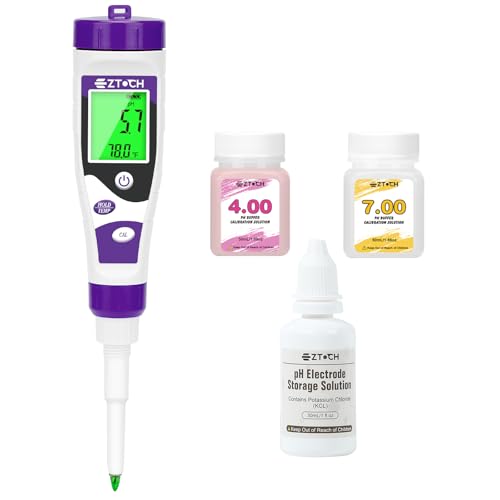
- Bluetooth app stores up to 1,000 readings
- Suitable for canning and many fermentations
- Includes calibration and probe-storage solutions
Best For: Home fermenters and canners tracking repeated batches
Reliable Everyday Tester
Apera PH20 Waterproof pH Tester

- ±0.1 pH accuracy with auto calibration
- Waterproof body with stable-reading recognition
- Up to 2,000 hours of battery operation
Best For: General liquid testing and routine kitchen use
Food-Texture Specialist
Spear-Probe Fermentation Meter

- Spear probe suits dough, meat, and cheese
- 0.01 pH resolution with temperature compensation
- Replaceable electrode and three buffer solutions
Best For: Frequent fermentation and semi-solid food testing
Precision All-Rounder
Apera PH60 Replaceable-Probe Tester

- 0.01 pH accuracy with a wide measurement range
- Replaceable glass probe for regular liquid solutions
- Color backlit display with pH and temperature readings
Best For: Precise beverage and general liquid testing
Fermentation-Focused Pick
GIDIGI Food Fermentation pH Meter
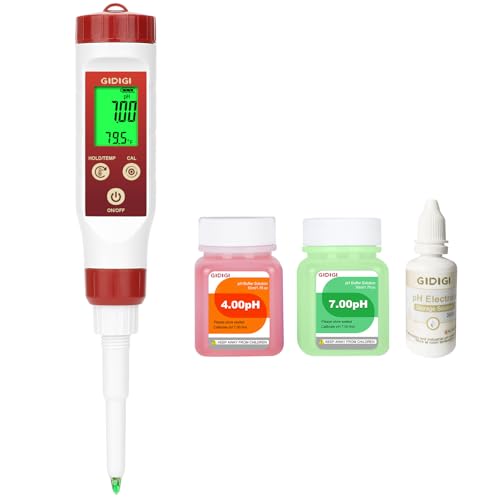
- Includes calibration and electrode-protection solutions
- Spear tip handles semi-solid foods
- Useful for fermentation and canning
Best For: Home fermentation, sourdough, sauces, dairy, brewing, and canning
Smart Solid-Food Pick

- 316 stainless steel blade for solid samples
- Bluetooth app supports 24-hour monitoring
- Stores up to 1,000 readings
Best For: Fermented foods, dairy, sourdough, and data-conscious kitchen testing
Precision Water-Testing Pick

- ±0.01 pH stated accuracy
- Replaceable sensor probe
- Includes KCL and three calibration solutions
Best For: Homebrewing plus aquarium, pool, garden, and hydroponic water testing
Fermentation Specialist

- Includes 4.00 and 7.00 calibration solutions
- Food-focused spear probe for dough and fermentation
- ATC and KCL-moistened storage cap
Best For: Sourdough and fermented-food projects
Versatile Pocket Pick

- ±0.01 pH accuracy across a 0.00–14.00 range
- Backlit LCD and compact pocket-size design
- Includes buffer powders and built-in batteries
Best For: Liquid foods and multipurpose household testing
Probe-First Food Tester

- Spear probe supports direct testing of thicker samples
- Three-point automatic calibration
- Includes six buffer powder packets
Best For: Sourdough, canning, sauces, and semi-solid food samples
Smart Fermentation Tracker – Bluetooth Food pH Meter
For home cooks comparing ph meters for home kitchens, this food-focused model stands out for Bluetooth tracking and broad fermentation coverage. It is designed for checking canned foods, sourdough, yogurt, kombucha, sauces, and other homemade products.
Best For: Home fermenters and canners who want to save and review pH readings digitally.
Pros:
- Connects to the YINMIK app and stores up to 1,000 readings.
- Useful across canning, sourdough, brewing, dairy, sauces, and more.
- Includes pH 4.00 and 7.00 calibration solutions plus probe storage solution.
- Backlit display and automatic shutoff support convenient kitchen use.
Cons:
- Bluetooth and app features may be unnecessary for occasional testing.
- The notes do not specify a replaceable probe.
This is a practical choice when recordkeeping matters as much as taking a single reading. Its canning guidance and data-storage features make it especially appealing for users managing repeated batches.
Reliable Everyday Tester – Apera PH20 Waterproof pH Tester
APERA INSTRUMENTS AI209 Value Series PH20 Waterproof pH Tester Kit, ±0.1 pH Accuracy
Check Price On AmazonAmong ph meters for home kitchens, the Apera PH20 is a straightforward waterproof tester for users who want simple, repeatable measurements. Its automatic calibration, temperature compensation, and stable-reading recognition reduce guesswork during testing.
Best For: Home users seeking a durable general-purpose pH tester with simple operation.
Pros:
- Provides ±0.1 pH accuracy with automatic calibration and buffer recognition.
- Automatic temperature compensation supports samples from 32 to 122°F.
- Waterproof design and included rugged carrying case suit active kitchens and other settings.
- Rated for up to 2,000 hours of continuous operation on included AAA batteries.
Cons:
- Its stated accuracy is lower than the 0.01-pH models in this roundup.
- The included kit is less specialized for semi-solid foods than spear-probe designs.
The PH20 favors dependable everyday use over advanced food-specific features. It is a sensible pick for general liquid testing when automatic stability detection and long battery life are priorities.
Food-Texture Specialist – Spear-Probe Fermentation Meter
For ph meters for home kitchens that need to handle more than liquids, this GIDIGI model uses a spear probe for dough, meat, cheese, and other semi-solid samples. It combines 0.01-pH readings, automatic temperature compensation, calibration buffers, and temperature display.
Best For: Cooks making sourdough, fermented meats, cheese, hot sauce, and other texture-heavy foods.
Pros:
- Spear tip is designed to penetrate dough, meat, and cheese.
- Offers 0.01 pH resolution with automatic temperature compensation across 32–140°F.
- Includes pH 4.00, 7.00, and 10.01 buffer solutions for calibration.
- Replaceable electrode can extend the meter’s usable life.
Cons:
- Food-specific spear design may be more than needed for ordinary liquid testing.
- Readings can take about 30 seconds.
This is the most purpose-built option here for semi-solid food testing. The replaceable probe and complete buffer set also make it a strong long-term choice for frequent fermentation projects.
Precision All-Rounder – Apera PH60 Replaceable-Probe Tester
The Apera PH60 is a precision-oriented option among ph meters for home kitchens, with 0.01 pH accuracy, automatic temperature compensation, and a replaceable glass probe. Its broad range and dual pH-and-temperature display make it useful for beverages and other liquid solutions.
Best For: Users who want a precise, reusable tester for beverages and general liquid solutions.
Pros:
- Provides 0.01 pH accuracy across a -2.00 to 16.00 pH range.
- Supports one- to three-point automatic calibration with five solution types.
- Replaceable glass probe helps extend the product’s service life.
- Backlit, multicolor LCD shows pH, temperature, stable readings, and calibration reminders.
Cons:
- The probe is described for regular water solutions rather than semi-solid foods.
- Requires four AAA batteries.
- Its broader features may be excessive for occasional kitchen checks.
Choose the PH60 when precision, calibration flexibility, and probe replacement matter more than a food-specific tip. It is particularly well suited to beverage and liquid-solution testing around the home.
Fermentation-Focused Pick – GIDIGI Food Fermentation pH Meter
For shoppers comparing ph meters for home kitchens, the GIDIGI food pH meter is a practical choice for fermentation and canning projects. Its spear-tip probe is designed for liquids and semi-solid foods, while the included calibration and electrode-protection solutions help you begin testing with less setup.
Best For: Home fermenters, sourdough bakers, sauce makers, dairy projects, brewing, and canning.
Pros:
- Includes 7.00 and 4.00 calibration solutions plus electrode-protection solution.
- Spear-shaped probe can test semi-solid foods such as cheese, meat, and bread.
- Measures across a 0–14 pH range and has a clear, well-lit display.
- Water-resistant construction supports use in wet kitchen environments.
Cons:
- The included calibration solutions are 7.00 and 4.00; alkaline-food testing may require an additional 10.01 solution.
- Its food-focused design may be more specialized than needed for basic water testing.
This is a well-rounded option if your main goal is monitoring acidity in homemade foods. The detachable probe and specialized spear tip add useful flexibility for repeated fermentation and canning work.
Smart Solid-Food Pick – YINMIK Food pH Tester
Among ph meters for home kitchens, the YINMIK stands out for solid-food testing and connected monitoring. Its food-grade 316 stainless steel blade helps pierce meat, fruit, and other solid samples while protecting the glass probe, and Bluetooth connectivity adds a way to record changes over time.
Best For: Cooks tracking fermented foods, dairy, sourdough, and solid ingredients who want app-based records.
Pros:
- 316 stainless steel blade is designed for piercing solid foods.
- Supports 24-hour continuous monitoring through the YINMIK app.
- Stores up to 1,000 data points, with printing and sharing support.
- Includes calibration, cleaning, and storage solutions, plus automatic temperature compensation.
Cons:
- The app and Bluetooth features may be unnecessary for occasional spot checks.
- Continuous monitoring removes the automatic power-off function.
- Its larger package and accessory set may take more storage space than a basic pH pen.
The YINMIK is the most feature-rich choice here for cooks who want to follow pH changes rather than take one-off readings. Choose it when solid-food access and data logging matter as much as the measurement itself.
Precision Water-Testing Pick – AC Infinity pH Meter PRO
If your kitchen testing extends beyond food, the AC Infinity pH Meter PRO is a versatile option among ph meters for home kitchens. It measures pH and temperature in water and includes a replaceable sensor probe, making it suited to homebrewing as well as aquariums, pools, gardens, and hydroponic setups.
Best For: Homebrewers and households that also test aquarium, pool, garden, or hydroponic water.
Pros:
- Offers stated accuracy of ±0.01 pH.
- Includes ready-to-use KCL and 4.00, 7.00, and 10.01 calibration solutions.
- Replaceable sensor probe can extend the meter’s service life.
- IP67-rated construction is sealed against high-volume moisture, dust, and sand.
Cons:
- It is designed primarily for water-quality assessment rather than piercing solid foods.
- Its broader water-testing capabilities may be more than needed for simple fermentation checks.
This is the strongest fit for users who want one instrument for homebrewing and several water-related tasks. The replaceable probe, broad calibration kit, and rugged IP67 rating make it a durable long-term choice for liquid testing.
Fermentation Specialist – YINMIK Food pH Tester
For home cooks comparing pH meters for home kitchens, this YINMIK model is designed around food fermentation and semi-solid samples. It includes calibration solutions, automatic temperature compensation, and a spear-style electrode suited to dough and other foods.
Best For: Sourdough, fermented foods, sauces, jams, and other kitchen fermentation projects.
Pros:
- Includes 4.00 and 7.00 calibration solutions.
- Conical-tip, open-junction electrode is designed for bread and dough.
- ATC and additional circuitry support stable readings across temperature changes.
- Protective cap includes a KCL-moistened sponge to help keep the probe hydrated.
Cons:
- Requires regular calibration for accurate measurements.
- Uses three LR44 batteries.
Its food-focused probe and included calibration kit make it a practical choice when fermentation and sourdough are the main priorities, rather than general water testing.
Versatile Pocket Pick – VIVOSUN Digital pH Meter
If you want one of the more broadly usable pH meters for home kitchens, the VIVOSUN Digital pH Meter covers liquid food alongside water, pools, spas, aquariums, and hydroponics. Its compact body, backlit display, and automatic temperature compensation keep routine testing straightforward.
Best For: Liquid foods and households that also want a compact meter for water or hobby applications.
Pros:
- Rated for measurements from 0.00 to 14.00 pH with ±0.01 accuracy.
- Automatic temperature compensation adjusts readings for water temperature.
- Backlit LCD, memory function, and pocket-size design improve convenience.
- Includes three pH buffer powders and built-in batteries.
Cons:
- The supplied notes identify it for liquid food, not specifically dough or semi-solid foods.
- Buffer powders must be prepared for calibration.
This is the most flexible option of the three for liquid testing, especially if kitchen use overlaps with aquarium, pool, hydroponic, or drinking-water checks.
Probe-First Food Tester – YINMIK Spear pH Meter
This YINMIK is a focused option among pH meters for home kitchens, using a spear probe for direct testing of sourdough, fermented foods, cosmetics, and lotions. The design can reduce preparation for suitable samples because the probe can be inserted directly into them.
Best For: Cooks who need direct testing of sourdough, canned foods, sauces, and other food or semi-solid samples.
Pros:
- Proprietary spear probe is suited to sourdough and direct sample testing.
- Offers a 0.00–14.00 pH range with stated ±0.1 accuracy.
- Three-point automatic calibration is supported.
- Includes six buffer solution powder packets and a KCL-moistened storage cap.
Cons:
- Stated accuracy is lower than the VIVOSUN’s listed ±0.01 specification.
- Powder buffers need to be prepared before calibration.
Choose this model when probe access into dough or other thicker samples matters most. Its direct-use spear design gives it a more specialized kitchen role than a general liquid-testing pen.
How We Picked These Ph Meters for Home Kitchens
We focused on features that matter when testing food rather than aquarium or laboratory samples alone. The selection includes meters designed or marketed for fermentation, canning, sauces, salsa, and other kitchen applications. We considered stated accuracy, probe shape, waterproofing, calibration support, storage requirements, display readability, and whether the sensor can be replaced.
Because product specifications and included accessories can vary, confirm the current listing before buying. A meter is only useful when it is calibrated correctly, cleaned between samples, and stored according to the manufacturer’s instructions.
Quick Comparison
| Best For | Look For | Why It Matters |
|---|---|---|
| Occasional canning | Food-rated spear probe and calibration packets | Provides practical testing without unnecessary complexity |
| Frequent fermentation | Waterproof construction and dependable calibration | Handles repeated kitchen use and cleanup more easily |
| Dense or solid foods | Blade-style or spear probe | Can reach the interior of thick foods and mixtures |
| Long-term value | Replaceable probe or sensor | Reduces waste when the original probe eventually wears out |
| General liquid testing | Fine resolution and a clear LCD | Makes small readings easier to observe and record |
Key Buying Factors for Ph Meters for Home Kitchens
Probe Design and Food Compatibility
A pointed spear probe is more useful than a basic water-only electrode for thick sauces, fermented vegetables, salsa, and semi-solid foods. Check that the probe is intended for food use, and avoid forcing a delicate electrode into firm ingredients. A stainless-steel blade design may be more convenient for solid samples.
Accuracy, Resolution, and Calibration
Do not confuse display resolution with real-world accuracy. A meter showing two decimal places is not automatically more accurate. Look for a stated accuracy that suits your application, plus two- or three-point calibration support and included buffer solutions. Calibration should be repeated at the interval recommended by the manufacturer, especially after heavy use or long storage.
Cleaning and Storage
Food residue can contaminate readings and damage the sensor. Choose a design that is easy to rinse, but never scrub or soak the probe beyond its instructions. Storage solution is preferable to storing an electrode dry; a protective cap and dedicated storage container are useful additions.
Water Resistance and Durability
Waterproof or splash-resistant construction helps in a busy kitchen, but it does not make every meter safe to immerse indefinitely. Follow the specified immersion depth, keep the electronics away from hot liquids, and test cooled samples when appropriate.
Who Should Buy Which Ph Meters for Home Kitchens?
For occasional home canning, choose a straightforward food meter that includes calibration supplies and has a suitable spear probe. Fermentation enthusiasts should prioritize repeatable calibration, a waterproof body, and easy cleaning. If you test dense foods regularly, select a dedicated blade or spear-style food probe rather than a general hydroponics pen.
Buyers who want lower long-term operating costs should consider a replaceable-probe model, while cooks who mainly test liquids may prefer a compact pocket tester with a clear display. General-purpose hydroponics meters can be useful for liquids, but verify that the probe and manufacturer guidance are appropriate for food samples before relying on one in a kitchen workflow.