Processing a large apple harvest calls for more than a basic countertop juicer. The best cider presses for large batches combine generous capacity, reliable pressure, durable materials, and practical cleanup features to turn fruit into juice efficiently.
This roundup compares 10 high-capacity presses, from 90-liter hydraulic designs to traditional wooden-basket models, so you can choose the right balance of speed, control, portability, and value.
Best 10 Cider Presses for Large Batches Picks for 2026
High-Capacity Hydraulic Pick
SQUEEZE Master 90L Hydraulic Press

- 23.8-gallon stainless steel basket
- Water-powered pressing up to 3 bar
- Includes filter bag and splash guard
Best For: Large juice, cider, and wine batches with minimal manual effort
Water-Powered Batch Pick
Hydropress 23.8-Gallon Cider Press

- 23.8-gallon capacity
- Garden-hose operation up to 3 bar
- Includes bag and splash protection
Best For: Large mixed-fruit pressing sessions with convenient water power
Manual Mid-Batch Pick
3.69-Gallon Stainless Steel Fruit Press
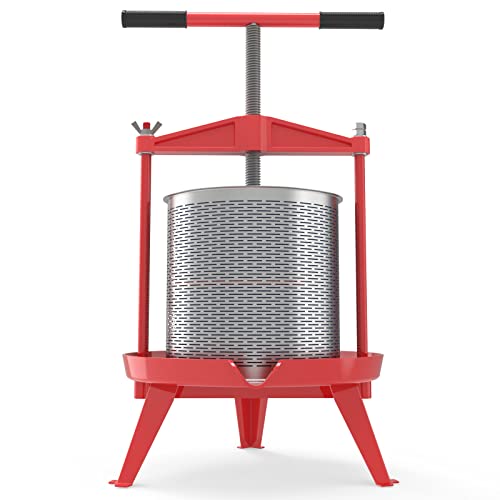
- 14-liter stainless steel basket
- Heavy-duty T-handle and Acme screw
- Detachable basket for cleanup
Best For: Moderate home cider, wine, and fruit-pressing batches
Two-Person Orchard Pick
American Harvester Double-Tub Press

- Integrated apple grinder and press
- Hard maple and cast-iron construction
- Up to 50 gallons in an afternoon with two people
Best For: High-volume orchard processing with a two-person workflow
Effort-Saving Manual Press
Stainless Steel 4.75-Gallon Cider Press

- 4.75-gallon wood basket
- Built-in stainless steel crusher
- Manual, portable operation
Best For: Home users processing apples and other hard produce without electricity
High-Capacity Hydraulic Power

- 40-liter pressing capacity
- 5-ton hydraulic jack
- 304 stainless steel juice-contact parts
Best For: Orchards and harvest-season batches requiring high capacity
Traditional Large-Basket Press
4.75-Gallon Wooden Cider Press
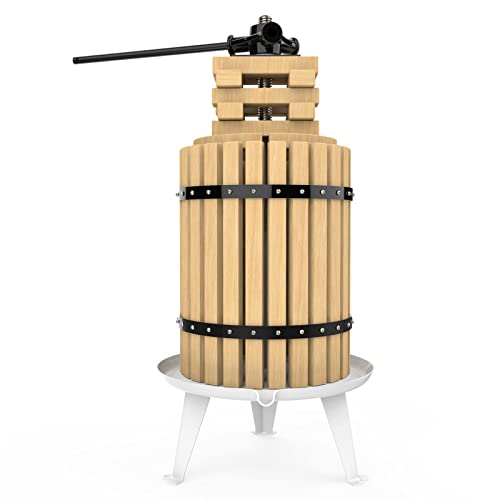
- Handles 22–33 pounds per load
- Traditional hand-powered design
- Includes a filter bag
Best For: Families, parties, and small juice operations wanting a vintage-style press
Best with Extra Features
Mosakar 30L Hydraulic Fruit Press

- 30-liter capacity for large batches
- 3 tons of pressure for strong extraction
- 304 stainless-steel juice-contact parts
Best For: High-volume cider and juice pressing
Traditional Home Batch Pick
4.75-Gallon Beech Wood Fruit Press

- 4.75-gallon capacity for home batches
- Beech wood basket with breakaway design
- Manual, quiet operation with pour spout
Best For: Family-sized cider and seasonal fruit pressing
Large Manual Press Pick
VEVOR 30L Beech Wood Wine Press

- 30-liter capacity for large batches
- Extended handle and thick pressing plate
- Includes filter bags and wooden blocks
Best For: Large manual fruit, cider, and wine batches
High-Capacity Hydraulic Pick – SQUEEZE Master 90L Hydraulic Press
For shoppers comparing cider presses for large batches, this 23.8-gallon hydraulic model stands out for water-powered pressing and stainless steel, food-grade construction. It connects to a standard garden hose, applies up to 3 bar of pressure, and includes a filter bag and splash guard.
Best For: Family parties, catering, hotels, fresh-juice operations, and small wine factories.
Pros:
- Large 90-liter capacity for substantial pressing sessions.
- Uses household water pressure instead of electricity or intensive manual effort.
- Designed for rapid pressing and potentially higher juice yield, even when partly filled.
- Includes a filter bag and splash guard.
Cons:
- At 79.2 pounds, it is not especially portable.
- Requires access to a garden hose and suitable water supply.
- Its large 35-by-26-by-26-inch package footprint may require dedicated storage.
This is a practical choice when batch capacity and reduced physical effort matter most. Its hose-powered design is particularly convenient for frequent cider or juice production.
Water-Powered Batch Pick – Hydropress 23.8-Gallon Cider Press
This Hydropress is a strong option for cider presses for large batches when you want to use garden-hose pressure rather than an electric motor. It is designed for apples, pears, berries, and other fruit, with a supplied pressing bag and splash protection.
Best For: Home orchard harvests and larger fruit-pressing sessions where hose-powered operation is convenient.
Pros:
- 23.8-gallon listed capacity supports sizeable batches.
- Uses garden hose water pressure with a maximum pressure of 3 bar.
- Sheet-metal gap is intended to support better output.
- Includes a bag and protection against splash water.
Cons:
- Requires a garden hose and compatible water supply.
- Weighs about 79 pounds, limiting easy movement.
- The 35-by-26-by-26-inch package dimensions call for substantial storage space.
Choose this model if straightforward hydraulic operation and generous capacity are more important than portability. Its fruit versatility also makes it useful beyond apple cider.
Manual Mid-Batch Pick – 3.69-Gallon Stainless Steel Fruit Press
For buyers who want cider presses for large batches but prefer a simpler manual setup, this 14-liter stainless steel press offers a useful middle ground. Its heavy-duty T-handle and large-diameter Acme screw are designed to create pressing force with less effort than a basic hand press.
Best For: Home brewers, orchard owners, harvest-season use, and parties needing moderate batch capacity.
Pros:
- Holds up to 14 liters, or about 3.7 gallons, of fruit.
- Manual screw mechanism requires no water or electricity.
- Food-grade stainless steel basket is rust- and corrosion-resistant.
- Detachable basket simplifies cleanup.
Cons:
- Its capacity is smaller than the hydraulic models in this roundup.
- Manual operation still requires turning the T-handle.
- Hand-wash care may take more time after pressing.
This press suits users who need more capacity than a small tabletop unit while retaining a straightforward, hose-free design. It is a sensible fit for moderate batches rather than continuous commercial-scale work.
Two-Person Orchard Pick – American Harvester Double-Tub Press
The American Harvester combines grinding and pressing in one double-tub setup, making it a notable option among cider presses for large batches. Its apple-eater grinder reduces apples to a fine texture, and the manufacturer notes that two people can produce up to 50 gallons in an afternoon.
Best For: Orchard harvests, family operations, and users who want integrated grinding and pressing for high-volume work.
Pros:
- Double-tub design combines grinding and squeezing.
- Apple-eater grinder prepares apples to a fine texture before pressing.
- Two-person operation is stated to produce up to 50 gallons in an afternoon.
- Hard maple and cast-iron construction is designed for long-term durability.
Cons:
- Two-person operation is needed for the stated production rate.
- Integrated grinding and pressing may require more setup space than a single manual press.
- The supplied notes do not specify capacity, dimensions, or power requirements.
This is the most production-oriented choice here for shoppers processing a substantial apple harvest. Its integrated grinder can streamline workflow, provided you have help and adequate room for operation.
Effort-Saving Manual Press – Stainless Steel 4.75-Gallon Cider Press
For shoppers comparing cider presses for large batches, this manual SQUEEZE master model combines an 18-liter solid wood basket with a stainless steel crusher. Its extended hand shank and phase-in pressing design are intended to reduce effort while processing apples and other hard produce.
Best For: Home users who want a portable manual press and crusher for apples, pears, peaches, carrots, and similar produce.
Pros:
- 4.75-gallon capacity suits substantial home batches.
- Thicker press plate and larger stressed area are designed for thorough pressing.
- Food-grade stainless steel construction is rust resistant and suitable for juice-contact parts.
- Manual operation needs no power supply.
Cons:
- Manual operation still requires physical effort.
- Hand-wash care is required.
- The supplied notes do not specify a powered or hydraulic assist.
This is a practical middle-ground option when portability and a built-in crusher matter more than automated pressing. Its 4.75-gallon capacity is useful for home-scale large batches, while the stainless steel components simplify durability concerns.
High-Capacity Hydraulic Power – 10.6-Gallon 5-Ton Cider Press
Among cider presses for large batches, the Mosakar hydraulic model stands out for its 10.6-gallon capacity and 5 tons of pressing force. Its AISI 304 stainless steel juice-contact parts and adjustable design are aimed at efficient harvest-season processing.
Best For: Orchards, home harvests, parties, and users who need higher-capacity pressing with hydraulic assistance.
Pros:
- 10.6-gallon/40-liter capacity handles large loads.
- Hydraulic jack supplies up to 5 tons of pressure.
- AISI 304 stainless steel pressing plate, basket, and juice tray resist acidic juice.
- Adjustable tray height and a 90-degree-turning beam help with loading and container placement.
Cons:
- At 85 pounds, it is considerably less portable than smaller manual presses.
- Its 20 x 17.3 x 31.6-inch dimensions require dedicated storage space.
- The supplied notes do not mention an included fruit crusher.
This is the strongest fit for buyers prioritizing batch size and pressing force. The hydraulic system and 40-liter basket can reduce repeated loading, while the substantial frame favors a fixed workspace over frequent relocation.
Traditional Large-Basket Press – 4.75-Gallon Wooden Cider Press
This traditional SQUEEZE master press is a practical option for cider presses for large batches when you prefer a straightforward hand-powered design. Its 4.75-gallon wooden basket can press roughly 22 to 33 pounds of fruit at a time, and a filter bag is included.
Best For: Families, parties, eateries, small fresh-juice shops, and home users seeking a traditional fruit, wine, or cider press.
Pros:
- 4.75-gallon basket can handle 22 to 33 pounds of fruit per load.
- Extended hand shank and phase-in pressing design are intended to make pressing easier.
- Versatile design works with fruit and is also listed for vinasse, oil pomace, and honeycomb.
- Includes one filter bag for juice processing.
Cons:
- Hand-powered operation requires repeated manual effort.
- Wood construction and uncoated finish may require careful hand washing and drying.
- The supplied notes do not identify stainless steel juice-contact components.
This model suits buyers who value a vintage-style press and a larger fruit load than a small countertop juicer can manage. It offers useful batch capacity and broad applications, though the all-manual wooden construction favors hands-on users.
Best with Extra Features – Mosakar 30L Hydraulic Fruit Press
For shoppers comparing cider presses for large batches, the Mosakar stands out with a 7.93-gallon capacity and 3 tons of pressure. Its juice-contact components use AISI 304 stainless steel, while the powder-coated frame is designed for durable, repeat use.
Best For: Large-batch cider, juice, wine, and fruit pressing where high pressure and easy cleanup matter.
Pros:
- 30-liter capacity supports substantial pressing sessions.
- Three tons of pressure helps maximize juice extraction.
- Stainless-steel basket, pressing plate, and drain pan are easy to clean.
- Solid, powder-coated frame is built for long-term durability.
Cons:
- At 66 pounds, it is relatively heavy to move.
- The hydraulic design may require more setup space than smaller manual presses.
This is the strongest choice of the three for buyers prioritizing pressure, capacity, and food-contact materials. Its larger footprint and weight are trade-offs for a more substantial batch-pressing setup.
Traditional Home Batch Pick – 4.75-Gallon Beech Wood Fruit Press
Among cider presses for large batches, this 4.75-gallon manual model offers a practical middle ground for home users. Its solid beech wood basket, heavy-duty stand, and built-in pour spout support straightforward pressing of apples, grapes, and berries.
Best For: Home cider makers and small seasonal batches who prefer quiet, manual operation.
Pros:
- 4.75-gallon capacity suits family-sized pressing sessions.
- Solid red beech basket is designed to resist moisture and wear.
- Built-in pour spout makes juice collection convenient.
- Breakaway basket design helps with pulp removal between batches.
Cons:
- Smaller capacity than the 30-liter presses in this roundup.
- Hand-wash care requires manual cleanup.
- Manual pressing requires physical effort and produces batches sequentially.
This press is a sensible option when you want traditional operation without a motor. It is less suited to very high-volume work, but its stable stand and removable basket make it practical for home use.
Large Manual Press Pick – VEVOR 30L Beech Wood Wine Press
For cider presses for large batches without hydraulic equipment, the VEVOR 30-liter manual press combines a large basket with an extended lever handle. Its thickened beech wood pressing plate, filter bags, and removable bucket are designed for efficient loading, pressing, and cleanup.
Best For: Home kitchens, orchards, farms, and wineries needing a high-capacity manual press for fruit, wine, or other mash.
Pros:
- 30-liter capacity supports large-batch pressing.
- Extended handle helps apply leverage manually.
- Includes two filter bags and six wooden pressing blocks.
- Removable bucket allows easier rinsing and cleanup.
Cons:
- Manual operation requires more effort than a hydraulic press.
- Wood construction requires hand-wash care.
- Its 38.1-pound weight and large capacity may need dedicated storage space.
This model offers the capacity of a commercial-style batch press while retaining a traditional manual setup. Choose it over the hydraulic option if leverage and wood construction are more important than powered pressure.
How We Picked the Best Cider Presses for Large Batches
We focused on the factors that matter most when pressing substantial quantities of apples, grapes, and other fruit: basket capacity, pressure method, construction, juice-contact materials, stability, loading convenience, and cleanup. The selection includes hydraulic and manual presses, plus combination systems that grind fruit before pressing.
Capacity claims are useful, but they do not tell the entire story. A press must also be easy to load repeatedly, remain stable under force, and allow the pomace to be removed without excessive downtime. Stainless steel components are especially useful for frequent production because they resist staining and are generally straightforward to sanitize.
Quick Comparison
- Highest capacity: The 23.8-gallon hydraulic presses are suited to large harvests and fewer refill cycles.
- Balanced capacity: Seven- to 10.6-gallon models offer a practical middle ground for serious home users.
- Traditional operation: Four- to 4.75-gallon wooden-basket presses provide classic appearance and hands-on control.
- Integrated workflow: Combination grinder-and-press systems can reduce equipment changes when processing whole apples.
- Lower-effort pressing: Hydraulic models apply substantial pressure with less manual cranking than screw presses.
Key Buying Factors for Cider Presses for Large Batches
Capacity and Throughput
Larger baskets reduce the number of loading cycles, but they also require more fruit preparation and a suitable collection container. Choose capacity based on your harvest volume, storage space, and how many people will help operate the press.
Pressure and Operating Effort
Hydraulic presses are a strong choice when repeated manual cranking would be tiring. Manual screw and cross-beam designs can be dependable and simple, but they require more physical effort and may press more slowly.
Materials and Sanitation
Look for stainless steel where juice contacts the press, along with removable liners or filter bags when included. Wooden baskets can work well, but they need careful washing, drying, and storage to prevent odors, mold, or warping.
Stability and Cleanup
A heavy stand, wide base, splash guard, and accessible drainage point make a noticeable difference during repeated batches. Confirm that the basket, cloth, tray, and pressing components can be cleaned thoroughly after use.
Who Should Buy Which Cider Presses for Large Batches?
Choose a large hydraulic press if you process substantial harvests and want faster, lower-effort cycles. The 23.8-gallon options are best for serious seasonal production, while 7.93- to 10.6-gallon models may be easier to store and handle.
Choose a traditional wooden press if you value classic construction, visual appeal, and straightforward manual operation. These presses suit smaller batches, occasional cider making, and users who prefer a slower, hands-on process.
Choose a grinder-and-press combination if you want a more complete workflow for whole apples. Grinding fruit first is essential for efficient pressing, so an integrated unit can save setup time and reduce the need for separate equipment.
Before ordering, verify the actual basket volume, dimensions, included accessories, warranty coverage, and replacement-part availability. The best cider press is the one whose capacity and operating method match your harvest rather than simply having the largest advertised rating.