Making fresh cider at home is easier when your press matches your harvest size, available storage, and preferred level of effort. The right model can also handle grapes, berries, and other soft fruit for juice or small-batch winemaking.
We selected 10 manual and hydraulic options spanning compact presses, traditional wooden baskets, stainless-steel designs, and larger-capacity machines. Use the guide below to compare capacity, construction, operation, and cleanup before choosing.
Best 10 Cider Presses for Home Use Picks for 2026
Best Compact Crusher

- 7-liter hopper for home-scale batches
- Uniform pulp for easier pressing
- 304 stainless steel construction
Best For: Preparing apples and other fruit before pressing
Best Traditional Press
4.75-Gallon Beechwood Fruit Press

- Solid beechwood basket
- Built-in spout for juice collection
- Quiet manual operation
Best For: Moderate home batches of cider, juice, or wine
Best High-Capacity Press

- 40-liter pressing capacity
- 5 tons of hydraulic pressure
- 304 stainless-steel juice-contact parts
Best For: Large harvests and orchard-scale home pressing
Best All-in-One Kit

- Crusher and press in one kit
- 18-liter wood-basket press
- Rust-resistant stainless-steel components
Best For: Home users wanting a complete manual cider setup
Heavy-Duty Stainless Steel Pick

- 2.38-gallon stainless steel barrel
- Heavy-duty cross-beam and screw design
- Works with apples, grapes, and berries
Best For: Home cider makers seeking a sturdy manual press
Traditional Wood-Basket Pick

- Solid red beechwood basket
- Built-in pour spout for collection
- Compact 1.6-gallon manual design
Best For: Small home batches and traditional pressing
Large-Capacity Stainless Steel Pick

- 3.17-gallon/12-liter capacity
- Two stainless steel barrels and filter bags
- Non-slip triangular manual handle
Best For: Larger home batches, parties, and versatile pressing
Traditional Pick
SQUEEZE master 18L Wooden Cider Press

- 4.75-gallon basket for moderate batches
- T-shaped handle designed for easier pressing
- Includes one filter bag and presses various fruits
Best For: Families and small-batch traditional juicing
Large-Batch Power
VEVOR 30L Hydraulic Fruit Press

- 7.93-gallon capacity for larger batches
- Jack-style hydraulic pressing with 3-ton stated load capacity
- Removable bucket and two filter bags aid cleanup and use
Best For: Home brewers and larger-scale fruit pressing
Balanced Homebrew Option
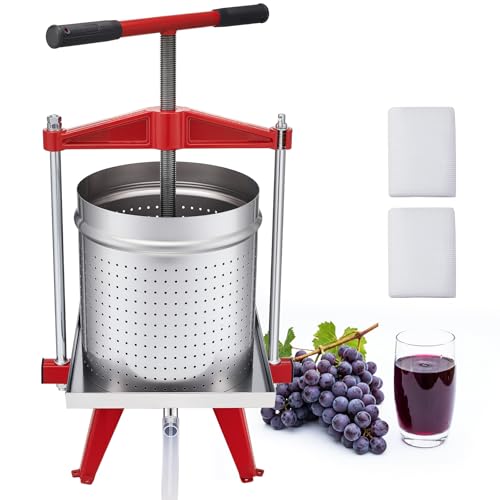
- 3.96-gallon capacity for moderate batches
- T-shaped handle and cross-beam enable manual pressing
- Stainless steel, removable bucket, and two filter bags
Best For: Home kitchens and hobby cider makers
Best Compact Crusher – 7L Manual Apple Crusher
For shoppers comparing cider presses for home use, this manual crusher is a practical first step for turning apples, pears, grapes, and other fruit into press-ready pulp. Its 7-liter hopper and table-mount design suit home or garden use, while the stainless-steel construction is built for repeated seasonal processing.
Best For: Home cider makers who need a dedicated crusher to prepare fruit efficiently before pressing.
Pros:
- Large 7-liter hopper can process up to 35–45 kg of fruit per hour.
- Produces uniform pieces that are easy to press with minimal waste.
- Food-grade 304 stainless steel and reinforced iron frame offer durable construction.
- Manual operation works with apples, pears, grapes, oranges, and other fruit.
Cons:
- It crushes fruit but does not extract juice by itself.
- Table mounting is required for secure operation.
- Hand-wash care may take extra cleanup time.
This is a strong choice when speed and consistent pulp size matter more than having an all-in-one press. Pair it with a separate basket press for a complete cider-making setup.
Best Traditional Press – 4.75-Gallon Beechwood Fruit Press
This manual fruit press is a solid option for cider presses for home use when you want a quiet, traditional setup. Its 4.75-gallon beechwood basket, heavy-duty stand, and built-in pour spout are sized for household cider, juice, and small-batch wine making.
Best For: Home users pressing crushed apples, grapes, or berries in moderate seasonal batches.
Pros:
- 4.75-gallon solid red beech basket supports home-scale pressing.
- Manual handle operation needs no motor or power supply.
- Built-in pour spout simplifies juice collection.
- Breakaway basket design helps remove fruit pulp between pressing cycles.
Cons:
- Fruit must be crushed before loading.
- Its wooden basket requires hand-wash care.
- Secure mounting may be useful because the feet include screw-hole options.
The beechwood basket and low-noise manual mechanism give this press a classic feel. It is best suited to buyers who value straightforward operation and manageable batch capacity over hydraulic force.
Best High-Capacity Press – 40L Hydraulic Fruit Press
For larger harvests, this hydraulic model stands out among cider presses for home use with a 40-liter capacity and 5 tons of pressing force. Its stainless-steel juice-contact parts, adjustable tray height, and movable beam make it suitable for orchard-scale home processing and seasonal gatherings.
Best For: Experienced home users and orchard owners handling large fruit loads and seeking higher pressing force.
Pros:
- 10.6-gallon/40-liter capacity handles substantial batches.
- Hydraulic jack delivers up to 5 tons of pressure.
- AISI 304 stainless steel is used for the pressing plate, basket, and juice tray.
- Adjustable tray height and a 90-degree-turning beam improve loading and collection.
Cons:
- At 85 pounds, it is substantially heavier than smaller manual presses.
- The larger frame requires more storage and workspace.
- Fruit still needs to be prepared before pressing.
This press is built for capacity and force rather than portability. Its 40-liter basket and hydraulic system make it a compelling choice for big harvests, while the stainless-steel contact surfaces simplify juice-focused cleanup.
Best All-in-One Kit – 18L Press with 7L Crusher
This combination kit simplifies the cider-making workflow by pairing a 7-liter fruit crusher with an 18-liter wood-basket press. Among cider presses for home use, it is a convenient choice for buyers who want to crush and press fruit with manual tools rather than assemble separate equipment.
Best For: Home cider makers who want a matched manual crusher-and-press setup for apples and other hard fruit.
Pros:
- Combines a 7-liter crusher with a 4.75-gallon/18-liter press.
- Longer hand shank and spiral, phase-in pressing design are intended to reduce effort.
- Thicker press plate and larger stressed area support thorough pressing.
- Stainless-steel construction is food-grade and rust resistant.
Cons:
- The 18-liter press is smaller than the 40-liter hydraulic alternative.
- Manual operation can require repeated physical effort.
- Hand-wash care is required.
The matched crusher and press make this kit appealing for beginners or anyone replacing multiple tools with one coordinated setup. It offers useful versatility, though larger harvests may call for a higher-capacity press.
Heavy-Duty Stainless Steel Pick – Green Fruit Wine Press
For shoppers comparing cider presses for home use, this manual stainless steel model offers a sturdy 2.38-gallon capacity for apples, grapes, berries, and other fruit. Its cross-beam construction and screw mechanism are designed for steady, efficient juice extraction without electricity.
Best For: Home cider makers who want a durable stainless steel press with useful capacity for seasonal fruit processing.
Pros:
- Heavy-duty stainless steel construction with a stable cross-beam design.
- 2.38-gallon barrel suits apples, grapes, berries, and wine making.
- Manual screw operation supports efficient juice extraction.
- Can be rinsed with a hose for convenient cleanup between batches.
Cons:
- Hand-wash care is specified, so cleanup still requires manual attention.
- At 14.29 kg, it is relatively heavy to move and store.
This is a practical choice when sturdiness and corrosion-resistant stainless steel matter more than portability. Its capacity sits comfortably between small countertop presses and larger production equipment.
Traditional Wood-Basket Pick – 1.6-Gallon Beech Press
This 1.6-gallon beechwood press is a compact option for cider presses for home use, especially if you prefer a traditional basket design. Its manual operation, built-in pour spout, and removable basket are suited to small batches of apple, grape, or berry juice.
Best For: Home users who value a classic wooden basket, quiet manual operation, and a smaller batch capacity.
Pros:
- Solid red beech basket offers a traditional fruit-pressing design.
- Built-in pour spout helps direct juice into a container.
- Breakaway basket design allows quicker pulp removal between pressings.
- Feet include screw-hole options for more secure mounting.
Cons:
- The 1.6-gallon capacity is smaller than the other listed presses.
- Beechwood construction requires hand-wash care.
- Its manual design requires physical handle operation for every batch.
Choose this model if you want a manageable press for home-scale batches and appreciate the feel of a wooden basket. The smaller capacity can also make it easier to match the press to modest harvests.
Large-Capacity Stainless Steel Pick – VEVOR 12L Fruit Wine Press
For larger batches, this VEVOR model stands out among cider presses for home use with its 3.17-gallon, 12-liter capacity and stainless steel barrels. The triangular handle, included filter bags, and removable components make it suited to family gatherings, parties, and varied pressing tasks.
Best For: Families and home producers who need a larger-capacity press for cider, wine, juice, or other food preparations.
Pros:
- Large 12-liter capacity supports bigger batches and gatherings.
- Stainless steel pressing plate, barrels, base, and support frame provide a sturdy setup.
- Triangular non-slip handle is designed for easier manual operation.
- Includes two food-grade filter bags and disassembles for cleaning.
Cons:
- Its 26.18-inch height and 16.8-pound weight require dedicated storage space.
- Although the notes mention dishwasher convenience, the care details also specify hand washing.
- Best results may require pre-cut fruit and a filter bag.
This is the strongest fit when capacity is the priority. Its larger footprint and manual operation are trade-offs for handling more fruit per pressing and supporting several types of food-making projects.
Traditional Pick – SQUEEZE master 18L Wooden Cider Press
For shoppers comparing cider presses for home use, this traditional wood-basket model offers a manual design with a 4.75-gallon capacity. Its T-shaped handle, spiral press action, and included filter bag are suited to smaller batches of apple, grape, and other fruit juice.
Best For: Families, small fresh-juice operations, and users who prefer a traditional manual press.
Pros:
- T-shaped handle and phase-in pressing design are intended to reduce effort.
- Large pressing area and thicker plate are designed for thorough juice extraction.
- Can handle about 22 to 33 pounds of fruit per batch and includes one filter bag.
Cons:
- Its 4.75-gallon capacity is smaller than the 15L and 30L stainless-steel alternatives here.
- The supplied details do not specify removable-bucket cleaning features.
This is a practical choice when a vintage-style wooden press and moderate batch size matter more than maximum capacity or hydraulic operation.
Large-Batch Power – VEVOR 30L Hydraulic Fruit Press
Among cider presses for home use, this 7.93-gallon stainless-steel model is built for larger batches and uses a jack-style hydraulic mechanism. Its thickened pressing plate, two filter bags, and removable bucket make it suited to frequent juice, wine, and mash pressing.
Best For: Home brewers, orchards, farms, and users processing large quantities at once.
Pros:
- 30L capacity supports larger juice or wine batches.
- Jack-style design provides a stated maximum load capacity of 3 tons.
- Food-grade materials, two filter bags, and a removable bucket support repeated use and cleanup.
- Suitable for fruit, vegetables, honey, olive oil, herbal mash, and fermented pulp.
Cons:
- At 57.8 pounds, it is substantially heavier than the 15L model.
- Its larger footprint may be less convenient for compact kitchens.
Choose this VEVOR when throughput is the priority. The hydraulic design and 30L chamber favor substantial batches, while the removable bucket simplifies rinsing between uses.
Balanced Homebrew Option – VEVOR 15L Manual Cider Press
This 3.96-gallon stainless-steel press is a balanced option for cider presses for home use, offering more capacity than a small countertop tool without the weight of a hydraulic model. The T-shaped handle, cross-beam, two filter bags, and thickened pressing plate support manual apple, grape, and vegetable pressing.
Best For: Home kitchens and hobby brewers who want a manageable mid-size press for repeated batches.
Pros:
- 15L capacity accommodates moderate juice or wine batches.
- T-shaped handle and cross-beam provide a straightforward manual pressing setup.
- Stainless-steel construction, two filter bags, and a removable bucket support practical use and cleaning.
- Works with fruit, vegetables, honey, olive oil, herbal mash, and fermented pulp.
Cons:
- Manual operation requires rotating the handle rather than using hydraulic assistance.
- The 15L capacity is less suitable for very large batches than the 30L model.
For most home users, this model strikes a useful middle ground: it is lighter and more compact than the large hydraulic press while still offering a durable stainless-steel build and versatile applications.
How We Picked the Best Cider Presses for Home Use
We focused on the practical features that matter during real pressing sessions: basket capacity, frame stability, juice-contact materials, pressing mechanism, portability, and cleaning demands. The lineup includes compact presses for occasional batches, traditional basket presses for home orchards, and hydraulic models for users processing larger harvests.
Capacity descriptions are approximate because the usable load depends on chopped fruit, pressing cloths, and how tightly the basket is packed. A crusher or scratter may also be necessary; a press works best when apples and other firm fruit are broken into smaller pieces first.
Quick Comparison
| Best For | Recommended Style | Why It Makes Sense |
|---|---|---|
| Small kitchens and occasional batches | 1.6- to 3.17-gallon manual press | Compact, easier to store, and sufficient for modest fruit volumes |
| Typical home orchard harvests | 4.75-gallon basket press | Balances output, stability, and manageable manual effort |
| Large harvests or frequent pressing | 7.93- to 10.6-gallon hydraulic press | Higher capacity and more consistent pressure with less physical strain |
| Users who need preparation and pressing | Crusher plus press setup | Turns whole or firm fruit into press-ready pulp before extraction |
Key Buying Factors for Cider Presses for Home Use
Capacity and Batch Size
Choose based on how much fruit you process at once, not only the advertised gallon figure. A smaller press is easier to load, empty, and clean, while a larger basket reduces the number of cycles during harvest season. Avoid buying more capacity than you can comfortably fill and store.
Manual or Hydraulic Operation
Manual T-handle and cross-beam presses are straightforward and usually need little maintenance, but they require more physical effort. Hydraulic presses apply greater, steadier force and suit larger batches, although they cost more and take up additional space.
Materials and Stability
Stainless-steel juice-contact parts are convenient to sanitize and resist corrosion. Wood baskets offer a traditional pressing experience but need careful drying and cleaning. A wide, heavy-duty stand and stable frame are important because twisting or rocking wastes force and can create spills.
Cleanup and Accessories
Look for removable baskets, accessible juice trays, and smooth surfaces without difficult-to-reach crevices. Confirm whether a pressing bag, collection tray, crusher, or hydraulic pump is included. Those extras can change the real cost and convenience significantly.
Who Should Buy Which Cider Presses for Home Use?
Choose a compact manual press if you make occasional cider, have limited storage, or process small quantities of grapes and berries. Choose a mid-size wooden-basket press for the best all-around fit for many households with a garden or a few apple trees. Choose a stainless-steel manual model if easy sanitation and versatile juice making matter most. Choose a hydraulic press when you regularly handle heavy harvests or want more pressing power with less hand effort. If you are pressing apples, remember to budget for a compatible crusher or scratter unless one is already available.