Fresh cider starts with the right press. Whether you process a few backyard apples or make larger batches for wine and juice, the best cider press should match your harvest size, available workspace, and preferred level of manual effort.
This roundup compares 10 selected models, including compact wooden presses, heavy-duty manual designs, hydraulic options, and combination grinder-and-press systems.
Best 10 Cider Presses Picks for 2026
Low-Effort Manual Pick
SQUEEZE master 4.75-Gallon Cider Press

- 4.75-gallon wood basket
- Stainless steel crusher and press components
- Manual, portable operation
Best For: Home users pressing apples and other hard produce without electricity
Large-Batch Stainless Steel Choice
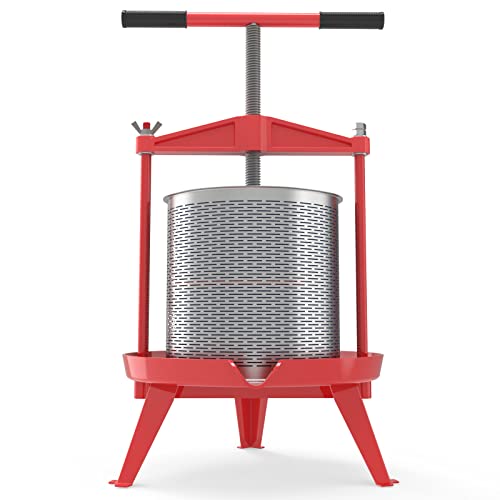
- 14-liter stainless steel basket
- Heavy-duty T-handle with Acme screw
- Detachable basket for cleanup
Best For: Home brewing and orchard harvests requiring larger manual batches
Heirloom Orchard Workhorse
American Harvester Double-Tub Press

- Integrated apple grinder and press
- Hard maple and cast iron construction
- Two-person, high-volume workflow
Best For: Families and orchards processing large seasonal harvests
Hydraulic Heavy-Duty Pick
22L Stainless Steel Hydraulic Fruit Press

- 3-ton hydraulic jack with up to 6,600 pounds of pressure
- 22-liter barrel with filter basket and cloth
- 304 stainless steel construction
Best For: High-pressure cider, wine, and juice pressing in home or commercial settings
Best Manual Cider Press for Versatile Home Use

- Natural juice extraction with reduced foaming
- Heavy-duty stand with pour spout
- Quiet manual operation for apples, grapes, and berries
Best For: Families and small-batch juice or wine making
Best High-Capacity Cider Press for Effortless Hydraulic Pressing
10.7-Gallon Stainless Steel Press

- Hydraulic operation reduces manual effort
- Large 40-liter capacity for bigger batches
- Includes filter bag and splash guard
Best For: Frequent, high-volume home or small-business pressing
Best Compact Cider Press for Small Batches
1.6-Gallon Manual Beechwood Press

- Compact 6-liter size for household batches
- Includes two food-grade filter bags
- Stable base with progressive screw pressing
Best For: Occasional home juice, cider, and fruit-wine making
Heavy-Duty Pick
Mosakar 40L Hydraulic Cider Press

- 40L capacity with 5 tons of hydraulic pressure
- 304 stainless juice-contact parts
- Adjustable tray and rotating beam
Best For: Large home, orchard, and harvest-season batches
Practical Manual Choice

- 14L capacity for family-scale batches
- Removable 304 stainless-steel basket
- Two food-grade filter bags included
Best For: Families, parties, and small wineries
Traditional Style Pick
SQUEEZE master 18L Wooden Cider Press

- 18L solid wood basket
- Handles roughly 22–33 pounds per batch
- T-handle and wide press plate
Best For: Traditional-style family and small-business pressing
Low-Effort Manual Pick – SQUEEZE master 4.75-Gallon Cider Press
For shoppers comparing cider presses, this manual model combines a 4.75-gallon wood basket with a stainless steel fruit crusher. Its lengthened hand shank, spiral design, and phased pressing action are intended to reduce effort while processing apples and other hard fruits.
Best For: Home users who want a portable, manually operated press and crusher for apples, pears, peaches, carrots, and similar produce.
Pros:
- Large 4.75-gallon capacity with a solid wood basket.
- Thicker press plate and larger stressed area are designed to improve juice yield.
- Food-grade stainless steel construction is rust resistant and hand-washable.
- Manual operation requires no power supply and can be used in different locations.
Cons:
- Manual pressing requires hands-on effort.
- Hand-wash-only care may take more time than a dishwasher-safe design.
This cider press is a practical choice when portability, broad fruit compatibility, and a traditional manual process matter more than powered convenience.
Large-Batch Stainless Steel Choice – 3.69-Gallon Fruit Wine Press
Among cider presses for home brewing, this 14-liter stainless steel model emphasizes capacity and leverage. Its heavy-duty T-handle turns a large-diameter Acme screw to create high pressure with comparatively little effort.
Best For: Home brewers, orchard owners, and harvest-season users who want to press apples, pears, grapes, herbs, nut milks, or honey in larger batches.
Pros:
- 14-liter, or approximately 3.7-gallon, stainless steel basket.
- Heavy-duty T-handle and Acme screw support high-pressure pressing.
- Food-grade stainless steel basket is paired with a powder-coated frame and stand.
- Detachable basket makes cleanup easier.
Cons:
- Its roughly 26-inch height and 18.5-inch width require dedicated workspace.
- Manual operation does not provide powered pressing.
With its sizable basket and leverage-focused design, this press suits buyers who prioritize batch capacity and straightforward cleanup for home beverage making.
Heirloom Orchard Workhorse – American Harvester Double-Tub Press
This American Harvester stands out among cider presses by combining an apple grinder with a pressing system in a double-tub design. Its hard maple and cast iron construction is built around a traditional, two-person workflow for substantial afternoon production.
Best For: Families, orchards, and users who want a durable, conversation-piece cider press for high-volume seasonal processing.
Pros:
- Integrated apple grinder prepares fruit before pressing.
- Double-tub design combines grinding and squeezing in one setup.
- Hard maple and cast iron construction is intended for long-term use.
- Two-person operation can produce up to 50 gallons in an afternoon, according to the supplied notes.
Cons:
- The two-person operating approach is less suited to solo pressing.
- Traditional construction may require more setup and hands-on involvement than compact presses.
This is the strongest fit for buyers seeking a substantial, family-heirloom-style press with integrated grinding rather than a small countertop appliance.
Hydraulic Heavy-Duty Pick – 22L Stainless Steel Hydraulic Fruit Press
For buyers comparing cider presses, this 22-liter stainless steel model uses a 3-ton hydraulic jack to apply up to 6,600 pounds of pressure with minimal pumping effort. Its outer barrel, perforated filter basket, and included mesh cloth are designed to separate pulp from collected juice.
Best For: Home brewers, craft cider makers, small wineries, and restaurants processing apples, grapes, berries, and other ingredients in controlled batches.
Pros:
- Hydraulic jack delivers powerful, even pressing with reduced manual effort.
- 22-liter outer barrel and 11-liter filter basket support batch processing.
- 304 stainless steel construction is rust resistant and easy to clean.
- Filter cloth, hose, and spout support cleaner juice collection.
Cons:
- At 36 pounds, it is less convenient to move than a lighter manual press.
- Hydraulic operation adds mechanical complexity compared with a basic screw press.
This press is a compelling option when pressing force, filtration, and multipurpose use are more important than the lightest or simplest equipment.
Best Manual Cider Press for Versatile Home Use – 4.75-Gallon Beechwood Press
For shoppers comparing cider presses, this 4.75-gallon manual model offers a sturdy, traditional setup for extracting juice from apples, grapes, and berries. Its beechwood basket, heavy-duty stand, and built-in pour spout make it practical for seasonal home pressing and small-batch winemaking.
Best For: Families, hobbyists, and small-batch juice or wine making.
Pros:
- Beechwood basket is designed for natural juice extraction with reduced foaming and drier pulp.
- Heavy-duty stand includes a pour spout and optional screw-hole mounting for added stability.
- Manual operation is quiet, straightforward, and requires no motor.
- Breakaway basket design helps simplify pulp removal between pressing sessions.
Cons:
- Hand washing is required.
- Crushed fruit must be loaded manually and pressed with the handle.
- Its 4.75-gallon capacity may be less suitable for high-volume production.
This is a well-rounded cider press for buyers who want a durable manual design and useful capacity without relying on electricity. The secure mounting option is especially helpful when stability is a priority.
Best High-Capacity Cider Press for Effortless Hydraulic Pressing – 10.7-Gallon Stainless Steel Press
Among cider presses, this 10.7-gallon hydraulic model stands out for larger batches and reduced physical effort. It connects to a standard household garden hose, using water pressure to press fruit while its stainless-steel construction, filter bag, and splash guard support a cleaner workflow.
Best For: Larger family batches, catering, hospitality, juice shops, and small wine operations.
Pros:
- 10.7-gallon/40-liter capacity supports substantial pressing sessions.
- Hydraulic operation saves electricity and manual muscle power.
- High applied pressure is designed to improve juice yield, even with a partially filled basket.
- Food-grade materials and a maximum 3-bar pressure setting support controlled operation.
Cons:
- Requires access to a normal domestic water supply and a connected garden hose.
- At 46.8 pounds, it is relatively heavy to move.
- The larger capacity may be more than needed for occasional small household batches.
This press is the practical choice when throughput and lower physical effort matter more than portability. Its hydraulic design makes it particularly appealing for frequent or larger-scale cider and wine pressing.
Best Compact Cider Press for Small Batches – 1.6-Gallon Manual Beechwood Press
For smaller batches, this compact 1.6-gallon model is one of the more approachable cider presses to consider. Its natural beechwood basket, progressive screw mechanism, extended handle, and included filter bags provide a simple setup for pressing prepared apples, grapes, berries, and other fruit.
Best For: Home users, family gatherings, small farms, wineries, and occasional juice making.
Pros:
- Compact 6-liter capacity suits small-batch pressing and home use.
- Triangular base and beechwood construction are designed for stable operation.
- Eight supporting blocks and a thick pressing block help improve extraction.
- Includes two food-grade filter bags for more convenient and hygienic pressing.
Cons:
- Hard fruits must be crushed before pressing.
- Manual operation requires turning the handle throughout extraction.
- Hand-wash care is required.
This VEVOR press is a good fit when storage space, batch size, and straightforward operation are key considerations. It offers useful versatility beyond cider, but its smaller capacity is best matched with household or occasional production.
Heavy-Duty Pick – Mosakar 40L Hydraulic Cider Press
For larger batches, this Mosakar hydraulic fruit press gives cider presses buyers a 10.6-gallon capacity and up to 5 tons of pressure. Its stainless-steel juice-contact components, adjustable tray height, and movable beam make it practical for orchard harvests and varied containers.
Best For: Home users, orchards, harvest season, and parties needing high-capacity pressing.
Pros:
- Large 40L capacity with 5 tons of hydraulic pressure.
- AISI 304 stainless-steel pressing plate, basket, and juice tray resist acidic juice and are easy to clean.
- Adjustable tray height and a 90-degree-turning beam simplify loading and container placement.
- Versatile for fruit, herbs, nut milks, honey, and more.
Cons:
- At 85 pounds, it is relatively heavy to move.
- Its 20 x 17.3 x 31.6-inch footprint requires dedicated space.
This is the strongest capacity-oriented option in the group. Choose it when hydraulic force and durable stainless juice-contact parts matter more than portability.
Practical Manual Choice – VEVOR 14L Fruit Wine Press
This VEVOR manual press is a balanced choice among cider presses for family-scale batches. The 3.69-gallon stainless-steel basket, swing-open crossbeam, T-handle, and included filter bags support straightforward loading and pressing.
Best For: Families, parties, small wineries, farms, and fresh-juice use.
Pros:
- 14L capacity accommodates a useful family or small-batch volume.
- Spiral pressing mechanism and anti-slip T-handle make manual operation straightforward.
- Removable 304 stainless-steel basket supports easier cleaning.
- Includes two food-grade filter bags and works with apples, grapes, berries, and other materials.
Cons:
- Manual pressing requires pre-crushing for best results.
- Hand washing is required, and non-food-contact metal parts need lubrication to help prevent corrosion.
- Its 34-pound weight and 38.39-inch height may limit convenient storage.
With a moderate capacity and useful accessories, this model fits buyers who want a capable manual press without moving up to a hydraulic system.
Traditional Style Pick – SQUEEZE master 18L Wooden Cider Press
For shoppers drawn to traditional cider presses, the SQUEEZE master combines an 18L solid wood basket with a manual T-handle and progressive screw design. Its wide press plate is designed to apply pressure over a larger area, while the included filter bag helps with juice preparation.
Best For: Families, parties, eateries, fresh-squeezed juice stores, and small plants.
Pros:
- 18L capacity can handle about 22 to 33 pounds of fruit at once.
- T-shaped handle and phase-in screw design are intended to reduce pressing effort.
- Thick, wide press plate supports thorough pressing and potentially higher juice yield.
- Suitable for fruit, vinasse, oil pomace, and honeycomb.
Cons:
- The wood construction requires hand washing and may need more care than stainless-steel designs.
- Its 17.76 kg weight makes it less convenient to relocate.
- Only one filter bag is included.
This press suits buyers who value a vintage wooden design and a larger-than-family capacity. Its broad pressing area and manual mechanism make it a distinctive alternative to all-metal models.
How We Picked These Cider Presses
We selected these models based on the features that matter most for home fruit processing: basket capacity, press mechanism, construction, juice-contact materials, stability, included accessories, and likely cleanup demands. The selection spans compact 1.6-gallon presses through 10.7-gallon hydraulic models, so different households can find a suitable fit.
We also considered whether each press is designed primarily for occasional juice making, regular cider production, or more demanding wine and fruit-processing work. Product descriptions were compared for practical details such as filter bags, splash guards, dual-tub designs, grinders, stainless-steel components, and load capacity.
Quick Comparison
| Press type | Best suited to | Main advantage | Potential trade-off |
|---|---|---|---|
| Small manual wooden press | Small harvests and beginners | Compact and simple | Lower batch capacity |
| Medium basket press | Household cider and juice | Good balance of size and control | Requires manual effort |
| Hydraulic press | Frequent or larger-batch use | Higher pressing force | Heavier and more expensive |
| Grinder-and-press system | Users processing whole apples | Combines preparation and pressing | More parts to clean and store |
Key Buying Factors for Cider Presses
Capacity and Batch Size
Basket size is one of the most important specifications. A 1.6- to 4.75-gallon model can suit occasional backyard use, while 10-gallon-class presses reduce the number of batches needed for a substantial harvest. Remember that rated capacity does not always equal the volume of finished juice.
Pressing Mechanism
Manual T-handle and cross-beam presses are straightforward, affordable, and easy to operate without power. Hydraulic presses apply more consistent force and can be less tiring during repeated batches, but they generally weigh more and require more storage space.
Materials and Stability
Wooden baskets offer a traditional design, while stainless-steel juice-contact parts are generally easy to sanitize and resistant to corrosion. Look for a sturdy frame, broad base, secure feet, and a collection tray or outer bucket that helps control splashing.
Preparation, Filtration, and Cleanup
Apples usually need to be crushed before pressing. A built-in grinder or a compatible crusher can simplify the workflow. Filter bags help contain pulp and improve handling, but they add another item to wash. Check whether components can be removed easily and whether the manufacturer provides replacement bags or parts.
Who Should Buy Which Cider Presses?
Choose a compact manual press if you make cider occasionally, have limited storage, or want the simplest entry point. A medium-capacity wooden or stainless-steel press is a strong all-purpose choice for families processing apples, grapes, and berries throughout the season.
Choose a hydraulic model if you press large harvests, want greater pressing force, or prefer to reduce the physical effort of repeated batches. If you do not already own a fruit crusher, a grinder-and-press system may offer the most efficient overall workflow. Before buying, confirm the required counter or floor space, expected fruit volume, cleaning routine, and whether the press includes every filter, bucket, and accessory you need.