Making fresh cider at home does not require a full-size orchard setup. The best compact presses combine manageable capacity, sturdy construction, and easy cleanup for kitchens, patios, and small batch brewing.
This roundup compares 10 manual options, from lightweight stainless steel presses for occasional use to larger basket models for processing several pounds of fruit at once.
Best 10 Cider Presses for Small Kitchens Picks for 2026
Best Compact Crusher

- 7-liter hopper for home batches
- Uniform pieces ease pressing
- Stainless steel, table-mount design
Best For: Preparing apples and pears before pressing
Best Large-Batch Press

- 14-liter pressing basket
- Includes two filter bags
- Stable floor-standing construction
Best For: Larger home batches with adequate floor space
Best Complete Manual Setup

- Crusher and press in one setup
- 4.75-gallon pressing capacity
- No electricity required
Best For: Manual apple crushing and pressing at home
Best Small-Batch Press
2L Compact Soft-Fruit Squeezer
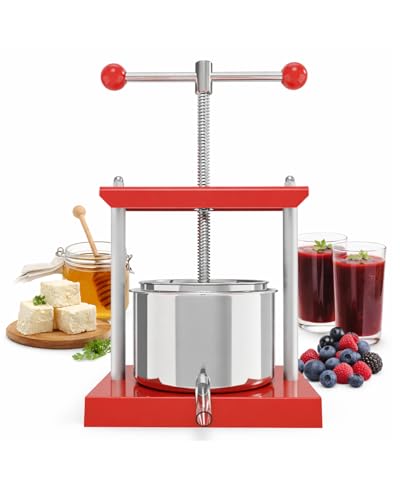
- Compact 2-liter capacity
- Includes reusable mesh filter bag
- Designed for soft or crushed ingredients
Best For: Small batches in tight kitchens
Large-Batch Wood Press

- Natural beechwood basket with stable triangular base
- Includes two food-grade filter bags
- Six-liter capacity for family-size batches
Best For: Home juice and fruit-wine making
Compact Stainless Press
0.8-Gallon Cider and Fruit Press

- Food-contact stainless-steel construction
- Stable triangular base with three columns
- Removable parts and smooth surfaces ease cleanup
Best For: Small batches and easy maintenance
High-Capacity Beech Press
4.75-Gallon Manual Cider Maker

- Large capacity for seasonal or group pressing
- Beechwood basket with breakaway pulp removal
- Built-in pour spout and heavy-duty stand
Best For: Large home batches and small juice shops
Compact Stainless Steel Pick
- 3-liter capacity for small batches
- Stable triangular base and three columns
- Includes filter bag and silicone hose
Best For: Small-batch cider and juice in home kitchens
Easy-Clean Countertop Pick

- Compact 1.65-liter capacity
- Thickened stainless steel pressing plate
- Disassembles for easier cleaning
Best For: Small household batches and limited counter space
High-Capacity Traditional Pick

- 18-liter capacity for larger fruit loads
- Wooden basket with large pressing area
- T-handle design aims to reduce effort
Best For: Large batches, parties, and small juice operations
Best Compact Crusher – 7L Manual Apple Crusher
For shoppers comparing cider presses for small kitchens, this manual crusher is a practical prep tool rather than a complete pressing setup. Its 7-liter hopper and table-mount design help turn apples and pears into uniformly sized pieces that are easier to press.
Best For: Home cider makers who need a compact, high-capacity fruit crusher for apples, pears, and other produce.
Pros:
- 7-liter/1.8-gallon hopper can process a substantial batch of fruit.
- Produces uniform 1/4-inch pieces for more convenient pressing.
- Food-grade 304 stainless steel construction with a reinforced iron frame.
- Manual operation works at home or in the garden without relying on a power outlet.
Cons:
- It crushes fruit but does not press juice by itself.
- At 19.7 inches tall and 12.5 pounds, it still needs dedicated storage space.
- Hand-wash care requires cleanup after use.
This is a strong fit when efficient fruit preparation is the main need. Pair it with a separate press to build a capable small-kitchen cider workflow.
Best Large-Batch Press – 14L Manual Fruit Wine Press
Among cider presses for small kitchens, this manual press suits households that want a larger pressing capacity but have room for a floor-standing design. The 14-liter basket, filter bags, and progressive screw mechanism are built for extracting juice from pre-crushed fruit.
Best For: Families and home cider makers pressing larger batches of apples, grapes, or other prepared fruit.
Pros:
- 3.69-gallon/14-liter capacity supports larger home batches.
- Removable 304 stainless steel basket simplifies cleaning.
- Includes two food-grade filter bags.
- Triangular base and anti-slip T-handle support stable manual operation.
Cons:
- Its 38.39-inch height and 34-pound weight make it less convenient for cramped kitchens.
- Fruit should be pre-crushed for the best results.
- Hand washing and occasional lubrication add maintenance.
This press offers useful capacity for serious home production, but measure your storage and operating area carefully before buying. It is better suited to a garage, utility room, or spacious kitchen than a tight countertop.
Best Complete Manual Setup – 18L Press with 7L Crusher
This combination is a convenient option for shoppers seeking cider presses for small kitchens because it includes both a fruit crusher and a larger manual press. The 7-liter crusher prepares fruit, while the 4.75-gallon wooden-basket press handles the extraction stage without requiring electricity.
Best For: Home users who want an all-in-one manual setup for crushing and pressing apples, pears, and other hard produce.
Pros:
- Combines a 7-liter crusher with an 18-liter/4.75-gallon press.
- Manual design can be moved and used without a power supply.
- Long hand shank and spiral pressing design are intended to reduce effort.
- Food-grade stainless steel components are described as rust resistant.
Cons:
- The larger 4.75-gallon press may need more storage space than a compact kitchen can provide.
- Manual crushing and pressing still require hands-on work.
- Hand-wash care is required.
The bundled format avoids matching a separate crusher and press, making it appealing for new cider makers. Its capacity and two-stage workflow are useful, though the equipment is best for kitchens or storage areas with room for larger manual tools.
Best Small-Batch Press – 2L Compact Soft-Fruit Squeezer
For very limited counter and cabinet space, this compact press is one of the more kitchen-friendly cider presses for small kitchens. Its 2-liter capacity and 11.5-inch height suit small batches of soft fruit or pre-crushed ingredients, rather than whole apples or pears.
Best For: Small-batch pressing of grapes, berries, cherries, herbs, honey, cheese, or other soft and crushed ingredients.
Pros:
- Compact 0.53-gallon/2-liter capacity fits small projects and tighter storage areas.
- Includes a reusable mesh filter bag for smoother output.
- Stainless steel buckets offer a food-safe, acid-resistant construction.
- T-handle provides controlled manual pressing.
Cons:
- It is not suitable for whole hard fruits such as apples or pears.
- Small capacity limits batch size.
- Ingredients must be chopped or crushed before pressing.
This is the most space-conscious choice of the group, but its soft-fruit focus matters. Choose it for small, frequent batches and infusions; choose a crusher-and-press setup for full-size apple cider production.
Large-Batch Wood Press – 1.6-Gallon Manual Cider Maker
For cider presses for small kitchens, this VEVOR model offers a useful middle ground: its 1.6-gallon capacity can handle family-size batches while its manual design avoids motors, cords, and complicated controls. The beechwood basket, filter bags, and progressive screw mechanism support straightforward fruit pressing.
Best For: Home users who want a versatile wooden press for apples, grapes, berries, juice, or small-batch fruit wine.
Pros:
- Solid natural beechwood basket with a triangular base for stable operation.
- Includes two food-grade filter bags for cleaner, more hygienic pressing.
- Six-liter capacity and extended handle help produce juice efficiently.
- Can also press fruit pulp, cheese, and olive oil.
Cons:
- Hard fruit must be crushed before pressing.
- At 22.64 inches tall and 15.9 pounds, it may need dedicated storage.
- Hand-wash-only care requires cleanup after each use.
Choose this press if you value wood construction, included filtration, and enough capacity for family gatherings without moving up to a much larger unit. Pairing it with a fruit crusher may be useful when processing firm apples or similar produce.
Compact Stainless Press – 0.8-Gallon Cider and Fruit Press
Among cider presses for small kitchens, this compact stainless-steel model is designed for manageable batches and simpler cleanup. Its 0.7-gallon capacity, removable parts, and smooth food-contact surfaces make it a practical choice for home kitchens and small food-service settings.
Best For: Users who prioritize stainless-steel construction, easy rinsing, and smaller batches of apples, grapes, or other fruit.
Pros:
- Stainless-steel construction is suitable for direct food contact.
- Triangular base and three columns help keep the press stable.
- Smooth surfaces resist residue buildup, while removable parts simplify cleaning.
- Dual barrels and a T-handle support manual pressing.
Cons:
- The approximately 0.7- to 0.8-gallon capacity is smaller than the other presses here.
- Manual pressing requires physical effort.
- The supplied details do not specify overall dimensions or included accessories.
This is the most kitchen-friendly option for shoppers who prefer metal over wood and do not need a large pressing run. Its smaller capacity can also help limit countertop handling and cleanup for occasional batches.
High-Capacity Beech Press – 4.75-Gallon Manual Cider Maker
This 4.75-gallon model suits shoppers seeking cider presses for small kitchens but expecting larger seasonal batches. Its solid beechwood basket, heavy-duty stand, built-in pour spout, and manual operation are geared toward pressing crushed apples, grapes, and berries with efficient juice collection.
Best For: Experienced home users, family gatherings, and small juice or wine-making operations that need substantial capacity.
Pros:
- Large 4.75-gallon capacity supports bigger pressing sessions.
- Solid red beech basket is designed for moisture and wear resistance.
- Built-in pour spout makes juice collection more convenient.
- Breakaway basket helps remove fruit pulp between pressing cycles.
Cons:
- Its 27.6-inch height and 24.4-inch depth require considerable storage space.
- Fruit must be crushed before loading into the basket.
- Hand-wash-only care can make cleanup more involved after large batches.
This press is best when capacity matters more than a compact footprint. Optional screw holes in the feet allow more secure mounting, which is useful because larger loads and manual leverage call for a stable setup.
Compact Stainless Steel Pick – 3L Manual Fruit Wine Press
For shoppers comparing cider presses for small kitchens, this 3-liter manual model offers a manageable countertop capacity without giving up a sturdy stainless steel-and-aluminum construction. Its triangular base, three support columns, and T-handle are designed for controlled hand pressing.
Best For: Small-batch cider, juice, wine, puree, cheese, and herb infusions.
Pros:
- 3-liter capacity suits modest batches and home use.
- Stainless steel food-contact parts resist rust and are designed for durability.
- Removable parts, a filter bag, and a silicone hose support practical cleanup and setup.
- Triangular base helps keep the press stable during operation.
Cons:
- Manual pressing requires repeated handle rotation.
- Hand-wash care may take more time than a fully dishwasher-friendly design.
- Its 0.8-gallon capacity is not intended for large harvests.
This is a sensible fit when kitchen space and batch size matter most. Choose it for compact, occasional pressing rather than high-volume cider production.
Easy-Clean Countertop Pick – VEVOR 1.65L Cider Press
Among cider presses for small kitchens, the VEVOR 0.44-gallon model is the most compact option here. Its 1.65-liter capacity, manual T-handle, stainless steel barrels, and disassemblable design make it geared toward smaller household batches and straightforward cleanup.
Best For: Compact countertop pressing for juice, cider, wine, cheese, puree, olive oil, honey, and herbs.
Pros:
- 1.65-liter capacity takes up less room than larger presses.
- Thickened stainless steel pressing plate is designed for thorough extraction.
- Two food-grade filter bags are included.
- Inner and outer barrels can be disassembled for cleaning; the notes also describe dishwasher convenience.
Cons:
- Small capacity limits output for parties or larger fruit loads.
- Manual operation still requires physical effort.
- Pre-cutting fruit is recommended for better results.
Its smaller footprint and easy-clean construction make this a practical starting point for occasional cider making. It is best suited to convenience and limited batches, not processing a full harvest.
High-Capacity Traditional Pick – 18L Wooden Cider Press
Although larger than most cider presses for small kitchens, this traditional wood-basket press is worth considering when higher output matters more than a compact footprint. Its 18-liter capacity and T-handle are designed to press substantial quantities of apples, grapes, and other fruit by hand.
Best For: Family parties, farm-style batches, eateries, and small fresh-juice operations.
Pros:
- 18-liter capacity can handle approximately 22 to 33 pounds of fruit at once, according to the supplied notes.
- Large pressing area and thicker press plate are designed to improve juice yield.
- Spiral, phase-in pressing and a T-shaped handle are intended to reduce effort.
- Versatile enough for fruit, vinasse, oil pomace, and honeycomb.
Cons:
- Its large capacity and 17.76-kilogram weight make it less suitable for genuinely small kitchens.
- Wood construction requires hand-wash care.
- Only one filter bag is included.
This is the volume-focused choice in the group, with a traditional basket and substantially greater capacity. It makes sense only if you have adequate storage and regularly press larger loads.
How We Picked the Best Cider Presses for Small Kitchens
We focused on practical features that matter when counter space and storage are limited: overall capacity, footprint, materials, pressing mechanism, cleanup, and likely batch size. The selection includes compact stainless steel designs, wood-basket presses, and models that combine crushing and pressing functions.
Manual operation is useful for small kitchens because it avoids motors, electrical cords, and additional equipment. We also considered whether each press appears suited to soft fruit, apples, grapes, berries, herbs, or general juice extraction. Capacity labels can vary, so treat them as approximate basket volume rather than a guaranteed finished-juice yield.
Quick Comparison
| Best for | Look for | Typical option |
|---|---|---|
| Occasional small batches | 0.44–0.8 gallon capacity | Compact stainless steel press |
| Regular family use | 1.6–3.69 gallon capacity | Manual basket press with stable frame |
| Larger seasonal batches | 4.75 gallon or 18-liter basket | Wood-basket press with long handle |
| Fruit preparation and pressing | Integrated crusher or scratter | Crusher-and-press setup |
Key Buying Factors for Cider Presses for Small Kitchens
Capacity and Footprint
Choose the smallest basket that handles your usual batch. Compact presses are easier to store, but very small models may require repeated loads when working with apples. Measure the storage area and the counter or table where you plan to operate the press.
Materials and Stability
Stainless steel is generally easy to wash and resists juice exposure. Wood baskets offer traditional styling and can handle larger batches, but they need careful drying and maintenance. A broad base, reinforced frame, or triangular support helps prevent movement while turning the handle.
Pressing System and Preparation
Apples usually need to be crushed or pulped before pressing. A built-in grinder can save space, while a separate crusher may provide better workflow flexibility. Check whether the press includes a filter bag, dual barrels, collection tray, or other accessories needed for your intended fruit.
Cleanup and Food Safety
Look for removable parts, smooth surfaces, and components that can be rinsed promptly. Avoid leaving pulp or acidic juice on metal or wood. Confirm the manufacturer’s care instructions before using detergents, soaking wooden parts, or placing components in a dishwasher.
Who Should Buy Which Cider Presses for Small Kitchens?
Choose a compact 0.44- to 0.8-gallon model if you make occasional juice, process berries or herbs, or have very limited storage. These presses are convenient for small servings but are less efficient for large apple harvests.
Choose a 1.6- to 3.69-gallon press for regular household cider making. This range balances batch size with manageable storage and is a sensible starting point for most home users.
Choose a 4.75-gallon or 18-liter wood-basket model if you process fruit seasonally or want fewer loading cycles. Allow extra room for storage, setup, and cleaning, and use a sturdy work surface.
Choose a crusher-equipped design when you want an all-in-one setup and do not already own a fruit pulper. If you mainly press soft fruit, a simpler stainless steel press may be easier to maintain and quicker to use.